The Complete Guide to Black Leather Jackets: Styles, Materials and Buying Tips
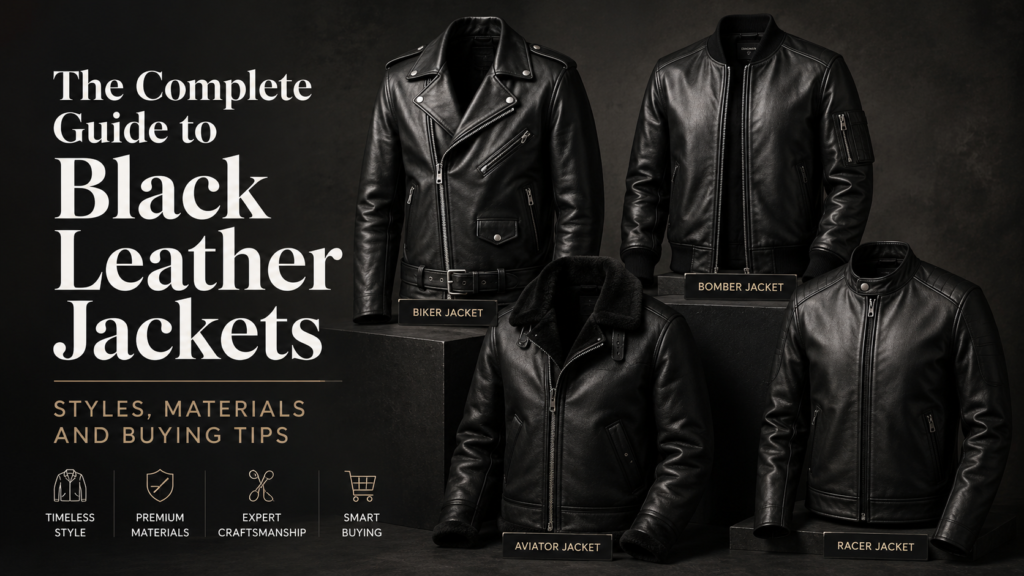
Black leather jackets have remained one of the most recognizable and versatile pieces of outerwear for decades. From classic motorcycle designs and military-inspired bomber jackets to modern luxury fashion pieces, the black leather jacket continues to appeal to consumers, retailers, fashion brands, and wholesalers across international markets. However, choosing the right black leather jacket involves much more than simply selecting an attractive design. Leather type, grain quality, construction, stitching, fit, hardware, finishing, manufacturing standards, and maintenance can all affect the jacket’s appearance, comfort, durability, and value. For B2B buyers, additional factors such as manufacturer reliability, minimum order quantities, private-label capabilities, quality control, sustainability, and production capacity also become important. This pillar guide provides an overview of everything buyers and fashion businesses should understand about black leather jackets, from popular styles and leather materials to buying, care, styling, wholesale sourcing, and manufacturing. What Are the Most Popular Black Leather Jacket Styles? Black leather jackets are available in many different silhouettes, but several styles have remained especially popular. The most recognizable include biker jackets, bomber jackets, aviator jackets, racer jackets, motorcycle-inspired jackets, trucker jackets, leather blazers, and modern oversized designs. Biker jackets generally feature prominent zippers and hardware, while bomber jackets have a more relaxed silhouette with ribbed cuffs and waistbands. Aviator jackets often include warm collars or heavier linings for colder conditions. Racer jackets offer a cleaner and more minimal appearance, making them suitable for customers who prefer understated styling. For retailers and fashion brands, choosing the right combination of styles depends on their target market, seasonal collection, customer preferences, and desired price positioning. 3. Black Leather Bomber Jacket: Features, Benefits and Styling Ideas The black leather bomber jacket combines the traditional shape of a military flight jacket with the premium look and feel of leather. Typical features include a front zipper, ribbed cuffs, ribbed waistband, side pockets, and a comfortable fit. One of the biggest advantages of the bomber jacket is versatility. It can be worn casually with jeans, trousers, T-shirts, knitwear, and trainers. Leather bomber jackets can also be manufactured using different materials. Cowhide creates a more structured and rugged jacket, while lambskin or sheepskin offers greater softness and flexibility. For fashion brands, bomber jackets are valuable because they can be adapted to classic, luxury, streetwear, vintage, or contemporary collections. Black Leather Biker Jacket: A Complete Buyer’s Guide The black leather biker jacket is one of the most iconic leather jacket designs. Traditional biker jackets often feature an asymmetric zipper, wide lapels, zippered pockets, metal snaps, shoulder detailing, and an adjustable waist belt. When buying a biker jacket, leather quality should be evaluated alongside the construction. Cowhide provides greater structure and durability, while lambskin creates a softer and more fashion-oriented jacket. Zippers should feel strong and smooth because they are used frequently. Stitching around the shoulders, armholes, pockets, and waist should also be checked carefully. Buyers should consider whether they need a fashion biker jacket or a technical motorcycle garment, as protective riding jackets require different construction and safety considerations. Black Leather Aviator Jacket: History, Features and Modern Uses Aviator jackets developed from military flight clothing originally designed to protect pilots from cold temperatures. Traditional versions were made from durable leather and often included warm shearling linings or collars. Modern black leather aviator jackets maintain many of these recognizable elements while adapting them for everyday fashion. Typical features include large collars, substantial zippers, adjustable straps, warm lining, and a slightly relaxed silhouette. Today, aviator jackets are particularly suitable for autumn and winter collections. They can be paired with denim, boots, knitwear, or casual trousers. For retailers selling into colder European markets, the aviator jacket can provide both visual appeal and practical seasonal functionality. 6. Classic vs Modern Black Leather Jackets: What Is the Difference? Classic black leather jackets are usually based on traditional biker, bomber, motorcycle, or aviator designs. They tend to use recognizable silhouettes, conventional hardware, neutral linings, and relatively timeless construction. Modern leather jackets may experiment with oversized fits, cropped lengths, minimalist details, unusual zipper placements, quilting, mixed materials, matte finishes, embroidery, or contemporary pattern shapes. Neither approach is automatically better. Classic jackets can appeal to customers looking for timeless products, while modern designs may be better suited to trend-conscious fashion audiences. Retailers should consider their target customers carefully when deciding whether a collection should focus on heritage-inspired designs, modern styling, or a combination of both. 7. Men’s vs Women’s Black Leather Jackets: Key Design Differences Men’s and women’s black leather jackets can use similar styles, but their patterns are usually developed differently. Men’s jackets generally have broader shoulders, straighter body proportions, longer sleeves, and additional room through the chest. Women’s jackets may include more waist shaping, adjusted bust measurements, narrower shoulder proportions, and different jacket lengths. Modern fashion also includes many unisex and oversized designs, reducing some traditional distinctions. However, B2B buyers should still pay careful attention to sizing specifications. Simply scaling one pattern larger or smaller does not always produce a good fit. Brands targeting multiple markets should develop measurement charts that reflect their intended customer base. Leather and Quality 8. Which Leather Is Best for a Black Leather Jacket? There is no single leather that is best for every jacket. The correct material depends on the intended design, price level, comfort requirements, durability expectations, and customer preferences. Cowhide is strong and structured, making it suitable for biker and motorcycle-inspired jackets. Lambskin is lighter, softer, and more luxurious, making it popular for premium fashion jackets. Sheepskin offers flexibility and comfort, while goatskin provides an attractive balance between strength and softness. Full-grain and top-grain leathers are generally preferred for higher-quality products. Buyers should therefore choose leather based on the jacket’s intended purpose rather than assuming that one hide type is universally superior. 9. Cowhide vs Sheepskin Black Leather Jackets: Which Is Better? Cowhide and sheepskin produce very different types of leather jackets. Cowhide is generally heavier, stronger, and more structured. It works well for rugged biker jackets, motorcycle-inspired garments, heavy bombers, and designs that require
How to Categorize Leather Jackets in Product Taxonomy Correctly
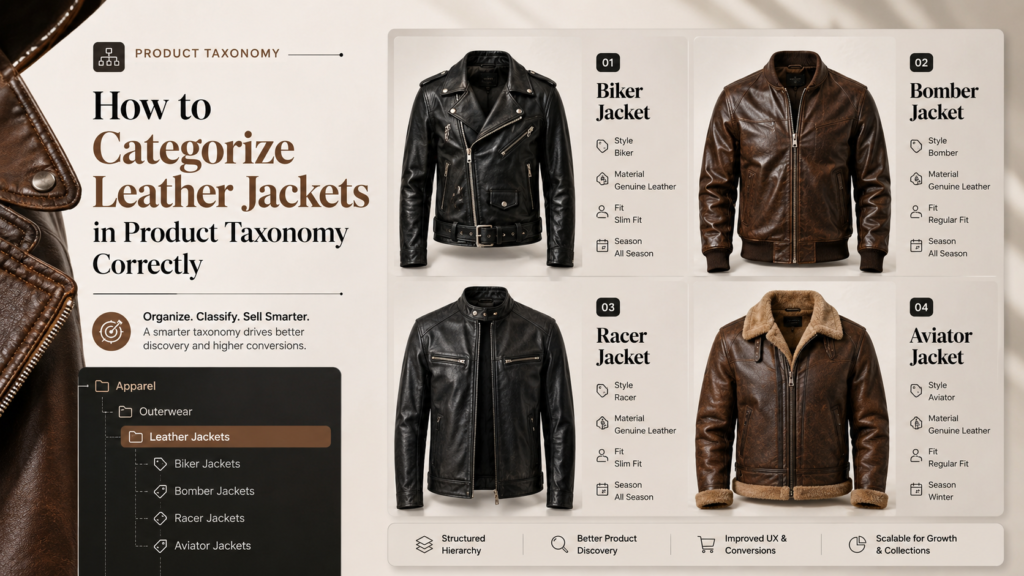
Leather jackets are one of the most versatile and diverse categories in the fashion and outerwear industry. They come in many different styles, materials, finishes, fits, colours, and designs. From classic biker jackets and bomber jackets to aviator, racer, suede, shearling, and premium fashion jackets, the number of possible variations can make product organization difficult. For manufacturers, wholesalers, B2B suppliers, online retailers, and fashion brands, understanding how to categorize leather jackets in product taxonomy correctly is essential. A well-planned taxonomy helps businesses organize products clearly, improve website navigation, enhance product discovery, and support search engine optimization. When product categories are easy to understand, visitors can move from broad product groups to specific jacket types without confusion. This is particularly important for large leather jacket catalogues where buyers may want to filter products by material, style, gender, colour, finish, or intended use. This guide explains how leather jackets should be categorized within an effective product taxonomy and how businesses can build a structure that works for both buyers and search engines. What Is Product Taxonomy? Product taxonomy is the structured system used to organize products into categories, subcategories, filters, and attributes. A simple fashion taxonomy might look like this: Clothing → Outerwear → Jackets → Leather Jackets From there, leather jackets can be divided into more specific categories depending on how customers search for them. For example: Leather Jackets → Men’s Leather Jackets → Biker Jackets or: Leather Jackets → Women’s Leather Jackets → Bomber Jackets A good taxonomy creates a clear relationship between different product groups. It helps customers understand where a product belongs and makes it easier for search engines to interpret the structure of a website. For businesses with hundreds or thousands of products, taxonomy becomes especially important because customers need a fast and logical way to narrow down their choices. Why Leather Jacket Product Taxonomy Is Important Leather jackets are available in many variations, and poorly organized product catalogues can quickly become confusing. A properly designed product taxonomy can help businesses: Improve website navigation Organize large product catalogues Improve internal linking Support SEO Make product filtering easier Improve product discovery Simplify inventory management Improve user experience Help buyers compare products Create clearer category pages For B2B businesses, taxonomy is even more important because wholesale buyers often search according to specific commercial requirements. For example, a buyer may want: Men’s cowhide biker jackets Women’s lambskin bomber jackets Full-grain leather jackets Private-label leather jackets Custom leather jackets Wholesale leather jackets A strong taxonomy allows buyers to reach these product groups quickly. Start With a Main Leather Jacket Category The first step in learning how to categorize leather jackets in product taxonomy correctly is creating a strong primary category. The basic structure may look like: Apparel → Outerwear → Jackets → Leather Jackets This creates a clear hierarchy and places leather jackets inside the broader clothing structure. Once the main leather jacket category has been established, businesses can create subcategories based on characteristics that buyers commonly use when shopping. The most useful characteristics include: Style Gender Leather type Finish Intended use Fit Colour Season Manufacturing requirements However, not every characteristic should become a separate category. Some work better as filters. Categorize Leather Jackets by Style Style is one of the most useful ways to organize leather jackets because customers frequently search for a specific design. Leather Biker Jackets Biker jackets are among the most recognizable leather jacket styles. They are commonly associated with asymmetrical zippers, lapels, metal hardware, fitted silhouettes, and multiple pockets. A suitable taxonomy structure would be: Leather Jackets → Biker Jackets or: Men’s Leather Jackets → Biker Jackets Biker jackets may also be divided according to material, such as cowhide or lambskin. Leather Bomber Jackets Bomber jackets usually feature ribbed cuffs, ribbed waistbands, comfortable fits, and front zip closures. A clear category structure would be: Leather Jackets → Bomber Jackets Bomber jackets can then be filtered by leather type, colour, gender, or lining. Leather Aviator Jackets Aviator jackets are inspired by traditional flight jackets and often include warm linings, large collars, and shearling-style details. They can be categorized as: Leather Jackets → Aviator Jackets Some websites may also use the term “flight jackets,” depending on how customers search. Leather Racer Jackets Racer jackets, also known as café racer jackets, generally feature simple designs, streamlined silhouettes, stand collars, and minimal decoration. They can be classified as: Leather Jackets → Racer Jackets or: Leather Jackets → Café Racer Jackets Leather Blazers Leather blazers combine traditional tailoring with leather construction. They often appeal to customers looking for premium or smart-casual outerwear. A suitable category would be: Leather Jackets → Leather Blazers Categorize Leather Jackets by Leather Type The type of leather used is another important part of product taxonomy. Different leather materials offer different levels of durability, softness, weight, texture, and appearance. Cowhide Leather Jackets Cowhide is known for its durability, strength, and natural grain. It is widely used for biker jackets, motorcycle jackets, workwear, and premium outerwear. A typical category structure might be: Leather Jackets → Cowhide Leather Jackets Lambskin Leather Jackets Lambskin leather is softer and lighter than cowhide. It is commonly used for fashion jackets where comfort and smooth texture are important. A suitable classification is: Leather Jackets → Lambskin Leather Jackets Sheepskin Leather Jackets Sheepskin is often used for lightweight jackets as well as warmer shearling-inspired designs. It can be categorized as: Leather Jackets → Sheepskin Leather Jackets Goatskin Leather Jackets Goatskin offers good durability, flexibility, and a distinctive grain pattern. A useful taxonomy category would be: Leather Jackets → Goatskin Leather Jackets Categorize by Leather Quality and Finish Leather quality and surface finish can also influence how jackets are organized. Common leather quality classifications include: Full-grain leather Top-grain leather Corrected-grain leather Suede leather Nubuck leather For example: Leather Jackets → Full-Grain Leather Jackets or: Leather Jackets → Suede Jackets Finishes can also be used as filters rather than separate categories. Common finishes may include: Matte Glossy Vintage Distressed Waxed Washed Aniline If every finish
Common Mistakes to Avoid When Buying a Black Leather Jacket
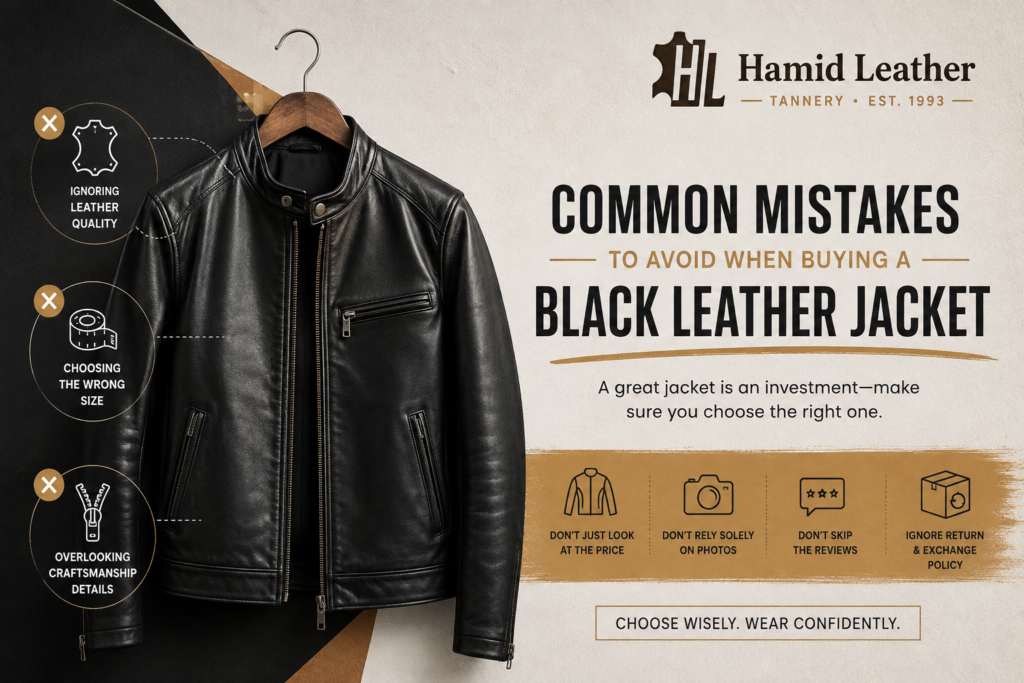
Buying a black leather jacket can be a long-term investment, but choosing the wrong material, size, style or construction can lead to an expensive disappointment. Many buyers focus only on appearance or price. However, a jacket that looks attractive in photographs may use unsuitable leather, weak hardware, inaccurate sizing or poor-quality stitching. These problems can affect its comfort, durability and overall value. Whether you are purchasing one jacket for personal use or sourcing a collection for a fashion brand, avoiding common buying mistakes will help you make a better decision. This guide explains the most common mistakes to avoid when buying a black leather jacket and shows you how to evaluate its leather, fit, finish, construction and long-term value. Mistake 1: Buying Based Only on Appearance The appearance of a black leather jacket is important, but it should not be the only factor influencing your decision. Professional lighting, editing and carefully selected product samples can make a jacket look impressive online. Photographs may not reveal: Leather thickness Surface flexibility Stitching quality Hardware strength Lining construction Actual weight Comfort Fit problems Colour transfer Weak pocket construction Review the complete product description and examine close-up images of the leather, stitching, zips, lining and interior labels. If you are buying in person, inspect the jacket under natural or neutral lighting. Artificial shop lighting can make the black colour and surface finish appear different. B2B buyers should never approve bulk production based only on digital photographs. Physical leather swatches and complete samples are necessary. Mistake 2: Assuming All Genuine Leather Is the Same The term “genuine leather” does not provide enough information to judge a jacket’s quality. Genuine leather jackets can be produced from: Full-grain leather Top-grain leather Corrected-grain leather Split leather Heavily pigmented leather Coated leather The phrase also does not identify the animal source. A cowhide jacket will normally feel different from a lambskin or sheepskin jacket. Cowhide is generally stronger and more structured, while lambskin is softer, lighter and more refined. Before purchasing, look for specific information about: Animal source Leather grade Thickness Surface finish Tanning method Grain Care requirements Intended use Avoid sellers that rely entirely on broad phrases such as “premium genuine leather” without offering meaningful specifications. Mistake 3: Choosing the Wrong Leather for Your Needs No single leather type is suitable for every jacket or every buyer. Choosing leather only because it is popular can result in a jacket that does not suit your lifestyle. Cowhide Cowhide is generally strong, substantial and suitable for structured jackets. It is often used for biker jackets, café racers and rugged outerwear. However, thick cowhide may feel too heavy or warm for buyers who want a lightweight everyday jacket. Sheepskin Sheepskin is softer and lighter. It can provide excellent comfort for fashion jackets, bombers and fitted designs. Its softer surface may require more careful handling than heavy cowhide. Lambskin Lambskin offers a smooth, luxurious feel and works well for lightweight, refined jackets. It may not be the best choice for demanding outdoor use or buyers who frequently expose their jackets to rough surfaces. Goatskin Goatskin provides a useful balance between strength, flexibility and manageable weight. Its natural grain may also help conceal minor signs of use. Buffalo Leather Buffalo leather is often substantial and strongly grained. It suits rugged and vintage-inspired designs but may feel too heavy for buyers who prefer a soft, minimal jacket. Choose the leather according to the jacket’s intended use, climate, design and required durability. Mistake 4: Believing That Thicker Leather Is Always Better Leather thickness affects durability and structure, but thicker leather is not automatically higher quality. Heavy leather may provide: Greater structure Strong shape retention Better abrasion resistance A substantial appearance However, it can also create: Additional weight Restricted movement A longer break-in period Discomfort in warm weather Excessive bulk in fitted designs Lightweight leather can be an excellent choice for blazers, fashion jackets and styles requiring a soft drape. The correct thickness depends on the design. A slim lambskin jacket should not be judged by the same standards as a heavy cowhide biker jacket. Mistake 5: Choosing the Wrong Jacket Style A jacket may be well made but still become a poor purchase if the style does not suit your wardrobe or lifestyle. Common black leather jacket styles include: Biker jackets Café racer jackets Bomber jackets Aviator jackets Leather blazers Field jackets Overshirts Long leather coats Before choosing a style, consider: Your usual clothing Your preferred fit The occasions when you will wear it Local weather Required layering Your body proportions The level of maintenance you accept A heavily decorated biker jacket may not suit someone who mainly wears smart-casual clothing. Similarly, a fitted café racer may not provide enough layering space for cold winter use. Classic, balanced designs usually offer greater long-term versatility. Mistake 6: Selecting a Size Based Only on S, M or L Standard size labels are not consistent across all manufacturers. A medium from one brand may have different chest, shoulder, sleeve and body measurements from a medium produced by another company. Always review the exact size chart and determine whether it lists: Body measurements Finished garment measurements Centimetres or inches Slim, regular or relaxed fit Measurement tolerances Body measurements describe the wearer, while garment measurements describe the finished jacket. A jacket must contain additional space for comfort, movement and layering. Confusing these two systems can lead to choosing the wrong size. Mistake 7: Ignoring the Shoulder Fit The shoulders are among the most difficult and expensive areas of a leather jacket to alter. For a standard or slim fit, the shoulder seams should generally align with your natural shoulder points. They should not sit significantly above the shoulders or extend too far down the arms unless the jacket intentionally uses an oversized design. A jacket may be too small if: The shoulder seams sit above your shoulders The leather pulls strongly across the upper back The collar moves backwards The armholes feel painful You cannot reach forward comfortably It
Are Black Leather Jackets Worth the Investment?
A high-quality black leather jacket can be worth the investment because it combines durability, versatility and timeless style. When the leather, construction and fit are appropriate, the jacket may remain useful for many years and become more comfortable and distinctive with wear. However, not every expensive leather jacket represents good value. The investment depends on the leather type, workmanship, design, cost per wear, maintenance requirements and how frequently you expect to use it. This guide explains whether black leather jackets are worth buying, what influences their long-term value and how individual customers and B2B buyers can make informed purchasing decisions. Why Black Leather Jackets Are Considered an Investment The word “investment” does not necessarily mean that a jacket will increase in financial value. In most cases, it refers to the long-term usefulness and value the garment provides. A black leather jacket may be considered a worthwhile investment because it can offer: Long-term durability Versatile styling A timeless appearance Protection from wind and mild weather The ability to develop character with age Repairability Strong cost-per-wear value Compatibility with different wardrobes Less dependence on short-lived fashion trends A well-made jacket may initially cost more than an ordinary synthetic outerwear garment. However, if it is worn frequently and maintained properly, its cost per use can become reasonable over time. The key is to invest in a jacket that suits your lifestyle instead of choosing one based only on brand recognition, marketing or price. How Long Can a Black Leather Jacket Last? A well-constructed leather jacket can last for many years, although its actual lifespan depends on several factors. These include: Leather type and grade Surface finish Leather thickness Stitching quality Hardware Lining Frequency of use Climate Storage conditions Cleaning methods Exposure to moisture and sunlight Timely repairs Strong cowhide or goatskin jackets may perform particularly well under regular use. Lambskin and sheepskin jackets can also last for years, but their softer surfaces generally require more careful handling. A jacket’s durability should not be judged by leather thickness alone. Heavy leather with poor stitching, weak hardware or an unstable finish may perform worse than carefully selected lightweight leather with skilled construction. The Importance of Choosing the Right Leather Different leather types provide different kinds of value. Cowhide Cowhide is widely used for biker jackets, café racers and structured outerwear. It is generally strong, substantial and resistant to demanding wear. It may be a worthwhile investment for buyers who want: Durability A structured appearance Strong shape retention Rugged styling Regular outdoor use Thicker cowhide can require a break-in period and may feel heavy in warm climates. Sheepskin Sheepskin is usually lighter, softer and more flexible than heavy cowhide. It can be suitable for: Everyday fashion jackets Lightweight outerwear Fitted designs Buyers who prioritise comfort Mild or transitional weather Its softer surface may require more protection from scratches and rough handling. Lambskin Lambskin is known for its smooth surface, low weight and luxurious feel. It is often used for: Premium fashion jackets Tailored silhouettes Lightweight designs Refined casual wear Lambskin can be a worthwhile choice for buyers who value softness and appearance, but it is generally less suitable for demanding use than substantial cowhide. Goatskin Goatskin offers a useful balance between strength, flexibility and manageable weight. Its natural grain can hide minor wear effectively, making it practical for regular use. It may provide strong long-term value for buyers who want durability without the heaviness of thick cowhide. Buffalo Leather Buffalo leather often has a bold grain and rugged appearance. It is commonly used for heritage, vintage and distressed jackets. Its substantial character can suit buyers who want a jacket that develops a distinctive appearance over time. Calfskin Calfskin generally provides a fine grain, smooth surface and refined appearance. It can combine softness with durability, although high-quality calfskin jackets may carry a premium price. The best investment is not automatically the toughest or most expensive leather. The material must match the intended use and jacket design. Does Genuine Leather Always Offer Good Value? The phrase “genuine leather” is not enough to determine whether a jacket is worth the price. A genuine leather jacket may use: Full-grain leather Top-grain leather Corrected-grain leather Split leather Heavily coated leather These materials can vary considerably in strength, appearance and ageing characteristics. Before purchasing, look for information about: Animal source Leather grade Thickness Surface finish Tanning method Lining composition Hardware Country of manufacture Care requirements A seller that provides precise specifications allows buyers to compare the product’s actual value instead of relying on broad marketing terms. Full-Grain and Top-Grain Leather Full-grain leather retains the natural outer surface of the hide. It may display pores, grain variation, wrinkles and small natural marks. It is valued for its strong fibre structure and ability to develop character with use. However, full-grain leather is not automatically suitable for every fashion jacket. Its natural variation and substantial character may not match designs that require a highly uniform or lightweight finish. Top-grain leather normally receives some surface correction to create a cleaner appearance. It can offer a practical balance between consistency, durability and natural character. Both options may provide good long-term value when the material is selected carefully and used appropriately. Corrected-Grain and Split Leather Corrected-grain leather is buffed and finished to reduce visible imperfections. It may also receive an embossed grain. Good corrected-grain leather can be practical for jackets requiring: Consistent black colour Uniform grain Easier maintenance Greater stain resistance Competitive pricing Split leather comes from the lower section of the hide and commonly receives a surface coating. It can be used to produce affordable genuine leather jackets, but it may not provide the same strength or ageing qualities as better full-grain or top-grain leather. A corrected or coated material is not automatically unsuitable. Its price and product description should accurately reflect what the buyer is receiving. Timeless Style Adds Long-Term Value Black leather jackets have remained popular across many decades because they can adapt to changing fashion trends. Common styles include: Biker jackets Café racer
How Should a Black Leather Jacket Fit?
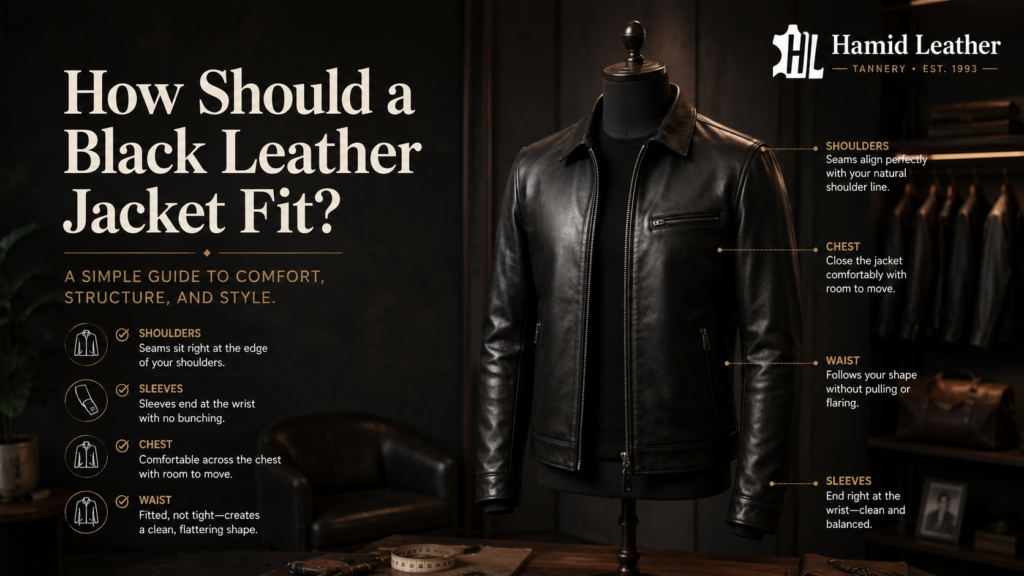
A black leather jacket should fit close enough to create a clean, structured silhouette while still allowing comfortable movement. It should not feel painfully tight, restrict your arms or place excessive pressure on the zip and seams. The correct fit depends on the jacket style, leather type, body shape and clothing you plan to wear underneath it. A slim lambskin café racer will fit differently from a relaxed leather bomber or a thick cowhide biker jacket. This guide explains how a black leather jacket should fit across the shoulders, chest, sleeves, waist and body. It also covers sizing, layering, movement and online shopping considerations for individual and B2B buyers. Why the Fit of a Leather Jacket Matters Fit affects more than appearance. It also influences comfort, movement, durability and how the jacket ages. A correctly fitted black leather jacket should: Follow the body’s natural shape Allow normal arm movement Close without excessive strain Provide suitable room for layering Maintain balanced proportions Avoid unnecessary bulk Place minimal stress on the seams Feel secure without causing discomfort A jacket that is too tight may strain the stitching, zip and leather around the shoulders, chest and underarms. A jacket that is too large may look shapeless, create excess material around the back and cause the sleeves or shoulders to hang incorrectly. Decide What You Will Wear Underneath Before choosing a size, decide how you expect to wear the jacket. If you normally wear it over a T-shirt or lightweight shirt, a closer fit may be appropriate. If you plan to wear jumpers, hoodies or thermal layers, the jacket will need additional space through the chest, shoulders, sleeves and armholes. Common layering options include: T-shirt Polo shirt Formal shirt Lightweight knitwear Sweatshirt Hoodie Thick winter jumper Thermal clothing Try the jacket with the type of layer you intend to wear regularly. A jacket that fits perfectly over a T-shirt may become uncomfortable when worn over thick knitwear. Understand the Intended Jacket Style Different black leather jacket styles are designed to fit differently. Biker Jacket A biker jacket normally has a close, structured fit. The shoulders should sit securely, while the chest should allow the asymmetric zip to close without pulling. Because biker jackets often use substantial cowhide, belts and heavy hardware, some initial firmness is normal. However, the jacket should still permit natural movement. Café Racer Jacket A café racer usually has a slim or regular silhouette with a straight front zip and band collar. It should follow the chest and waist without creating excessive folds. The clean design makes shoulder alignment and sleeve length particularly important. Bomber Jacket A leather bomber generally has a more relaxed body. Ribbed cuffs and waistbands create shape at the sleeves and hem. The chest may have more space than a café racer, but the jacket should not look excessively wide or inflated. Aviator Jacket Aviator jackets are often heavier and roomier because they may include shearling, quilted lining or insulation. They should allow space for warm clothing without making the shoulders look oversized. The weight should remain balanced across the body. Leather Blazer A black leather blazer should have a tailored appearance. The shoulder line should be clean, the lapels should lie flat and the front should close without pulling. Soft lambskin, sheepskin or calfskin can provide the drape required for this style. Oversized Leather Jacket An oversized jacket intentionally uses dropped shoulders, a wider body and longer sleeves. It should still look balanced rather than appearing as though the wearer accidentally selected the wrong size. How Should the Shoulders Fit? The shoulders are one of the most important areas to examine. For a standard or slim-fitting jacket, the shoulder seams should generally align with your natural shoulder points. They should not sit significantly above the shoulders or extend too far down the arms. Signs of a correct shoulder fit include: Shoulder seams align with the body The jacket lies smoothly across the upper back There is no severe pulling around the armholes The collar remains in the correct position The sleeves hang naturally You can raise and extend your arms The shoulders may be too tight if: The seams sit above your natural shoulders The leather pulls strongly across the back The collar moves backwards The armholes press painfully You cannot reach forward comfortably The front zip becomes distorted The shoulders may be too large if: The seams fall significantly down the upper arms Excess leather gathers around the shoulder area The sleeves appear too long The jacket loses its intended shape Dropped shoulder seams can be correct on intentionally relaxed or oversized designs. Always consider the intended silhouette before judging the fit. How Should the Chest Fit? The chest should feel secure when the jacket is fully closed, but it should not be compressed. Close the main zip or buttons and check whether: The front lies reasonably flat The zip remains straight You can breathe normally You can move your arms There is no severe pulling around the chest The lapels or collar remain correctly positioned The seams are not under excessive pressure Some small tension lines may appear on a fitted jacket, especially when new leather is firm. However, deep horizontal pulling lines usually indicate that the chest is too tight. If the front panels overlap excessively, the leather collapses around the chest or large folds appear near the armholes, the jacket may be too large. How Should the Waist Fit? The correct waist fit depends on the jacket’s cut. A slim café racer or fitted biker jacket may follow the waist closely. A bomber may have a wider body that is shaped by a ribbed waistband, while a straight-cut jacket may provide more room around the midsection. The waist should: Follow the intended silhouette Allow the jacket to close comfortably Avoid excessive pressure when sitting Sit smoothly without large folds Provide enough room for planned layers A tight waistband can cause the jacket to rise when you move or sit. It may
What to Look for When Buying a Black Leather Jacket Online
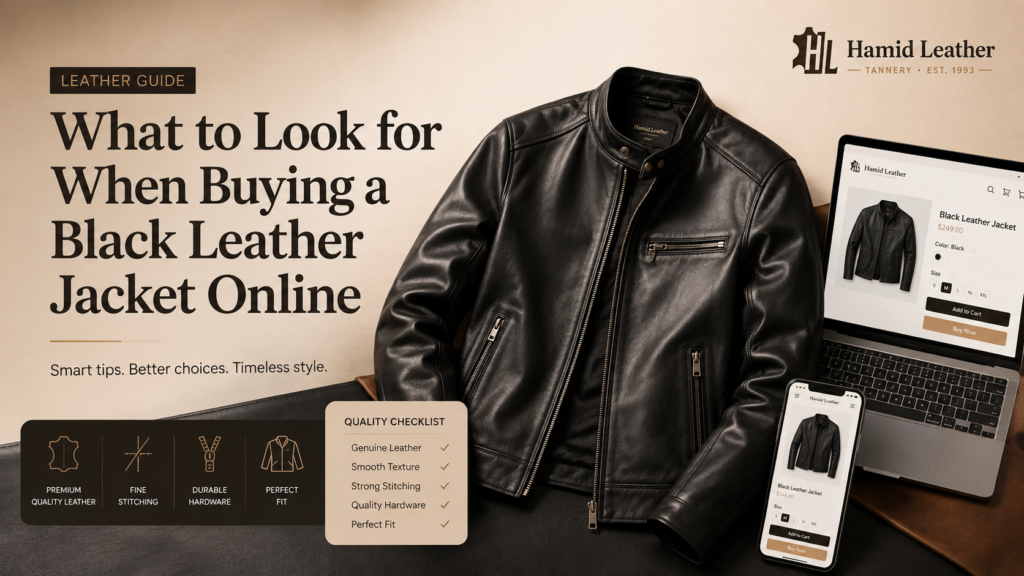
Buying a black leather jacket online gives you access to more styles, materials and price ranges than you may find in local stores. However, you cannot touch the leather, test the zips or try the jacket on before placing your order. Product photographs can also make different jackets appear almost identical, even when their leather quality, fit and construction vary considerably. For this reason, online buyers must evaluate the product description, measurements, photographs, material specifications, customer reviews and return policy carefully. This guide explains what to look for when buying a black leather jacket online so that you can select a jacket that suits your style, fits correctly and provides reliable long-term performance. Decide How You Intend to Wear the Jacket Before comparing products, determine where and how you expect to wear the jacket. Consider whether you need it for: Everyday casual wear Smart-casual outfits Work or travel Cold-weather use Lightweight seasonal layering Motorcycle-inspired fashion Evening occasions Occasional wear Long-term wardrobe use Your intended use will influence the most suitable jacket style, leather type, thickness, lining and fit. For example, a thick cowhide biker jacket may provide the structure needed for a rugged appearance, but it may feel unnecessarily heavy for mild weather. A lightweight lambskin jacket may be more comfortable for regular fashion wear but require more careful handling. Choose a Suitable Jacket Style Black leather jackets are available in several classic styles. Understanding their design features can help you narrow down your online search. Biker Jacket A traditional biker jacket often includes: An asymmetric front zip Wide lapels Metal snaps Multiple zip pockets A waist belt Structured shoulders Substantial hardware This style creates a bold and rugged appearance. Cowhide and buffalo leather are commonly used because they support the jacket’s structure and hardware effectively. Café Racer Jacket A café racer has a cleaner and more minimal design. It normally features: A straight front zip A band collar Limited hardware Streamlined pockets A fitted or regular silhouette Café racer jackets are versatile and can work with jeans, trousers, shirts, knitwear and simple footwear. Bomber Jacket A leather bomber usually has a relaxed body, front zip and fitted or ribbed cuffs and waistband. It is a practical choice for buyers who want: Casual styling Comfortable movement Room for light layering A classic silhouette Everyday versatility Aviator Jacket Aviator jackets frequently include a large collar, warm lining and heavier construction. Shearling-lined designs are especially suitable for colder climates. Check the product weight and lining details carefully, as aviator jackets can be considerably heavier than other leather-jacket styles. Leather Blazer A black leather blazer provides a more refined appearance. It may include notched lapels, tailored seams and a button closure. Lambskin, sheepskin and calfskin are commonly suited to this style because they provide the softness and drape needed for tailored garments. Minimalist Leather Jacket Minimalist jackets use clean lines, discreet pockets and limited hardware. Their simple appearance makes them easy to combine with casual and smart-casual outfits. For additional help comparing materials, fits and designs, read this complete guide on how to choose the perfect black leather jacket. Confirm Whether the Jacket Uses Real or Synthetic Leather Online product titles can sometimes be unclear. Terms such as “leather look,” “vegan leather,” “PU leather” and “faux leather” refer to synthetic materials rather than animal leather. If you want a genuine leather jacket, look for a clear material description stating the animal source. Common descriptions may include: Cowhide leather Sheepskin leather Lambskin leather Goatskin leather Buffalo leather Calfskin leather Do not assume that a jacket is made from genuine leather simply because the word “leather” appears in its title. Read the complete material section and check the outer-shell composition. If the information is unclear, contact the seller before ordering. Identify the Type of Leather The animal source affects the jacket’s weight, softness, strength, grain and price. Cowhide Cowhide is strong, durable and naturally structured. It is commonly used for biker, café racer, bomber and utility jackets. It is suitable for buyers who prioritise: Durability Shape retention Substantial construction Resistance to regular use A structured silhouette Thicker cowhide may feel firm when new and require a break-in period. Sheepskin Sheepskin is usually lighter and more flexible than cowhide. It is useful for fitted jackets and comfortable everyday wear. Its main characteristics include: Softness Flexibility Low weight Comfortable movement Attractive drape Lambskin Lambskin is recognised for its exceptionally soft and refined surface. It is commonly used for luxury fashion jackets, blazers and slim silhouettes. Although comfortable and elegant, lambskin is generally more delicate than heavy cowhide. Goatskin Goatskin provides an effective balance between strength, flexibility and manageable weight. Its visible natural grain also gives jackets a distinctive appearance. It is commonly used for: Bomber jackets Flight jackets Casual outerwear Lightweight structured designs Buffalo Leather Buffalo leather often has a pronounced grain and substantial feel. It works well for rugged, distressed and heritage-inspired jackets. Calfskin Calfskin has a fine grain and smooth appearance. It can offer a balance between durability, softness and luxury. The best leather depends on the jacket’s design and your intended use. One animal source should not automatically be considered superior for every product. Look Beyond the Term “Genuine Leather” “Genuine leather” tells you that real leather is present, but it does not provide enough information to judge its overall quality. The jacket could be made from: Full-grain leather Top-grain leather Corrected-grain leather Split leather Heavily coated leather Whenever possible, look for a description that identifies the leather grade as well as the animal source. Full-Grain Leather Full-grain leather retains the natural outer surface of the hide. It may display pores, grain variation, wrinkles and healed natural marks. It is valued for its strong fibre structure and ability to develop character over time. Top-Grain Leather Top-grain leather normally receives some surface correction to create a cleaner and more consistent appearance. It can provide a useful balance between natural character, durability and visual uniformity. Corrected-Grain Leather Corrected-grain leather is buffed and finished to reduce
How to Choose the Perfect Black Leather Jacket
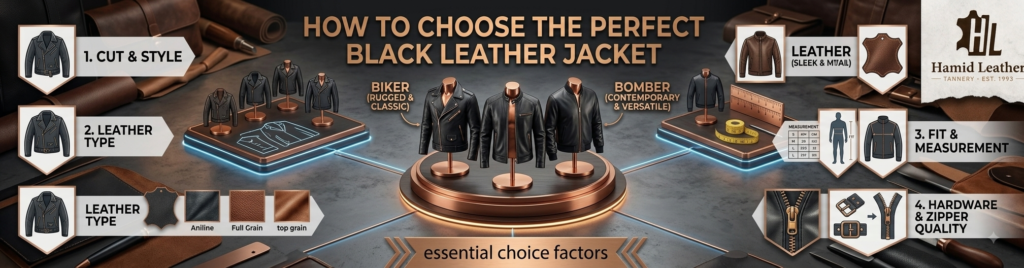
Choosing the perfect black leather jacket requires more than selecting an attractive design. The right jacket should match your personal style, body shape, climate, intended use and expectations for comfort and durability. Black leather jackets are available in many styles, including biker, bomber, café racer, aviator, blazer and minimalist designs. They can also be made from cowhide, sheepskin, lambskin, goatskin, buffalo leather or calfskin. Each option offers a different balance of strength, softness, weight and appearance. This guide explains how to choose the perfect black leather jacket by evaluating its style, leather type, fit, construction, lining, hardware and overall quality. Decide How You Will Use the Jacket Start by considering where and how often you plan to wear the jacket. A jacket intended for daily use should provide comfort, durability and enough versatility to work with different outfits. A fashion-focused jacket may prioritise softness, fit and visual appeal, while a winter jacket requires a warmer lining and sufficient room for layering. Consider whether you need the jacket for: Everyday casual wear Work or smart-casual outfits Evening occasions Motorcycle-inspired styling Cold-weather use Travel Occasional fashion wear Long-term investment A branded retail collection Your intended use will influence nearly every other decision, including the leather, thickness, style, lining and hardware. Choose the Right Jacket Style The best style depends on your wardrobe, body shape and preferred appearance. Black Leather Biker Jacket A biker jacket usually features an asymmetric front zip, wide lapels, metal snaps and several pockets. It creates a bold and structured appearance and works well with: Jeans T-shirts Boots Knitwear Casual dresses Streetwear Traditional biker jackets are often made from cowhide or buffalo leather because these materials support the jacket’s structure and hardware. Choose a biker jacket if you want a strong statement piece with a rugged appearance. Black Café Racer Jacket A café racer jacket has a cleaner, more minimal design. It normally includes a straight front zip, band collar and limited decoration. This style is suitable for people who want a leather jacket that looks modern without being overly detailed. A café racer works well with: Slim or straight-leg trousers Dark denim Plain shirts Polo shirts Chelsea boots Minimal trainers Its simple design also makes the leather’s grain, colour and finishing more noticeable. Black Leather Bomber Jacket A bomber jacket usually has a relaxed body, front zip and ribbed or fitted cuffs and waistband. It offers a casual and comfortable appearance and is particularly useful for everyday wear. Depending on its construction, it may be made from cowhide, goatskin, sheepskin or lambskin. Choose a bomber jacket if you prefer: A relaxed fit Comfortable movement Casual styling Room for light layering A classic, versatile silhouette Black Aviator Jacket Aviator jackets often feature a warm lining, large collar and substantial construction. Shearling-lined or insulated versions are suitable for colder climates. Because these jackets are visually heavier, they work particularly well with simple trousers and footwear. Choose an aviator jacket if warmth and heritage styling are more important than lightweight wear. Black Leather Blazer A leather blazer provides a more refined and formal appearance. It may include notched lapels, a button closure and tailored seams. Soft lambskin, sheepskin or calfskin is usually more suitable than heavy cowhide because the jacket needs to drape naturally. A black leather blazer can work with: Tailored trousers Fine knitwear Shirts Dresses Smart footwear Business-casual outfits Minimalist Black Leather Jacket Minimalist jackets use clean lines, discreet pockets and limited hardware. They are highly versatile because they avoid design elements strongly associated with a particular trend. A well-made minimalist jacket can remain relevant for many years. Select the Most Suitable Leather The animal source has a significant effect on the jacket’s strength, weight, softness and grain. Cowhide Cowhide is strong, structured and durable. It is suitable for biker, café racer, bomber and utility jackets. Advantages include: Excellent durability Good shape retention Strong resistance to regular use Suitability for substantial hardware Attractive ageing However, thicker cowhide may feel firm when new and require time to soften. Sheepskin Sheepskin is lighter and more flexible than cowhide. It is a good choice for fitted jackets and comfortable everyday wear. It offers: Softness Flexibility Low weight Comfortable movement Good drape Sheepskin may require more careful handling than heavy cowhide, particularly around sharp objects and high-friction areas. Lambskin Lambskin is recognised for its smooth, luxurious feel. It works especially well for refined fashion jackets, blazers and slim silhouettes. Choose lambskin if softness and elegance are your main priorities. However, it is generally less suitable for extremely rugged use. Goatskin Goatskin provides excellent strength relative to its weight. Its natural grain gives it a distinctive appearance. It is suitable for: Bomber jackets Flight jackets Casual outerwear Lightweight structured designs Goatskin is a practical option for buyers who want durability without the heavier feel of thick cowhide. Buffalo Leather Buffalo leather often has a strong, pronounced grain and substantial structure. It works well for rugged, vintage and heritage-inspired jackets. It may feel heavier and firmer than lambskin or sheepskin, but it can provide excellent long-term performance. Calfskin Calfskin has a fine grain, smooth surface and refined appearance. It can provide a balance between luxury, flexibility and strength. Its premium qualities make it suitable for tailored jackets and higher-priced fashion collections. Understand Leather Grades Leather grade can influence the jacket’s appearance, performance and price. Full-Grain Leather Full-grain leather retains the hide’s natural outer grain. It generally offers strong fibres, natural texture and attractive ageing. Minor pores, wrinkles and healed marks may remain visible. These characteristics should appear balanced rather than carelessly positioned. Top-Grain Leather Top-grain leather has usually received light surface correction to create a more consistent appearance. It can provide a good balance between durability, softness and visual uniformity. Corrected-Grain Leather Corrected-grain leather is buffed and finished to reduce visible surface imperfections. It may also receive an embossed grain. High-quality corrected-grain leather can be practical and durable, especially when consistent colour and easy maintenance are important. Split Leather Split leather comes from the
How Black Leather Jackets Are Manufactured
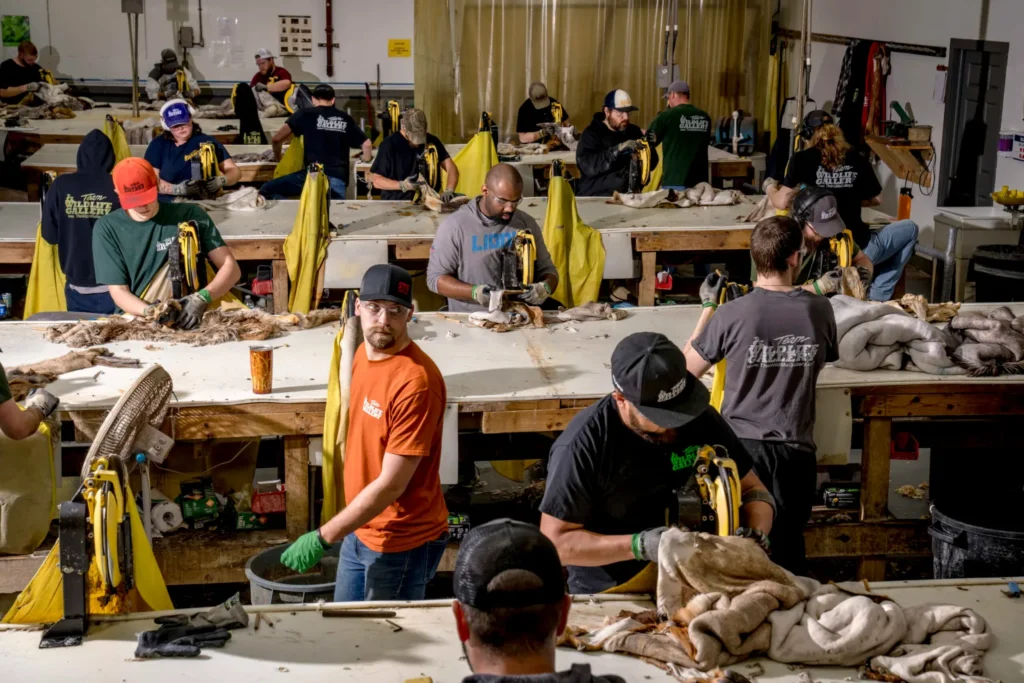
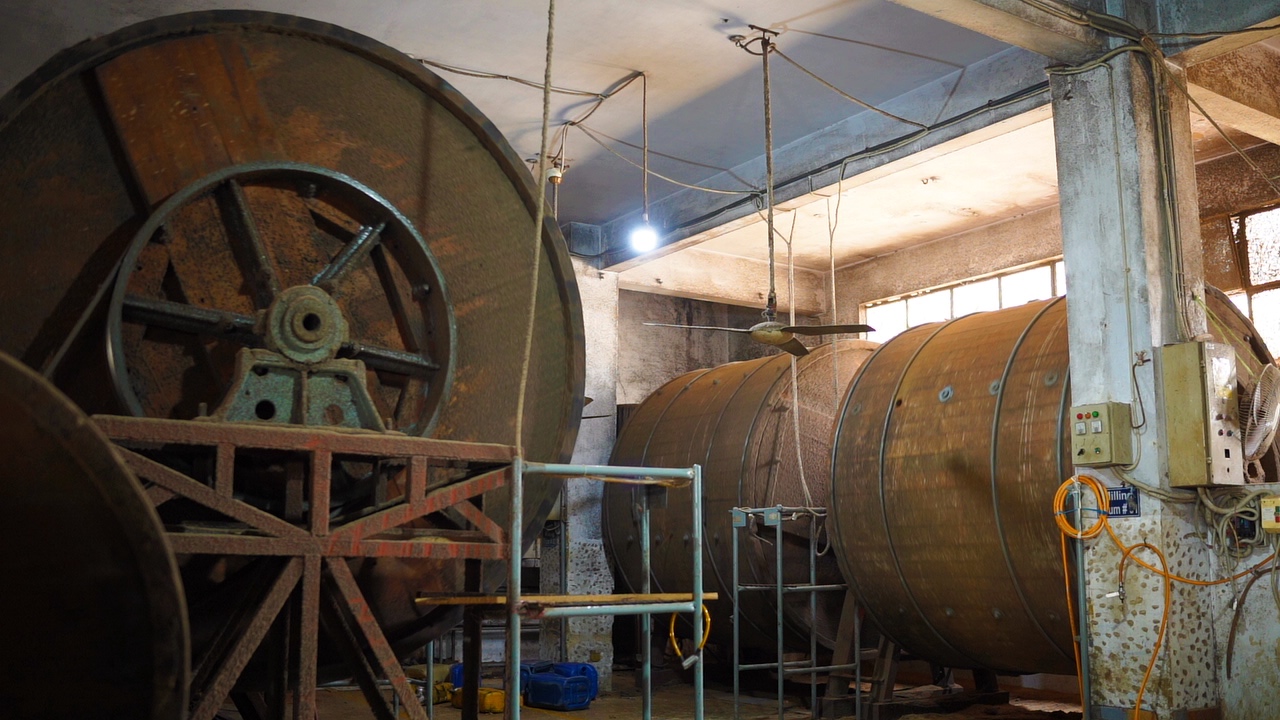
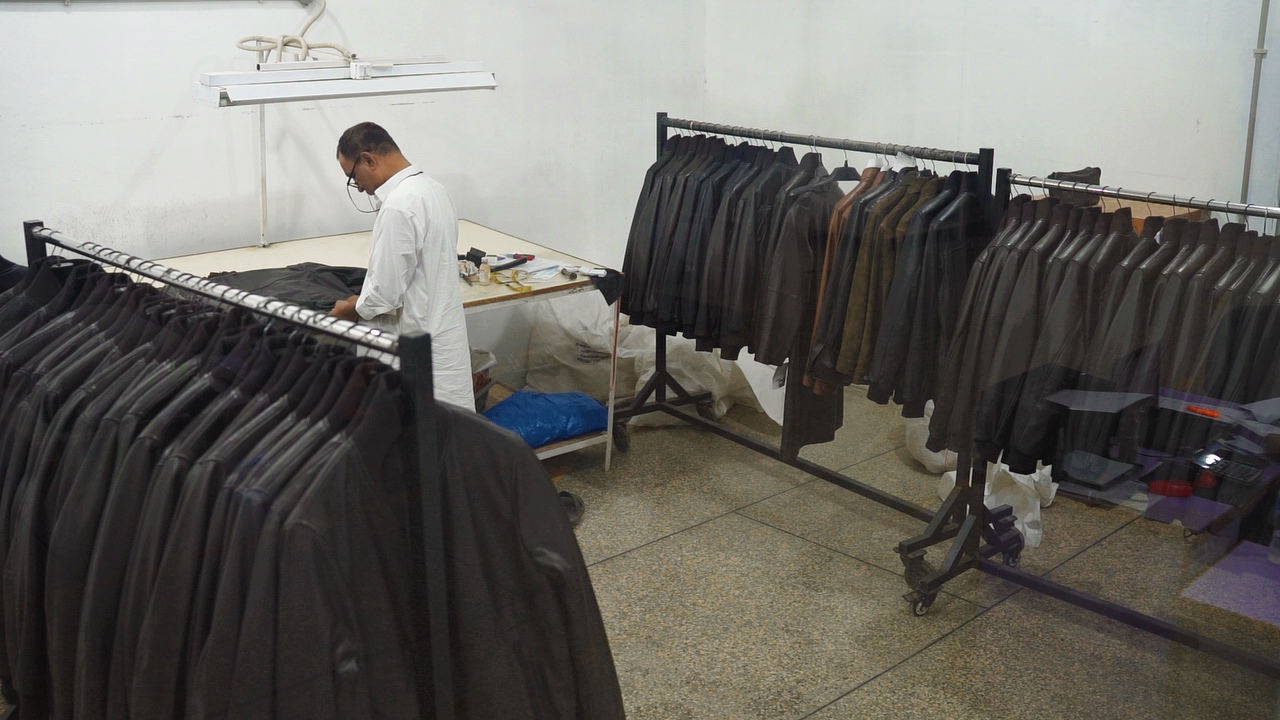
Black leather jackets are manufactured through a detailed process that combines leather selection, tanning, dyeing, pattern development, cutting, stitching, finishing and quality control. Although the completed jacket may appear simple, its production requires careful coordination between tanneries, designers, pattern makers, cutters, machine operators and quality-control teams. Every decision—from the animal hide and leather thickness to the stitching thread and zip quality—affects the jacket’s appearance, comfort and durability. This guide explains how black leather jackets are manufactured, from raw hide selection to final packaging, while highlighting the quality standards important to fashion brands, wholesalers and retailers. Black Leather Jacket Manufacturing Process at a Glance The main manufacturing stages include: Selecting the animal hide Preserving and preparing the raw hide Tanning the leather Dyeing it black Applying the required surface finish Grading and matching the leather Developing the jacket pattern Producing and approving samples Cutting the leather panels Preparing the lining and components Stitching the jacket Installing zips and hardware Finishing the garment Conducting quality inspections Pressing, packing and shipping Each stage must be controlled carefully because defects in leather manufacturing are often difficult or expensive to correct later. Step 1: Selecting the Right Animal Hide The manufacturing process begins with selecting the type of leather suitable for the jacket’s design, price and intended use. Common options include: Cowhide Sheepskin Lambskin Goatskin Buffalo leather Calfskin Cowhide Cowhide is strong, structured and durable. It is frequently used for biker jackets, café racers, bombers and rugged outerwear. Sheepskin Sheepskin is softer, lighter and more flexible. It works well for fitted jackets, fashion garments and lightweight collections. Lambskin Lambskin provides a smooth, soft and luxurious touch. It is commonly selected for premium fashion jackets but generally requires more careful handling. Goatskin Goatskin offers good strength without excessive weight. Its distinctive grain makes it suitable for bomber, flight and casual leather jackets. Buffalo Leather Buffalo leather usually has a bold grain and substantial structure. It is often used for vintage, distressed and heritage-inspired products. Calfskin Calfskin provides a fine grain and refined appearance. It is suitable for luxury jackets requiring a balance between softness and durability. The best material depends on the required weight, structure, flexibility, grain, finish and target retail price. Step 2: Preserving the Raw Hides Fresh animal hides contain moisture and organic material, so they must be preserved quickly to prevent decomposition. Common preservation methods include: Salting Brining Chilling Controlled drying Salt removes moisture and reduces bacterial growth while the hides are transported to the tannery. When the hides arrive, they are inspected and sorted according to: Animal type Size Weight Thickness Visible damage Surface condition Expected quality grade Hides with severe cuts, holes or extensive damage may be unsuitable for large visible jacket panels. Step 3: Soaking and Cleaning Preserved hides must be cleaned before tanning. They are placed in large rotating drums containing water and controlled chemicals. Soaking removes salt, dirt, blood and other unwanted materials while restoring moisture lost during preservation. The tannery carefully controls: Water temperature Drum speed Soaking time Chemical concentration pH level Improper soaking can cause uneven processing later, affecting softness, colour and surface quality. Step 4: Liming and Dehairing During liming, hides are treated to remove hair and unwanted proteins. This stage helps: Loosen hair follicles Remove natural grease Open the fibre structure Prepare the hide for tanning Improve chemical penetration After liming, machinery removes the loosened hair and remaining tissue. The fleshing process cleans the inner side of the hide by removing fat, flesh and connective tissue. Careful machine adjustment is essential because excessive pressure may cut or weaken the leather. Step 5: Splitting the Hide Thick hides may be split horizontally into separate layers. The upper layer contains the natural grain and may be used to produce: Full-grain leather Top-grain leather Corrected-grain leather The lower layer is called split leather. It may be finished or coated for use in lower-priced garments and other leather products. Splitting helps manufacturers control thickness and use different sections of the hide efficiently. For jackets, leather thickness must match the design. A lightweight fashion jacket requires different material from a structured motorcycle-inspired jacket. Step 6: Deliming, Bating and Pickling After liming, the hide’s alkalinity must be reduced. Deliming Deliming removes residual lime and gradually lowers the pH. Bating Bating uses enzymes to clean and soften the fibre structure. It contributes to a smoother surface and more flexible leather. Pickling During pickling, hides are treated with salt and acid to prepare them for certain tanning methods, particularly chrome tanning. Precise chemical control is important because uneven treatment can lead to poor tanning penetration or inconsistent leather performance. Step 7: Tanning the Leather Tanning converts raw hide into stable leather that resists decomposition. The main tanning methods used for jacket leather include: Chrome Tanning Chrome tanning is widely used for garment leather because it can produce: Softness Flexibility Heat resistance Colour consistency Efficient production Good physical performance The leather produced after chrome tanning commonly has a pale blue-grey appearance and is sometimes called wet blue. Vegetable Tanning Vegetable tanning uses tannins obtained from plant sources. It can produce firm leather with strong natural character and excellent ageing potential. However, vegetable-tanned leather is generally less common for soft fashion jackets because it may feel firmer and require longer processing. Chrome-Free and Alternative Tanning Some manufacturers use chrome-free or metal-free systems to meet particular brand requirements. These processes must be supported by clear technical specifications and testing. The tanning method influences softness, colour absorption, durability, moisture response and environmental performance. Step 8: Neutralisation and Retanning After primary tanning, the leather undergoes additional processing to create the required jacket characteristics. Neutralisation adjusts its acidity and prepares it for retanning, dyeing and fatliquoring. Retanning may be used to improve: Fullness Softness Grain tightness Shape retention Dye uniformity Touch Water resistance Overall performance The retanning formula depends on the animal source and final product. A soft lambskin fashion jacket requires a different formulation from a firm full-grain cowhide biker jacket. Step 9: Dyeing the Leather
Why Full-Grain Leather Is Ideal for Premium Black Leather Jackets
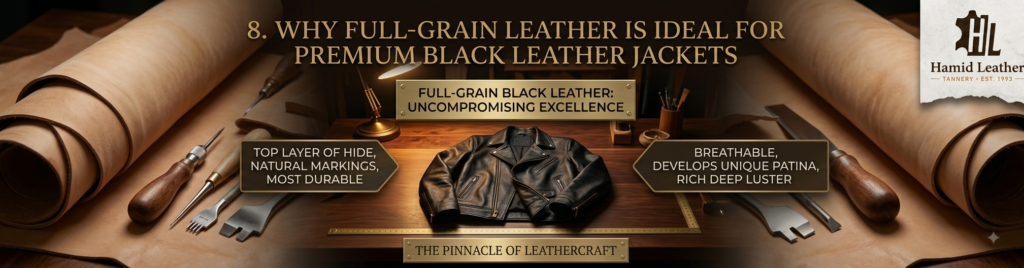
Full-grain leather is widely regarded as one of the finest materials for producing premium black leather jackets. It retains the strongest and most natural part of the hide, offering excellent durability, distinctive grain and the ability to develop character over time. Unlike heavily corrected leather, full-grain leather is not sanded extensively to remove natural surface features. Its pores, grain patterns and subtle variations remain visible, giving every jacket an authentic and individual appearance. However, premium quality depends on more than the leather grade alone. Hide selection, tanning, dyeing, thickness, panel matching, stitching and finishing all influence the final result. This guide explains why full-grain leather is ideal for premium black leather jackets and what consumers, fashion brands and wholesale buyers should consider before choosing it. What Is Full-Grain Leather? Full-grain leather is made from the uppermost section of an animal hide. This layer contains the natural grain and tightly connected fibres that provide strength and durability. During production, the hide is cleaned, tanned and finished, but its natural surface is not heavily buffed or sanded. Full-grain leather may show natural characteristics such as: Fine grain variations Pores Wrinkles Small healed marks Differences in texture Subtle tonal variation These characteristics are not necessarily defects. When carefully selected and balanced across a jacket, they demonstrate the natural origin of the material. Full-grain leather can receive different finishes, including aniline, semi-aniline, waxed, oiled or lightly pigmented treatments. The finish determines how much of the natural surface remains visible and how resistant the jacket is to moisture, stains and everyday wear. Full-Grain Leather vs Other Leather Grades Understanding how full-grain leather differs from other grades helps explain its premium position. Full-Grain Leather Full-grain leather retains the original grain surface. It usually provides excellent strength, natural character and long-term ageing potential. Top-Grain Leather Top-grain leather also comes from the upper section of the hide, but its surface may be lightly sanded or corrected to reduce visible imperfections. It provides a smoother and more consistent appearance. Corrected-Grain Leather Corrected-grain leather receives more extensive surface treatment. The natural grain may be buffed and replaced with an embossed pattern before pigments or coatings are applied. Split Leather Split leather comes from the lower layer of the hide. It is generally less dense and may receive a coating designed to imitate higher-quality grain leather. Bonded Leather Bonded leather is manufactured using leather fibres or scraps combined with binding materials. It does not offer the same structure, durability or ageing qualities as a complete full-grain hide. Consumers should also understand the difference between natural leather and synthetic alternatives. This comparison of genuine leather vs faux leather black jackets explains how the materials differ in composition, comfort, care and durability. Why Full-Grain Leather Is Considered Premium Full-grain leather is considered premium because it preserves the most structurally valuable section of the hide. Its dense fibre structure provides several advantages: Strong resistance to regular wear Excellent shape retention Natural surface character Better long-term ageing Greater refinishing potential A substantial and luxurious feel Individual grain patterns Strong premium-market appeal Producing consistent full-grain leather also requires careful hide selection. Because the surface is not heavily corrected, marks and irregularities cannot simply be concealed under thick coatings. Manufacturers must select suitable hides and position jacket panels carefully. This process requires greater skill, time and material control, contributing to the higher cost of premium full-grain jackets. Exceptional Durability Durability is one of the main reasons full-grain leather is ideal for premium black leather jackets. The outer grain layer contains tightly packed fibres that help the leather resist stretching, abrasion and everyday use. When the material is properly tanned and maintained, it can remain functional and attractive for many years. Full-grain leather is particularly suitable for: Biker jackets Café racer jackets Bomber jackets Utility jackets Heritage outerwear Premium casual jackets Long-term wardrobe pieces The jacket’s lifespan still depends on leather thickness, construction and care. Poor stitching or weak hardware can reduce the durability of a jacket even when excellent leather is used. For that reason, full-grain leather should be combined with secure seams, reinforced stress points, dependable zips and a properly fitted lining. Natural Grain and Individual Character Every hide has its own grain pattern. Full-grain leather preserves this individuality instead of covering it with a completely artificial surface. A premium black leather jacket may display: Subtle grain changes Fine wrinkles Natural pores Slight tonal depth Gentle variations in texture Unique ageing patterns These characteristics create visual depth, particularly when the leather uses an aniline, semi-aniline, waxed or oiled finish. Black leather is sometimes assumed to hide every natural feature, but the quality of the finish still matters. A carefully developed black shade can enhance the grain while maintaining a rich and sophisticated appearance. Brands seeking a completely uniform surface may prefer corrected top-grain leather. Full-grain leather is better suited to collections where authenticity and natural character are important. It Develops a Distinctive Patina One of the most valued features of full-grain leather is its ability to develop a patina. Patina refers to the gradual changes in colour, texture and gloss that occur as leather is worn and handled. It may appear around: Elbows Shoulders Cuffs Pocket openings Collar edges Front closures Seams Rather than simply deteriorating, quality full-grain leather can become more visually interesting as it ages. The jacket begins to reflect the wearer’s movements, habits and environment. Patina is especially attractive on waxed, oiled and lightly finished black leather. It may create subtle tonal differences and a softer surface without reducing the jacket’s premium appearance. Patina should not be confused with peeling, cracking or coating separation. Those problems normally indicate surface damage, poor finishing or unsuitable care. Strength Without Excessive Coating Lower-grade leather may depend on heavy pigments and coatings to create a smooth appearance and hide surface imperfections. Full-grain leather generally requires less correction because the natural grain remains intact. A lighter finish allows the material’s original texture to remain visible. This can provide: A more natural touch Better visual depth Greater flexibility
Genuine Leather vs Faux Leather Black Jackets
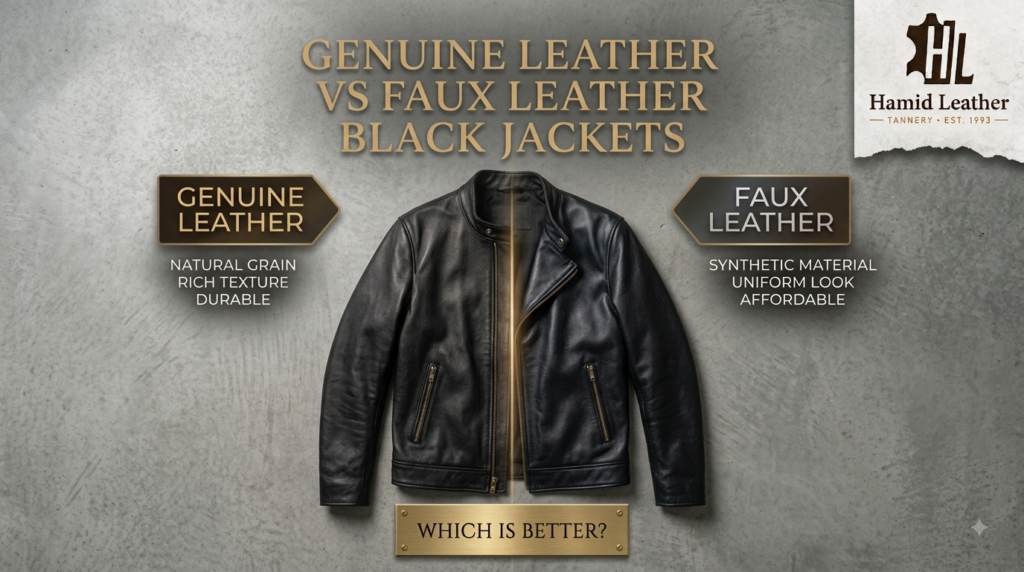
Black jackets are available in both genuine leather and faux leather, but the two materials differ significantly in composition, durability, appearance, comfort, maintenance and price. Genuine leather is made from animal hides and is valued for its natural grain, strength and ability to develop character over time. Faux leather is a synthetic alternative, commonly produced using polyurethane (PU) or polyvinyl chloride (PVC), designed to imitate the appearance of natural leather. Neither material is automatically suitable for every customer or clothing collection. Genuine leather is generally preferred for durability, ageing and premium positioning, while faux leather is often selected for affordability, consistent appearance and animal-free fashion products. This guide compares genuine leather vs faux leather black jackets to help consumers, fashion brands, wholesalers and retailers choose the most appropriate material. Genuine Leather vs Faux Leather at a Glance Feature Genuine leather Faux leather Material source Animal hide Synthetic or partly bio-based material Appearance Natural grain and variation Consistent and uniform Durability Generally high Usually lower Ageing Can develop a natural patina May peel or crack Breathability Generally better Often limited Initial price Usually higher Usually lower Weight Depends on the hide Often lightweight Water resistance Requires care Often resists light moisture Maintenance Needs suitable leather care Usually easy to wipe clean Repairability Can often be conditioned or refinished Usually difficult to repair Consistency Natural variation High visual consistency Best suited to Premium and long-lasting jackets Affordable and trend-focused jackets Genuine leather is usually the better option for longevity, natural character and premium collections. Faux leather may be more suitable when affordability, uniformity and animal-free materials are the main priorities. What Is Genuine Leather? Genuine leather is produced from animal hides that have been preserved through tanning. Common leather types used for black jackets include: Cowhide Sheepskin Lambskin Goatskin Buffalo leather Calfskin Each leather type provides different characteristics. Cowhide is generally strong and structured, making it suitable for biker jackets, café racers and rugged outerwear. Sheepskin and lambskin are softer and lighter, while goatskin offers an effective balance between strength and flexibility. The phrase “genuine leather” does not describe a specific level of quality. A jacket may use full-grain, top-grain, corrected-grain or split leather, and each option can differ in durability, appearance and price. Buyers should therefore examine the complete leather specification instead of relying only on the word “genuine.” What Is Faux Leather? Faux leather is a manufactured material designed to resemble genuine leather. It usually consists of a fabric base covered with a synthetic coating. The most common types include: PU Leather Polyurethane leather is generally soft, flexible and lightweight. It is frequently used for fashion jackets because it can imitate the smooth appearance of genuine leather at a lower price. PVC Leather PVC leather normally has a thicker and less breathable surface. It can offer good resistance to moisture but may feel stiffer than PU leather. Bio-Based Leather Alternatives Some newer materials use components derived from plants, agricultural waste or recycled sources. These may include materials marketed using cactus, grape, apple, mushroom or pineapple-related terminology. However, many bio-based alternatives still contain synthetic binders or coatings. Buyers should request detailed composition information instead of assuming that a plant-related name means the material is entirely natural or biodegradable. Which Material Looks Better? The better appearance depends on the desired style. Genuine leather displays natural grain, pores and subtle variations. These characteristics can make each jacket look slightly different. Over time, the surface may develop creases, tonal changes and a patina that reflects how the jacket has been worn. Faux leather usually provides a more uniform surface. Its colour, grain and gloss can be controlled closely during manufacturing, which is useful for fashion collections requiring consistency across large quantities. A high-quality faux leather can look convincing when new. However, lower-quality materials may appear excessively glossy, plastic-like or flat. Genuine leather is normally better for brands seeking natural character and premium appeal. Faux leather is useful for clean, consistent and trend-driven designs. Which Material Is More Durable? Genuine leather is generally more durable than faux leather. High-quality cowhide, goatskin and other suitable garment leathers can withstand years of regular use when the jacket is properly constructed and maintained. Genuine leather fibres are naturally interconnected, allowing the material to flex and soften over time. Surface scratches and signs of wear may sometimes be reduced through conditioning or professional refinishing. Faux leather has a coated structure. As the material ages, its surface may: Crack Peel Flake Separate from the backing Become sticky Lose flexibility Develop permanent creases Once the synthetic coating begins to peel extensively, repairs are often difficult and may only provide a temporary improvement. The lifespan of either jacket still depends on material quality, thickness, construction, climate, frequency of use and care. Which Material Is More Comfortable? Genuine leather usually becomes more comfortable with wear. Natural leather can adapt gradually to the wearer’s body, particularly around the shoulders, elbows and sleeves. Its breathability also helps reduce heat and moisture build-up. The initial comfort depends on the leather type. Lambskin and sheepskin are normally soft from the first wear, while thick cowhide may require a break-in period. Faux leather can feel soft and flexible when new, especially when high-quality PU is used. However, synthetic coatings generally allow less airflow. This may make a faux leather jacket feel warm or clammy in mild conditions. The lining, pattern and fit are also important. A well-designed faux leather jacket may feel more comfortable than a poorly fitted genuine leather one. Which Material Is More Breathable? Genuine leather is generally more breathable than synthetic leather. Its natural fibre structure allows a limited exchange of heat and moisture. This can make it more comfortable during extended wear. Faux leather usually has a less breathable coated surface. The wearer may experience greater heat and perspiration, particularly when the jacket uses a non-breathable lining. Perforations, ventilation panels and moisture-managing linings can improve comfort, but they do not make faux leather perform exactly like natural leather. Weight and Flexibility The weight