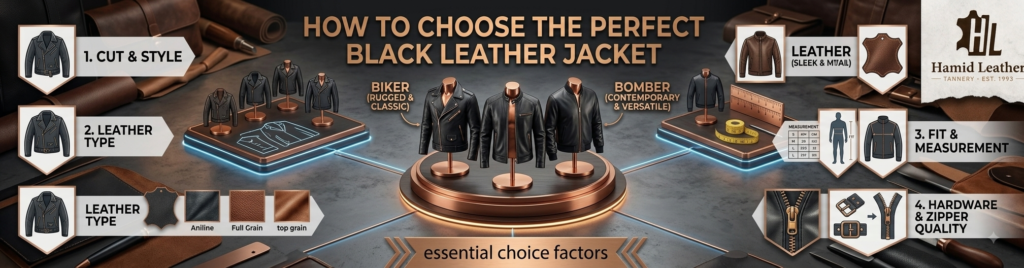
Choosing the perfect black leather jacket requires more than selecting an attractive design. The right jacket should match your personal style, body shape, climate, intended use and expectations for comfort and durability.
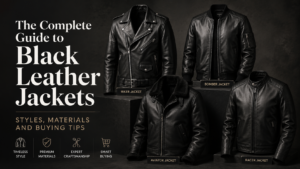
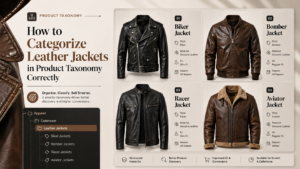
Black leather jackets are available in many styles, including biker, bomber, café racer, aviator, blazer and minimalist designs. They can also be made from cowhide, sheepskin, lambskin, goatskin, buffalo leather or calfskin. Each option offers a different balance of strength, softness, weight and appearance.
This guide explains how to choose the perfect black leather jacket by evaluating its style, leather type, fit, construction, lining, hardware and overall quality.
Decide How You Will Use the Jacket
Start by considering where and how often you plan to wear the jacket.
A jacket intended for daily use should provide comfort, durability and enough versatility to work with different outfits. A fashion-focused jacket may prioritise softness, fit and visual appeal, while a winter jacket requires a warmer lining and sufficient room for layering.
Consider whether you need the jacket for:
- Everyday casual wear
- Work or smart-casual outfits
- Evening occasions
- Motorcycle-inspired styling
- Cold-weather use
- Travel
- Occasional fashion wear
- Long-term investment
- A branded retail collection
Your intended use will influence nearly every other decision, including the leather, thickness, style, lining and hardware.
Choose the Right Jacket Style
The best style depends on your wardrobe, body shape and preferred appearance.
Black Leather Biker Jacket
A biker jacket usually features an asymmetric front zip, wide lapels, metal snaps and several pockets.
It creates a bold and structured appearance and works well with:
- Jeans
- T-shirts
- Boots
- Knitwear
- Casual dresses
- Streetwear
Traditional biker jackets are often made from cowhide or buffalo leather because these materials support the jacket’s structure and hardware.
Choose a biker jacket if you want a strong statement piece with a rugged appearance.
Black Café Racer Jacket
A café racer jacket has a cleaner, more minimal design. It normally includes a straight front zip, band collar and limited decoration.
This style is suitable for people who want a leather jacket that looks modern without being overly detailed.
A café racer works well with:
- Slim or straight-leg trousers
- Dark denim
- Plain shirts
- Polo shirts
- Chelsea boots
- Minimal trainers
Its simple design also makes the leather’s grain, colour and finishing more noticeable.
Black Leather Bomber Jacket
A bomber jacket usually has a relaxed body, front zip and ribbed or fitted cuffs and waistband.
It offers a casual and comfortable appearance and is particularly useful for everyday wear. Depending on its construction, it may be made from cowhide, goatskin, sheepskin or lambskin.
Choose a bomber jacket if you prefer:
- A relaxed fit
- Comfortable movement
- Casual styling
- Room for light layering
- A classic, versatile silhouette
Black Aviator Jacket
Aviator jackets often feature a warm lining, large collar and substantial construction.
Shearling-lined or insulated versions are suitable for colder climates. Because these jackets are visually heavier, they work particularly well with simple trousers and footwear.
Choose an aviator jacket if warmth and heritage styling are more important than lightweight wear.
Black Leather Blazer
A leather blazer provides a more refined and formal appearance. It may include notched lapels, a button closure and tailored seams.
Soft lambskin, sheepskin or calfskin is usually more suitable than heavy cowhide because the jacket needs to drape naturally.
A black leather blazer can work with:
- Tailored trousers
- Fine knitwear
- Shirts
- Dresses
- Smart footwear
- Business-casual outfits
Minimalist Black Leather Jacket
Minimalist jackets use clean lines, discreet pockets and limited hardware.
They are highly versatile because they avoid design elements strongly associated with a particular trend. A well-made minimalist jacket can remain relevant for many years.
Select the Most Suitable Leather
The animal source has a significant effect on the jacket’s strength, weight, softness and grain.
Cowhide
Cowhide is strong, structured and durable. It is suitable for biker, café racer, bomber and utility jackets.
Advantages include:
- Excellent durability
- Good shape retention
- Strong resistance to regular use
- Suitability for substantial hardware
- Attractive ageing
However, thicker cowhide may feel firm when new and require time to soften.
Sheepskin
Sheepskin is lighter and more flexible than cowhide. It is a good choice for fitted jackets and comfortable everyday wear.
It offers:
- Softness
- Flexibility
- Low weight
- Comfortable movement
- Good drape
Sheepskin may require more careful handling than heavy cowhide, particularly around sharp objects and high-friction areas.
Lambskin
Lambskin is recognised for its smooth, luxurious feel. It works especially well for refined fashion jackets, blazers and slim silhouettes.
Choose lambskin if softness and elegance are your main priorities. However, it is generally less suitable for extremely rugged use.
Goatskin
Goatskin provides excellent strength relative to its weight. Its natural grain gives it a distinctive appearance.
It is suitable for:
- Bomber jackets
- Flight jackets
- Casual outerwear
- Lightweight structured designs
Goatskin is a practical option for buyers who want durability without the heavier feel of thick cowhide.
Buffalo Leather
Buffalo leather often has a strong, pronounced grain and substantial structure. It works well for rugged, vintage and heritage-inspired jackets.
It may feel heavier and firmer than lambskin or sheepskin, but it can provide excellent long-term performance.
Calfskin
Calfskin has a fine grain, smooth surface and refined appearance. It can provide a balance between luxury, flexibility and strength.
Its premium qualities make it suitable for tailored jackets and higher-priced fashion collections.
Understand Leather Grades
Leather grade can influence the jacket’s appearance, performance and price.
Full-Grain Leather
Full-grain leather retains the hide’s natural outer grain. It generally offers strong fibres, natural texture and attractive ageing.
Minor pores, wrinkles and healed marks may remain visible. These characteristics should appear balanced rather than carelessly positioned.
Top-Grain Leather
Top-grain leather has usually received light surface correction to create a more consistent appearance. It can provide a good balance between durability, softness and visual uniformity.
Corrected-Grain Leather
Corrected-grain leather is buffed and finished to reduce visible surface imperfections. It may also receive an embossed grain.
High-quality corrected-grain leather can be practical and durable, especially when consistent colour and easy maintenance are important.
Split Leather
Split leather comes from the lower layer of the hide. It may receive a coating or finish to improve its appearance.
It is normally used for more affordable products but may not provide the same strength or ageing characteristics as high-quality full-grain or top-grain leather.
Do not rely only on the phrase “genuine leather.” Ask for the specific animal source, grade, thickness and finish whenever possible.
Choose the Correct Leather Thickness
The ideal thickness depends on the jacket’s design.
Thicker leather generally provides:
- Greater structure
- Stronger shape retention
- Better resistance to demanding wear
- A more substantial appearance
- A longer break-in period
Thinner leather generally provides:
- Greater flexibility
- Lower weight
- Better drape
- Easier movement
- A more fitted appearance
A heavy cowhide may be appropriate for a rugged biker jacket but uncomfortable for a tailored blazer. Similarly, very thin leather may not support large zips, belts or multiple pockets effectively.
The correct leather should support the jacket’s silhouette without making it unnecessarily stiff or weak.
Find the Right Fit
Fit is one of the most important parts of choosing a black leather jacket.
The jacket should sit close enough to create a clean shape but still allow natural movement. It should not feel painfully tight or depend on extreme stretching to become wearable.
Check the following areas carefully.
Shoulders
The shoulder seams should generally align with your natural shoulder points unless the design is intentionally oversized.
If the shoulders are too narrow, the jacket may restrict movement and pull across the upper back. If they are too wide, the sleeves may hang incorrectly.
Chest
Close the jacket completely. The chest should feel secure without excessive strain around the zip, buttons or seams.
If you plan to wear knitwear underneath, try the jacket with a similar layer before choosing the size.
Sleeves
The sleeves should reach approximately the wrist, although biker and riding-inspired jackets may have slightly longer sleeves.
Bend your elbows and reach forward. The sleeves should allow movement without pulling excessively through the shoulders or back.
Body Length
The ideal length depends on the style.
Biker and café racer jackets often finish near the waist or upper hip. Bombers may sit around the waist, while blazers and some utility jackets extend lower.
Short jackets can make the legs appear longer, while longer styles may provide more coverage and a relaxed appearance.
Armholes
Higher armholes can create a cleaner, more tailored fit, but they should not feel restrictive. Excessively low armholes may reduce mobility and create unnecessary bulk.
Perform a Movement Test
Do not judge the fit while standing still.
When trying on the jacket:
- Close the front zip or buttons
- Raise both arms
- Reach forward
- Bend your elbows
- Sit down
- Place your hands in the pockets
- Turn your upper body gently
- Try it with your intended layers
Some natural resistance is normal, particularly with new cowhide. However, the jacket should not cause pain, place severe pressure on the seams or prevent basic movement.
Choose Between a Slim, Regular or Relaxed Fit
Slim Fit
A slim-fit jacket creates a close and modern silhouette. It works well with lightweight clothing but may offer limited room for winter layers.
Regular Fit
A regular fit provides a balance between shape and comfort. It is generally the most versatile option for everyday use.
Relaxed or Oversized Fit
A relaxed jacket offers more room through the chest, shoulders and sleeves. It works well for layering and contemporary styling.
Choose the fit according to the intended appearance rather than automatically buying the tightest available size.
Consider Your Body Shape
The right design can create a balanced silhouette.
For broader shoulders, simple café racer or bomber jackets can maintain a clean shape without adding excessive detail.
For a lean frame, a fitted biker jacket may add structure through the shoulders and chest.
For a fuller midsection, a straight-cut jacket with minimal waistband pressure may feel more comfortable than a tightly ribbed bomber.
For shorter wearers, waist-length designs can help maintain proportion. Taller wearers may prefer jackets with slightly longer bodies and sleeves.
These are guidelines rather than strict rules. Comfort and personal preference remain more important than traditional styling advice.
Inspect the Leather Surface
Look at the jacket under natural or neutral lighting.
The leather should display:
- Consistent black colour
- Balanced grain
- Flexible finishing
- Clean panel selection
- Appropriate natural variation
- A surface suited to the advertised style
Avoid jackets with:
- Peeling
- Cracking
- Sticky coatings
- Severe colour differences
- Blisters
- Poorly concealed damage
- Excessive plastic-like rigidity
- Unbalanced panels
A completely uniform surface is not necessarily poor quality because pigmented leather can be intentionally consistent. The finish should simply remain flexible and properly bonded to the leather.
Choose the Right Black Finish
Black leather is available in several finishes.
Matte Black
Matte leather has a restrained, contemporary appearance. It works well for minimalist and café racer jackets.
Semi-Matte Black
Semi-matte finishes offer a balance between depth and low shine. They are versatile and suitable for many jacket styles.
Glossy Black
Glossy leather creates a bold and polished appearance. However, the finish should not feel excessively thick or plastic-like.
Waxed or Oiled Black
Waxed and oiled finishes can create tonal variation and a heritage appearance. They may develop additional character with use.
Distressed Black
Distressed leather is intentionally finished to appear aged or worn. The effect should be balanced across the jacket rather than appearing accidental.
The ideal finish depends on your wardrobe. Matte and semi-matte black are generally easier to combine with a wide range of outfits.
Check the Stitching
Examine the stitching around:
- Shoulders
- Armholes
- Collar
- Pockets
- Front zip
- Cuffs
- Side seams
- Hem
- Sleeve attachments
Stitches should be straight, secure and evenly spaced. Look for consistent thread tension and clean seam alignment.
Warning signs include:
- Loose threads
- Skipped stitches
- Open seams
- Crooked stitching
- Uneven stitch lengths
- Excessive puckering
- Multiple unnecessary needle holes
Leather retains needle holes, so accurate stitching is especially important.
Examine the Panel Matching
Leather jackets are made from multiple sections of natural hide. These sections should be matched carefully.
Compare the:
- Left and right sleeves
- Front panels
- Shoulders
- Collar
- Back panels
- Pocket components
The black shade, grain, thickness and gloss should appear balanced.
Perfect uniformity is not necessary, but one sleeve should not look significantly darker, smoother or more heavily grained than the other.
Test the Zips and Hardware
Open and close every zip several times.
The hardware should:
- Move smoothly
- Remain properly aligned
- Feel securely attached
- Avoid catching the lining
- Match across the jacket
- Have no sharp edges
- Suit the leather’s weight
Test all snaps, buckles and adjusters as well.
Large hardware can suit a substantial biker jacket but may distort lightweight lambskin. The components should support the design rather than overpower it.
Inspect the Lining
The lining affects comfort, warmth and movement.
Common options include:
- Polyester
- Viscose
- Cotton
- Satin
- Quilted fabric
- Wool blends
- Synthetic insulation
A lightweight, breathable lining may be suitable for mild weather, while a quilted or insulated lining provides additional warmth.
Make sure the lining:
- Sits smoothly
- Does not twist
- Allows arm movement
- Does not hang below the hem
- Is securely stitched
- Does not catch in the zip
- Has no open seams
A removable lining can increase versatility by allowing the jacket to be worn during different seasons.
Consider Your Climate
Your local weather should influence the jacket’s leather, thickness and lining.
For mild climates, consider:
- Lightweight sheepskin
- Lambskin
- Thin goatskin
- Breathable lining
- Minimal insulation
For colder climates, consider:
- Thicker cowhide
- Insulated lining
- Quilted construction
- Shearling
- Higher collars
- Secure cuffs and closures
For wet climates, choose a protected finish and follow the manufacturer’s care instructions. Genuine leather may resist light moisture depending on its finish, but it should not automatically be considered waterproof.
Check the Pockets
Pockets should be useful as well as visually balanced.
Check whether they:
- Are positioned evenly
- Open comfortably
- Have reinforced corners
- Use durable pocket bags
- Close properly
- Sit flat when empty
- Provide enough space for essential items
Interior pockets can be valuable for carrying a phone, cards or documents, but overloaded pockets may distort the jacket’s shape.
Evaluate the Collar and Cuffs
The collar should sit evenly without twisting, bubbling or lifting unexpectedly.
For biker jackets, ensure that the lapels lie correctly and the snaps are aligned. For café racer jackets, check that the band collar closes comfortably without pressing against the neck.
Cuffs should be symmetrical and easy to use. If they include zips or snaps, test every closure.
Look at Edge Finishing
Inspect the edges around the:
- Collar
- Cuffs
- Front opening
- Pocket openings
- Belt
- Hem
- Interior facings
Depending on the design, edges may be folded, painted, stitched or bound. They should appear clean and secure.
Avoid exposed adhesive, rough cutting, cracked edge paint, loose fibres or lining that is visible from the outside.
Consider Wardrobe Compatibility
A perfect jacket should work with clothing you already own.
Before buying, think about whether it matches your usual:
- Trousers
- Jeans
- Shirts
- T-shirts
- Knitwear
- Dresses
- Shoes
- Accessories
- Preferred colours
A heavily detailed biker jacket may be ideal for bold outfits, while a minimalist café racer or leather blazer may offer greater versatility.
Black is naturally adaptable, but the jacket’s silhouette and hardware will influence how easily it fits into your wardrobe.
Avoid Choosing Based Only on Trends
Trendy details can be attractive, but they may reduce the jacket’s long-term versatility.
If you want a jacket that remains wearable for many years, consider:
- Clean lines
- Balanced proportions
- Moderate hardware
- A classic collar
- Functional pockets
- A comfortable fit
- Durable black finishing
A timeless design does not need to be plain. It simply needs to suit your personal style beyond one season.
Set a Realistic Budget
The cost of a black leather jacket can be influenced by:
- Animal source
- Leather grade
- Hide quality
- Thickness
- Tanning and finishing
- Cutting yield
- Design complexity
- Hardware
- Lining
- Labour
- Brand positioning
- Order quantity
A higher price does not automatically guarantee better quality. Similarly, a lower-priced jacket is not necessarily unsuitable.
Evaluate the actual leather, fit, stitching, lining and hardware rather than relying only on the price or brand name.
Understand How the Jacket Was Made
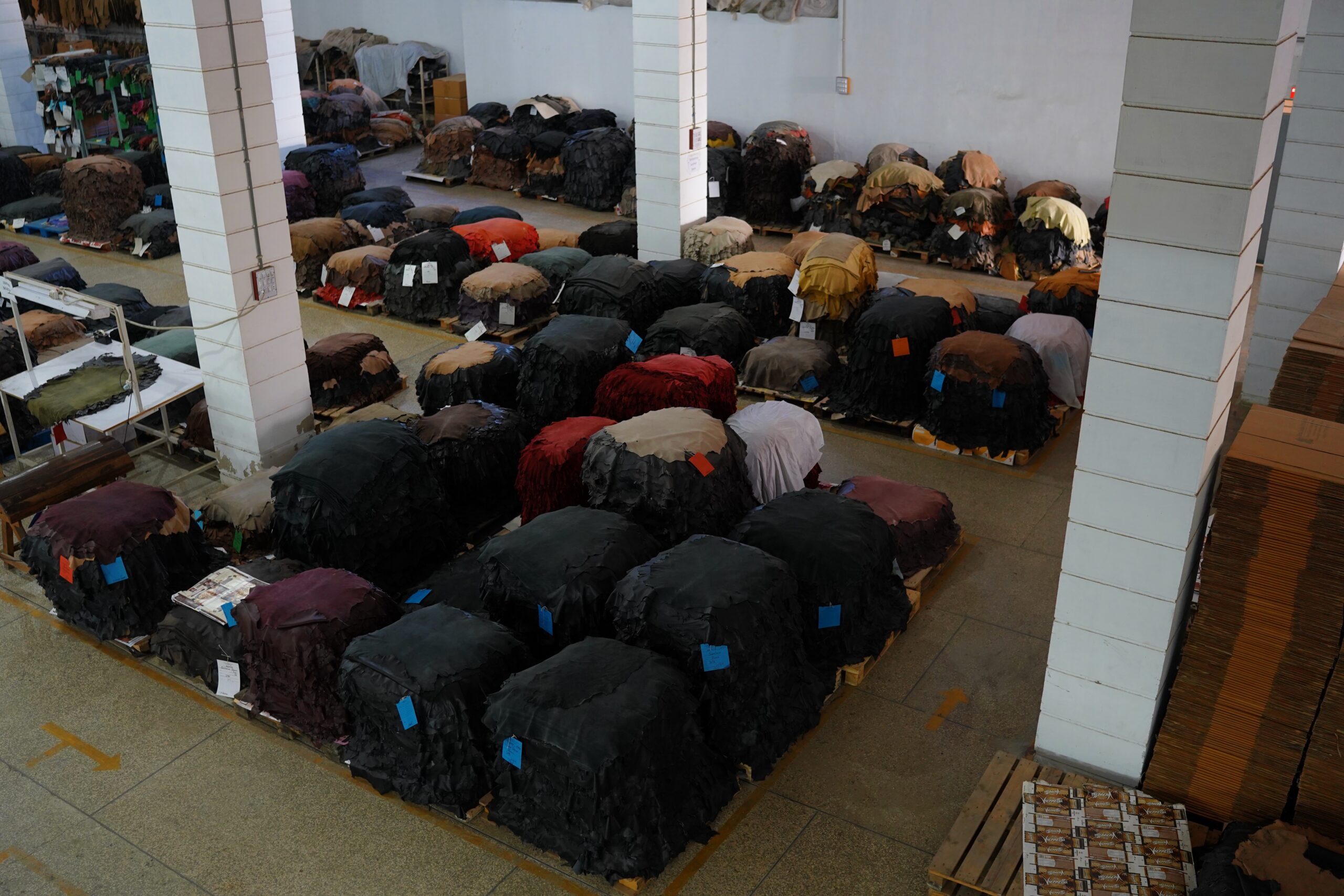
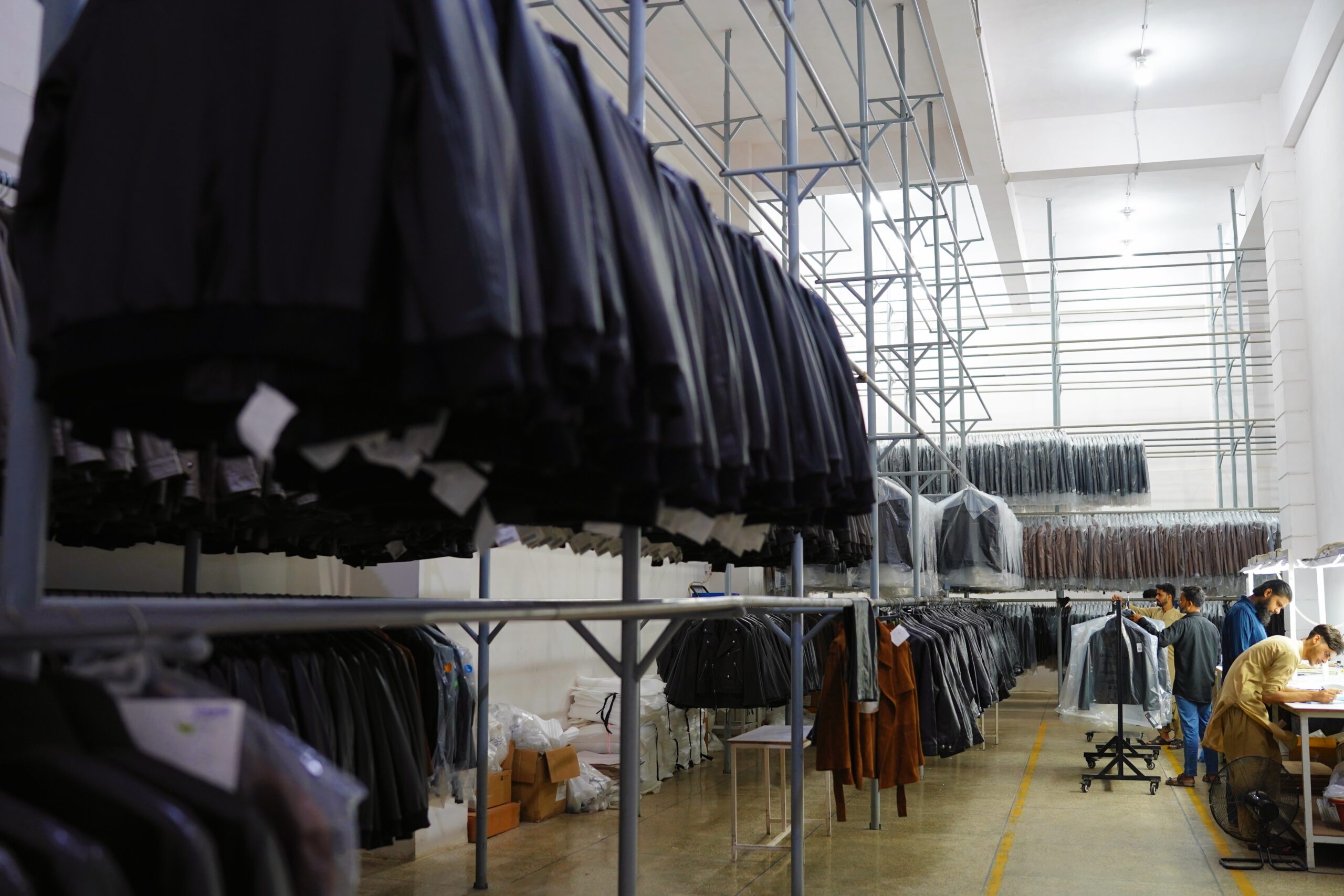
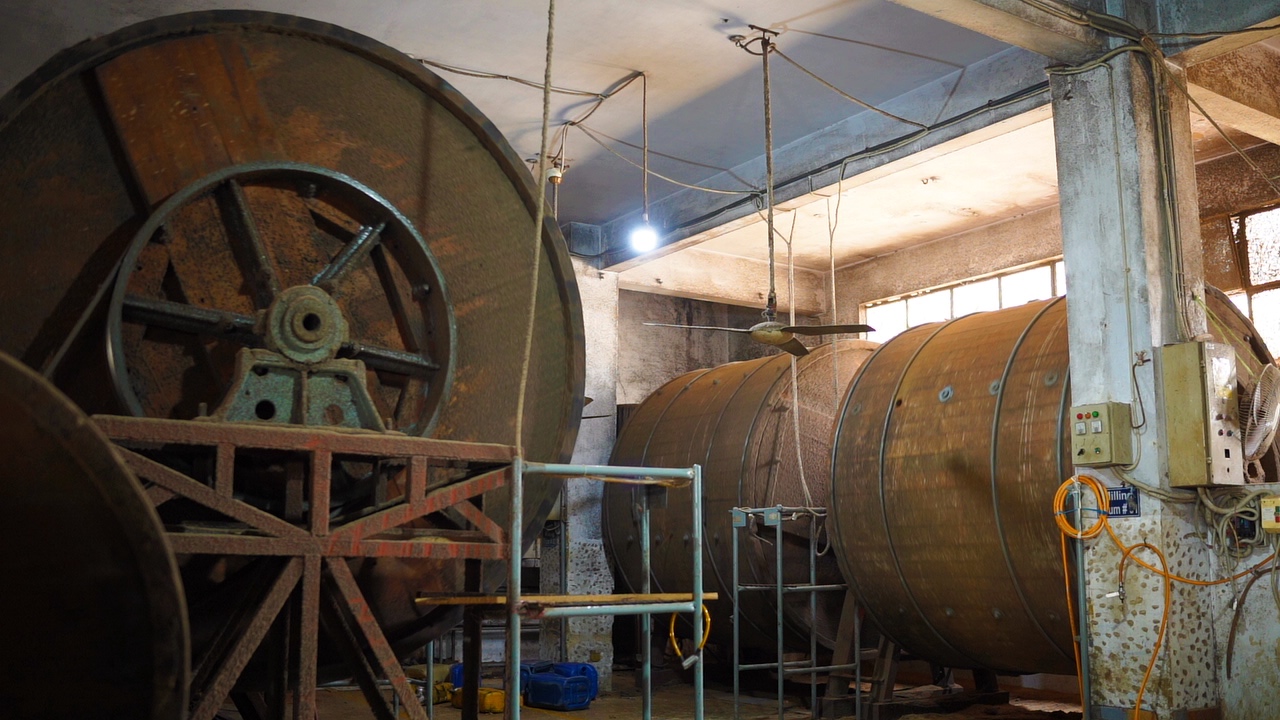
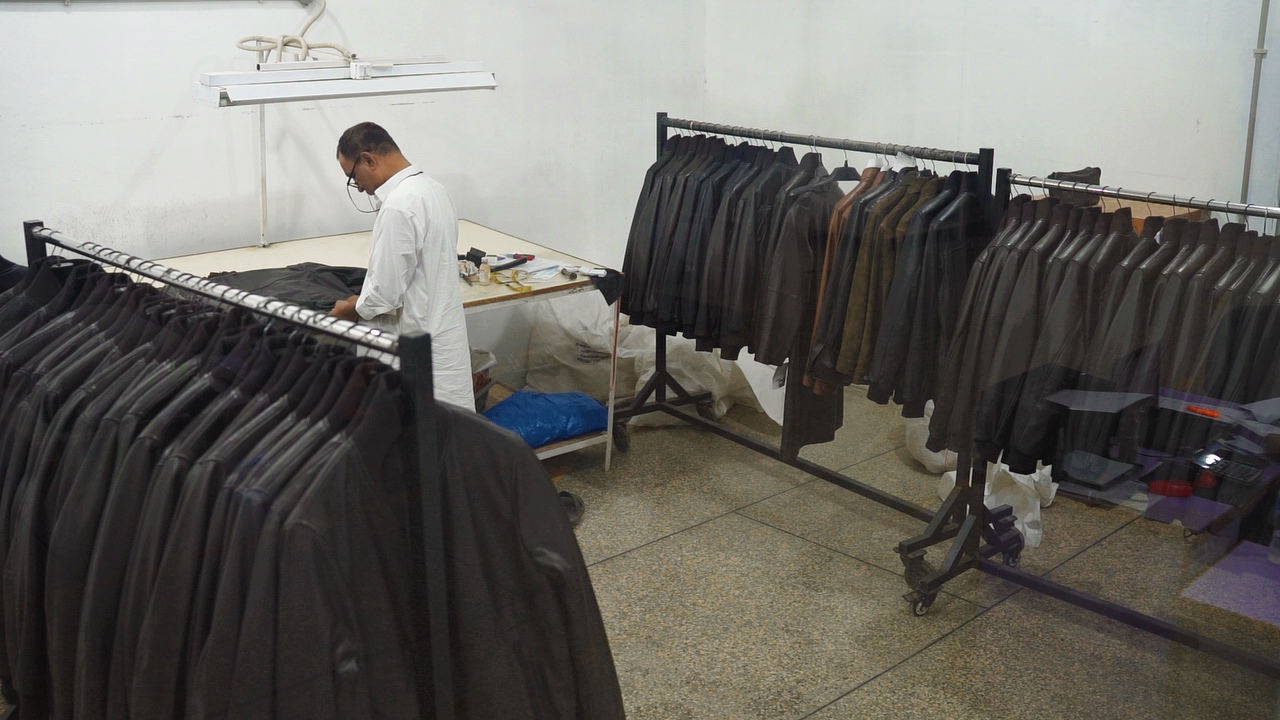
Manufacturing quality directly affects how a leather jacket looks and performs. Leather must be graded, matched and cut carefully before the panels are stitched and fitted with hardware and lining.
Understanding how black leather jackets are manufactured can help buyers recognise why hide selection, pattern accuracy, stitching and quality control are essential.
A jacket made from good leather can still perform poorly if it has inaccurate cutting, weak seams, unreliable hardware or a twisted lining.
Choose the Correct Size When Shopping Online
When purchasing online, do not rely only on labels such as small, medium or large. Sizing varies between brands and manufacturers.
Compare the product measurements with a jacket that already fits you well.
Important measurements include:
- Chest width
- Shoulder width
- Body length
- Sleeve length
- Waist width
- Hem width
- Upper-arm width
Check whether the measurements are taken from the garment or the body. Garment measurements normally include the additional space needed for comfort and movement.
Also review:
- The model’s height and size
- Fit description
- Intended layering
- Return policy
- Customer fit feedback
- Measurement tolerances
If you are between sizes, consider whether you prefer a close fit or need room for layering.
Ask the Right Questions Before Buying
Useful questions include:
- What animal leather is used?
- What is the leather grade?
- How thick is the leather?
- What type of finish does it have?
- Is the lining removable?
- What materials are used in the lining?
- What are the exact garment measurements?
- Is the jacket designed for layering?
- How should the leather be cleaned?
- Does the black colour have tested colourfastness?
- What is the return or alteration policy?
Detailed answers provide more confidence than broad descriptions such as “premium genuine leather.”
Advice for B2B Buyers
Fashion brands, wholesalers and retailers require more detailed evaluation than individual consumers.
Before placing a bulk order, buyers should approve:
- Leather source
- Leather grade
- Thickness range
- Black colour reference
- Grain appearance
- Gloss level
- Surface finish
- Lining
- Hardware
- Thread
- Labels
- Measurements
- Packaging
- Testing requirements
- Pre-production sample
A leather swatch is useful, but it cannot demonstrate the completed jacket’s fit, weight, drape or panel matching. Buyers should always evaluate a complete sample before bulk production.
For custom leather-jacket development and bulk manufacturing, Hamid Leather Ltd works with international fashion brands, wholesalers and retailers.
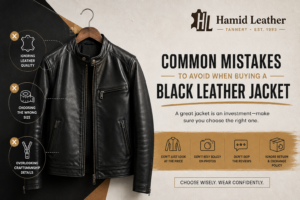
Common Mistakes to Avoid
When choosing a black leather jacket, avoid:
- Buying only because the leather feels soft
- Assuming heavy leather is always better
- Ignoring the shoulder fit
- Choosing a size without checking measurements
- Forgetting to account for layering
- Relying only on the term “genuine leather”
- Ignoring lining quality
- Failing to test the zips
- Overlooking crooked stitching
- Accepting severe panel mismatches
- Choosing a trend that does not suit your wardrobe
- Assuming all black finishes are identical
- Judging quality only by price
- Purchasing without checking care requirements
How to Care for Your Black Leather Jacket
Appropriate care can help preserve the jacket’s colour, shape and flexibility.
Recommended practices include:
- Store it on a wide, supportive hanger
- Keep it in a cool, ventilated place
- Avoid long-term plastic storage
- Protect it from prolonged sunlight
- Keep it away from radiators and direct heat
- Remove dust with a soft cloth
- Allow wet leather to dry naturally
- Use products suitable for the specific finish
- Test products on a hidden area
- Condition only when necessary
- Repair loose stitching promptly
- Use professional leather cleaning for serious stains
Do not apply large amounts of conditioner automatically. Overconditioning can darken the leather, soften it excessively or leave a greasy surface.
Frequently Asked Questions
Which black leather jacket style is most versatile?
A café racer or minimalist jacket is generally highly versatile because its clean design works with casual and smart-casual outfits.
Which leather is best for everyday wear?
Cowhide, goatskin and sheepskin can all be suitable. Cowhide offers greater structure, goatskin balances strength and weight, and sheepskin provides lightweight comfort.
Should a leather jacket fit tightly?
It should fit close enough to maintain its shape but still allow natural movement and suitable layering. It should not cause pain or place severe pressure on the seams.
Will a leather jacket stretch?
Natural leather may soften and adapt slightly with wear, particularly around movement areas. However, it should not be purchased several sizes too small in the expectation that it will stretch dramatically.
Which leather is best for a soft jacket?
Lambskin and sheepskin are popular choices for soft, lightweight jackets.
Which leather is best for a durable biker jacket?
Cowhide and buffalo leather are commonly used because they provide strength and structure.
Is a heavy leather jacket better?
Not automatically. The weight should match the design, climate and intended use.
How should the shoulders fit?
The shoulder seams should generally align with your natural shoulder points unless the jacket is intentionally oversized.
What should I wear under a leather jacket when trying it on?
Wear the type of clothing you expect to use regularly, such as a T-shirt, shirt or light jumper.
What is the best black finish?
Semi-matte black is highly versatile, while matte, glossy, waxed and distressed finishes suit different personal styles.
How can I tell if the jacket is well made?
Check its stitching, panel matching, lining, hardware, symmetry, fit and edge finishing. The leather should also remain flexible without peeling or cracking.
Is genuine leather always high quality?
No. The term does not explain the animal source, leather grade, thickness or finish.
Can I wear a black leather jacket with formal clothing?
A minimalist jacket or leather blazer can work with smart-casual and some formal outfits, depending on the occasion.
Should I size up for winter?
Consider sizing up only if you need room for thick layers. Compare the exact garment measurements before deciding.
How long can a good black leather jacket last?
A well-made jacket can last for many years when it is used appropriately and cared for correctly.
Final Thoughts
The perfect black leather jacket should match your lifestyle, personal style and expectations for comfort.
Begin by deciding how you will use it. A cowhide biker jacket may be ideal for someone who wants structure and rugged styling, while a lambskin café racer may suit a buyer looking for softness and a cleaner appearance. Bombers offer casual comfort, aviator jackets provide warmth and leather blazers create a more refined silhouette.
Fit should remain a priority. Check the shoulders, chest, sleeves, body length and armholes, and perform a movement test before making your decision. If shopping online, compare the exact garment measurements with a jacket you already own.
Inspect the complete product rather than focusing only on the leather. Stitching, panel matching, lining, hardware, pockets, edge finishing and symmetry all contribute to quality and long-term performance.
The best jacket is not necessarily the heaviest, softest or most expensive option. It is the jacket in which the material, design, fit and construction work together successfully.
By evaluating these features carefully, you can choose a black leather jacket that looks appropriate, feels comfortable and remains a valuable part of your wardrobe for years.