How to Identify a High-Quality Black Leather Jacket
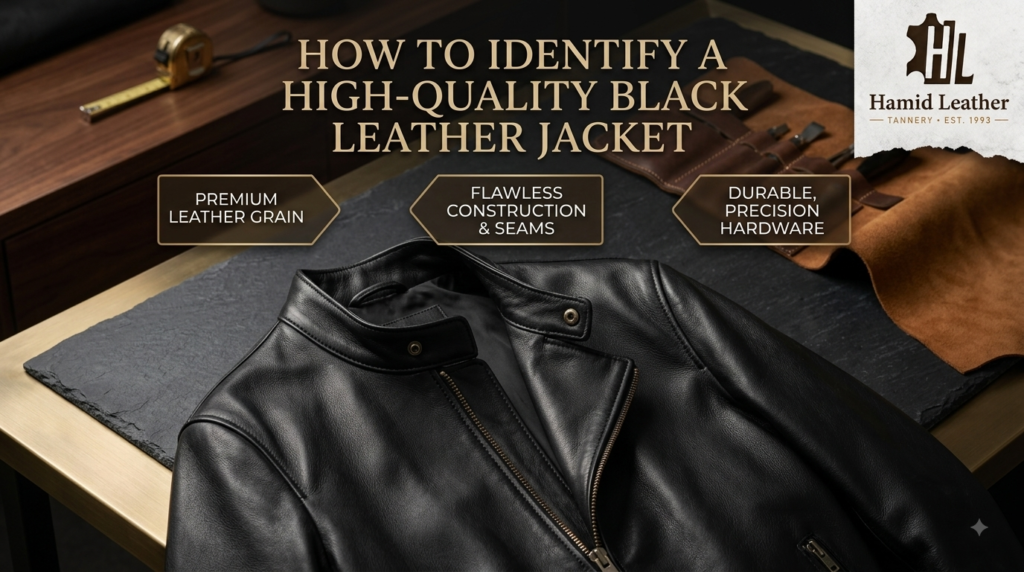
A high-quality black leather jacket should offer more than an attractive appearance. The type of leather, surface finish, stitching, lining, hardware, fit and overall construction all determine how the jacket will feel, perform and age. Two jackets may look similar in photographs but differ significantly in durability and comfort. One may use carefully selected hides, reinforced seams and reliable hardware, while the other may rely on heavily coated leather and weak construction. Whether you are purchasing a single jacket or sourcing a collection for a fashion brand, knowing what to inspect can help you make a better decision. This guide explains how to identify a high-quality black leather jacket by examining every important component. Start by Identifying the Leather Type The animal source affects the jacket’s weight, softness, strength and appearance. Common leathers used for black jackets include: Cowhide Sheepskin Lambskin Goatskin Buffalo leather Calfskin Cowhide is generally strong, structured and resistant to demanding use. It is commonly selected for biker jackets, café racers and rugged outerwear. Sheepskin is usually softer, lighter and more flexible. It works particularly well for fitted jackets, lightweight bombers and fashion-focused designs. Lambskin offers exceptional softness and a refined surface, while goatskin provides an effective balance between strength and manageable weight. Buffalo leather has a bold grain and substantial feel, whereas calfskin is valued for its smooth and premium appearance. No single leather is best for every jacket. The material should suit the intended style and use. For a more detailed material comparison, read this guide to cowhide vs sheepskin black leather jackets. Do Not Rely Only on the Term “Genuine Leather” The phrase “genuine leather” confirms that a product contains real leather, but it does not provide enough information to determine its quality. A genuine leather jacket may be made from full-grain, top-grain, corrected-grain or split leather. It may also have a light natural finish or a thick pigmented coating. When evaluating a jacket, ask for more specific information, including: Animal source Leather grade Thickness Tanning method Surface finish Country of origin Colourfastness Physical testing Precise specifications are particularly important for brands, wholesalers and retailers placing bulk orders. Examine the Leather Surface Natural leather is not expected to look completely artificial or identical across every panel. Small variations in grain, pores and texture can indicate the natural characteristics of the hide. However, excessive variation may suggest poor panel selection or weak quality control. Look for: Balanced grain across neighbouring panels Consistent black colour A flexible surface Natural texture Even finishing Clean cutting around seams and edges Avoid leather that shows: Peeling Surface cracking Sticky areas Blisters Loose coatings Severe colour differences Poorly concealed defects Plastic-like rigidity An extremely uniform surface does not necessarily mean the jacket is fake. Pigmented and corrected-grain leathers can have a consistent appearance. The important question is whether the finish remains flexible, properly bonded and suitable for the intended product. Feel the Leather Touch can reveal useful information about leather quality, although softness alone should not be treated as proof of quality. A high-quality black leather jacket should feel appropriate for its design. A biker jacket may use firm and substantial cowhide, while a fitted fashion jacket may require soft lambskin or sheepskin. Gently press and bend the leather. It should move naturally without feeling brittle, excessively dry or weak. Good jacket leather may feel: Supple or intentionally structured Consistent in thickness Smooth without feeling artificial Flexible around movement areas Substantial without unnecessary stiffness Some lower-quality jackets are mechanically softened or heavily coated to create an attractive first impression. Therefore, the leather’s feel must be considered alongside its strength, finish and construction. Check the Leather Thickness Leather thickness affects weight, structure, comfort and durability. Thicker leather normally provides: Greater shape retention Better resistance to abrasion A substantial appearance Increased durability A longer break-in period Thinner leather normally offers: Lower weight Greater flexibility Better drape Easier movement Suitability for fitted designs A high-quality jacket does not always need thick leather. The thickness should match the pattern and purpose. A heavy hide may be suitable for a rugged biker jacket but uncomfortable in a fitted blazer. Similarly, extremely thin leather may not provide enough structure for a jacket with large lapels, heavy zips or multiple pockets. The leather should also feel reasonably consistent across the body and sleeves. Inspect the Black Finish The black finish has a major influence on the jacket’s appearance and long-term performance. Black leather may have a: Matte finish Semi-matte finish Glossy surface Waxed appearance Oiled finish Distressed effect Vintage finish Two-tone effect A good finish should remain flexible when the leather bends. It should not crack around the elbows, shoulders, cuffs or pocket openings. Rub an inconspicuous area gently with a clean white cloth. Significant black colour transfer may indicate inadequate colourfastness. Minor transfer can occur with certain natural or heavily waxed finishes, so the test should be interpreted according to the product specification. For B2B production, black leather should be assessed for: Dry rubbing Wet rubbing Flex resistance Finish adhesion Water spotting Light exposure Shade consistency These tests help reduce the risk of fading, cracking and colour transfer after production. Look at the Panel Matching A leather jacket is normally constructed from several hide sections. Because natural leather varies, careful panel matching is essential. Inspect the front panels, sleeves, shoulders, collar and back. Their grain, colour and gloss should appear balanced. Poor panel matching may result in: One sleeve appearing darker than the other Different grain sizes across the front Uneven gloss Visible thickness differences One panel stretching more than another Natural variation is acceptable and may even add character. However, the jacket should still look intentional and visually balanced. Manufacturers should inspect and group hides before cutting to maintain consistency across complete garments and bulk orders. Inspect the Stitching Strong and accurate stitching is one of the clearest signs of a well-made leather jacket. Examine the seams around: Shoulders Armholes Collar Front closure Pockets Cuffs Side seams Hem Sleeve attachment The stitches should be
Cowhide vs Sheepskin Black Leather Jackets: Which Is Better?
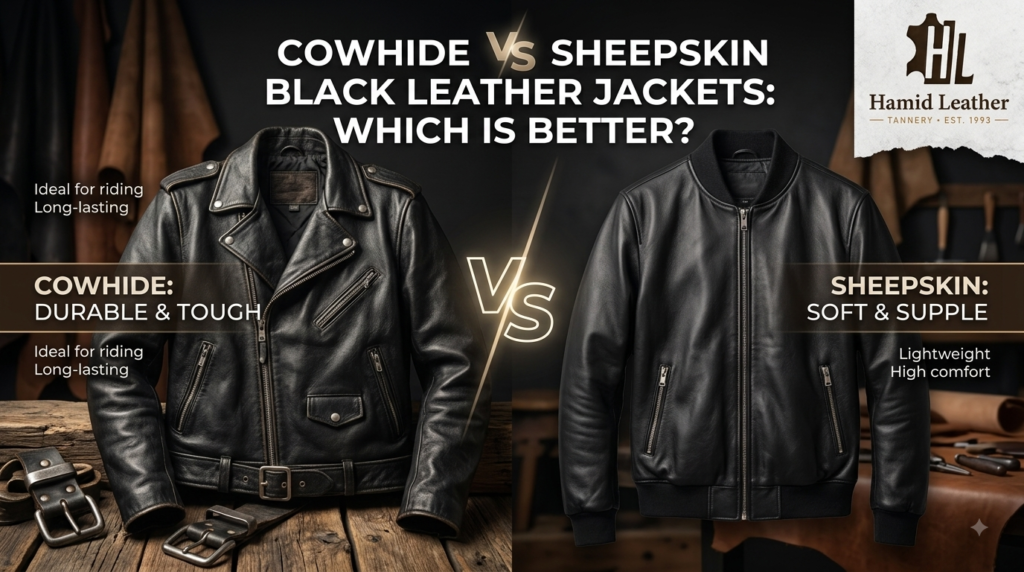
Choosing between cowhide and sheepskin is an important decision when buying or manufacturing a black leather jacket. Although both materials are genuine leather, they differ considerably in weight, softness, durability, appearance and suitability for different jacket styles. Cowhide is generally stronger, thicker and more resistant to demanding use. It is commonly selected for biker jackets, café racers and structured outerwear. Sheepskin is softer, lighter and more flexible, making it particularly suitable for fashion jackets, fitted silhouettes and comfortable everyday wear. Neither material is universally better. The right choice depends on the jacket’s intended purpose, target customer, climate, design and price position. This guide compares cowhide vs sheepskin black leather jackets to help consumers, fashion brands, wholesalers and retailers select the most suitable material. Cowhide vs Sheepskin Black Leather Jackets at a Glance Feature Cowhide leather Sheepskin leather Durability Excellent Moderate Weight Medium to heavy Light Softness Firm at first Naturally soft Flexibility Moderate Excellent Break-in period Often required Minimal Grain Strong and visible Fine and smooth Abrasion resistance Higher Lower Warmth Depends mainly on lining Comfortable but relatively light Shape retention Excellent Softer drape Best styles Biker, café racer and structured jackets Fashion, fitted and lightweight jackets Maintenance Generally more forgiving Requires gentler handling Typical price Varies by grade and finish Varies by softness and hide quality Cowhide is usually better when strength, structure and long-term durability are the main priorities. Sheepskin is generally better when softness, flexibility and lightweight comfort matter most. What Is Cowhide Leather? Cowhide is leather produced from cattle hides. It is one of the most widely used materials in the leather industry because cattle hides provide a large cutting area, strong fibre structure and substantial durability. The material can be produced in different thicknesses and finishes. Heavy cowhide is commonly used for rugged motorcycle-inspired jackets, while thinner garment-grade cowhide can be used for more flexible fashion outerwear. Common cowhide characteristics include: Strong fibre structure Good resistance to wear Medium to heavy weight Firm initial feel Visible natural grain Excellent shape retention Long-term durability Ability to develop character with age The final quality still depends on hide selection, tanning, thickness and finishing. Not every cowhide jacket provides the same level of quality. What Is Sheepskin Leather? Sheepskin leather is produced from sheep hides. When the wool is removed, the resulting leather is generally soft, lightweight and flexible. When the wool remains attached, the material is commonly called shearling. This distinction is important. A lightweight sheepskin fashion jacket is different from a thick shearling aviator jacket, even though both originate from sheep hides. Typical sheepskin leather characteristics include: Soft hand feel Lightweight construction Natural flexibility Fine grain Comfortable drape Minimal break-in period Suitability for fitted designs Greater sensitivity to abrasion Sheepskin is frequently used when comfort and appearance are more important than maximum resistance to rough conditions. Which Leather Is More Durable? Cowhide is generally more durable than sheepskin. Its dense fibre structure gives it greater resistance to: Abrasion Tearing Repeated wear Surface damage Stretching Stress around seams and pockets For this reason, cowhide is commonly selected for jackets that need to maintain their structure or withstand frequent use. Sheepskin can still provide good durability when the hide is carefully selected and the jacket is properly constructed. However, it is normally thinner and more vulnerable to scratches, stretching and rough handling. A well-made sheepskin jacket can remain wearable for many years, but it usually requires more careful use than a heavy cowhide jacket. The construction quality also matters. Poor stitching, weak zips or an unsuitable lining can shorten the life of a cowhide jacket, while strong construction can help a sheepskin jacket perform reliably. Which Leather Is Softer? Sheepskin is usually much softer than cowhide. A sheepskin jacket often feels comfortable from the first wear. The leather bends easily and follows the body without creating significant stiffness. Cowhide normally has a firmer feel, particularly when thick leather is used. New cowhide jackets may require a break-in period before the sleeves, shoulders and body become more flexible. Manufacturers can soften cowhide during processing, but very soft cowhide may still feel more substantial than sheepskin. Customers who prioritise immediate comfort will usually prefer sheepskin. Those who appreciate a structured jacket that gradually adapts to their body may prefer cowhide. Which Leather Is Lighter? Sheepskin is generally lighter than cowhide. This makes it particularly suitable for: Mild climates Indoor wear Travel Layering Slim-fit jackets Customers who dislike heavy outerwear Cowhide jackets can feel noticeably heavier, especially when they include thick leather, multiple pockets, metal hardware and insulated linings. However, leather thickness must also be considered. A thin garment cowhide jacket may be lighter than a heavily insulated shearling jacket. When comparing ordinary smooth cowhide with ordinary smooth sheepskin, sheepskin is usually the lighter option. Which Leather Provides Better Protection? Cowhide generally provides greater resistance to abrasion and surface damage. It is therefore the better option for rugged outerwear and motorcycle-inspired fashion jackets. However, an ordinary cowhide fashion jacket should not automatically be treated as specialist motorcycle protection. Protective riding equipment requires more than a strong outer material. It may also need: Abrasion-tested leather Reinforced seams Impact protectors Secure closures Suitable sleeve construction Safety certification Appropriate testing Sheepskin is more appropriate for fashion and general everyday use than demanding protective applications. Appearance and Grain Cowhide and sheepskin create different visual results. Cowhide Appearance Cowhide commonly has a stronger, more visible grain. It can create a rugged, substantial and structured appearance. Black cowhide may be finished in several ways, including: Smooth Pebbled Matte Glossy Waxed Oiled Distressed Vintage Two-tone The visible grain and firm structure make cowhide particularly effective for biker and heritage-inspired designs. Sheepskin Appearance Sheepskin usually has a finer and more delicate grain. Its softer structure creates a smoother drape around the body. Black sheepskin works well for: Minimalist designs Fitted jackets Lightweight bombers Cropped jackets Leather blazers Contemporary fashion pieces The surface can look polished and refined without appearing excessively heavy. Comfort and Flexibility Sheepskin generally offers better