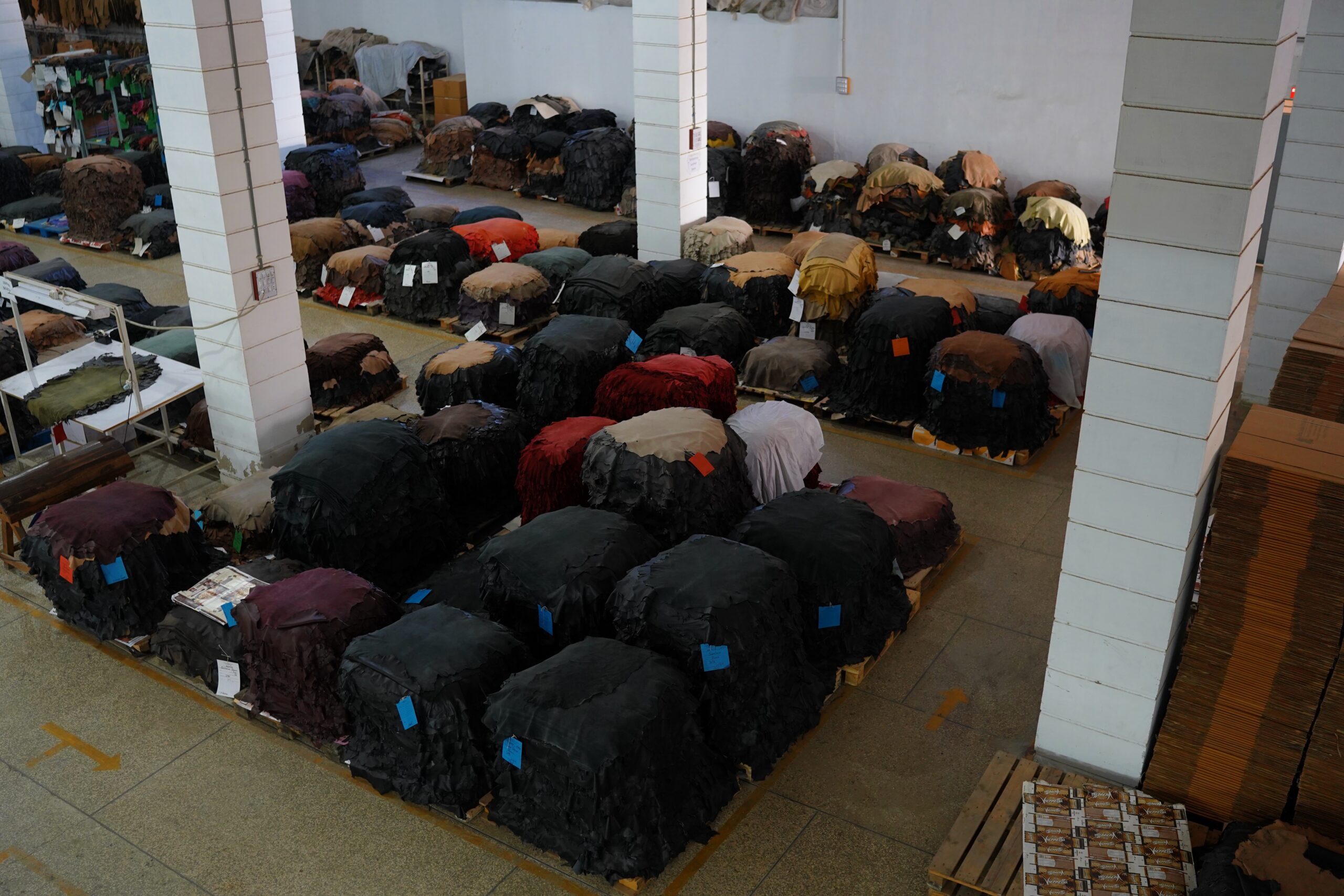
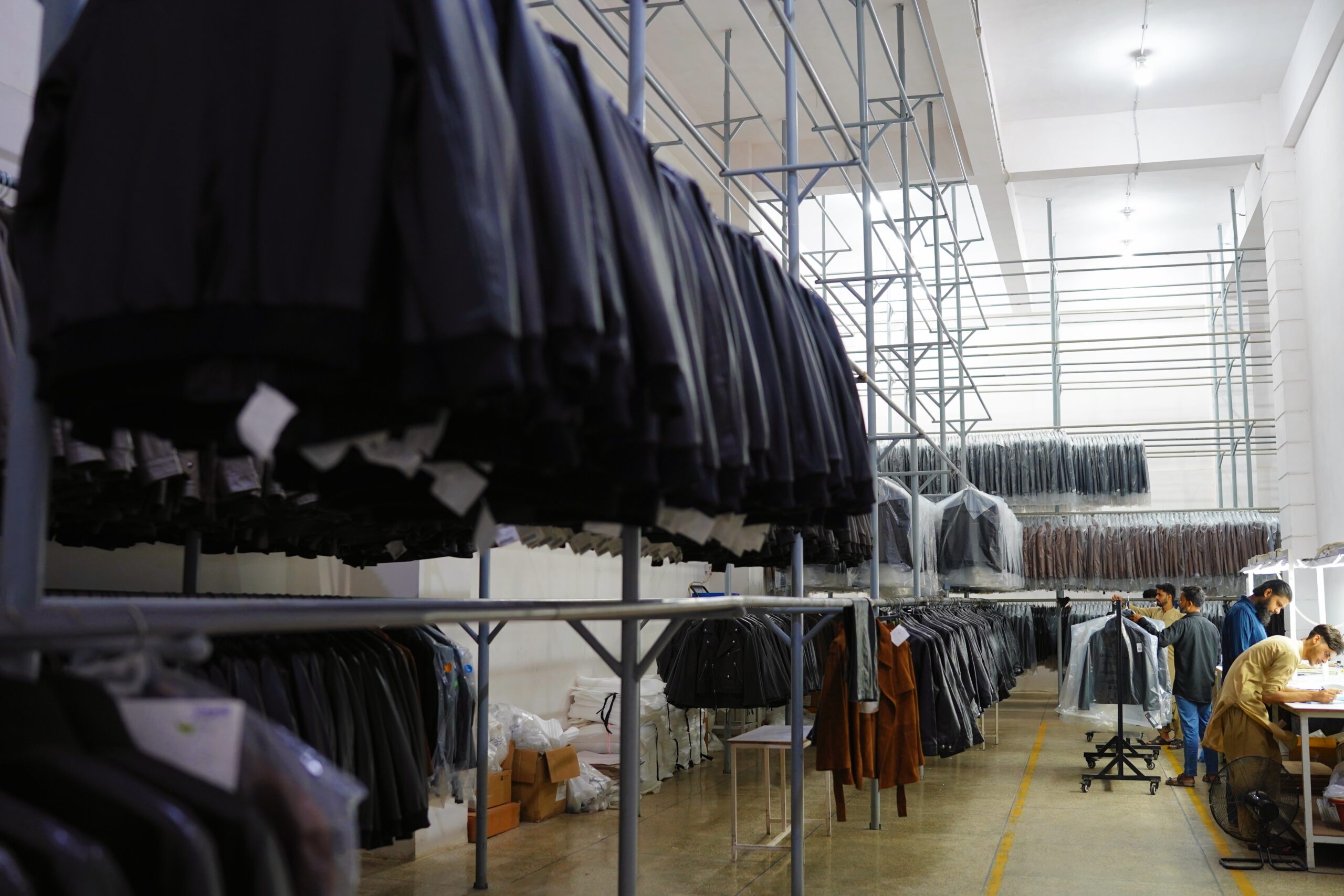
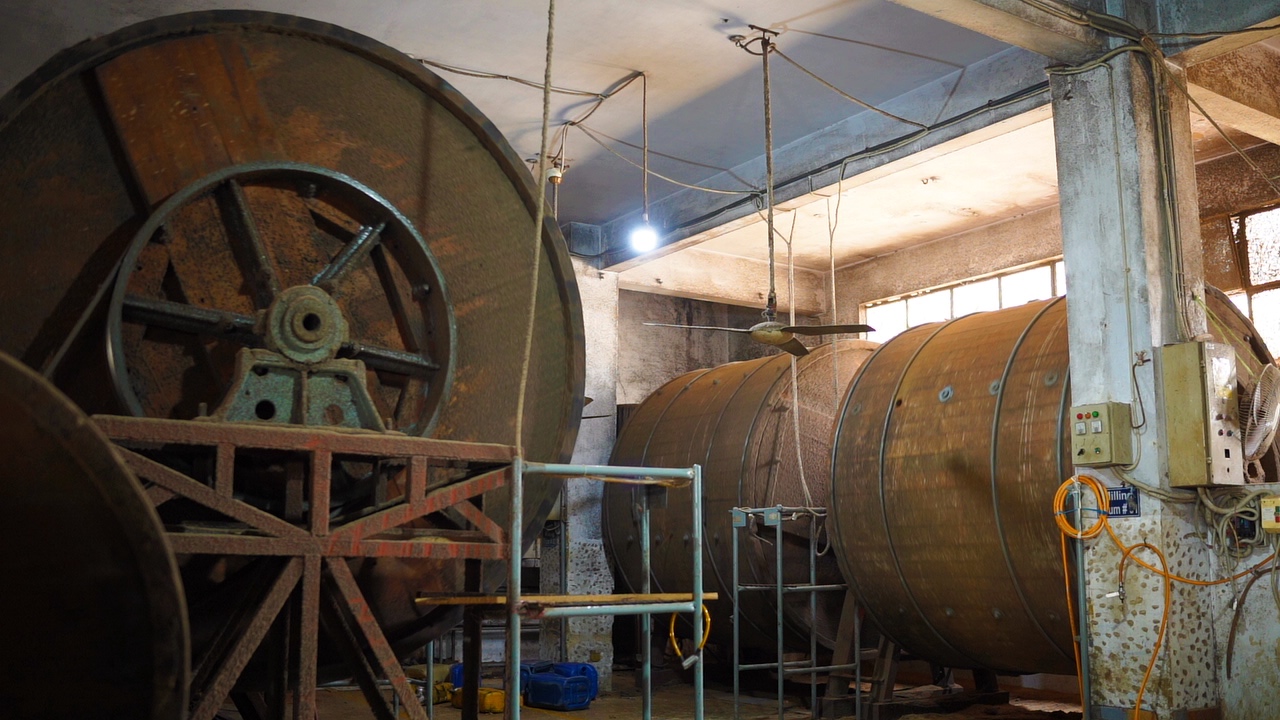
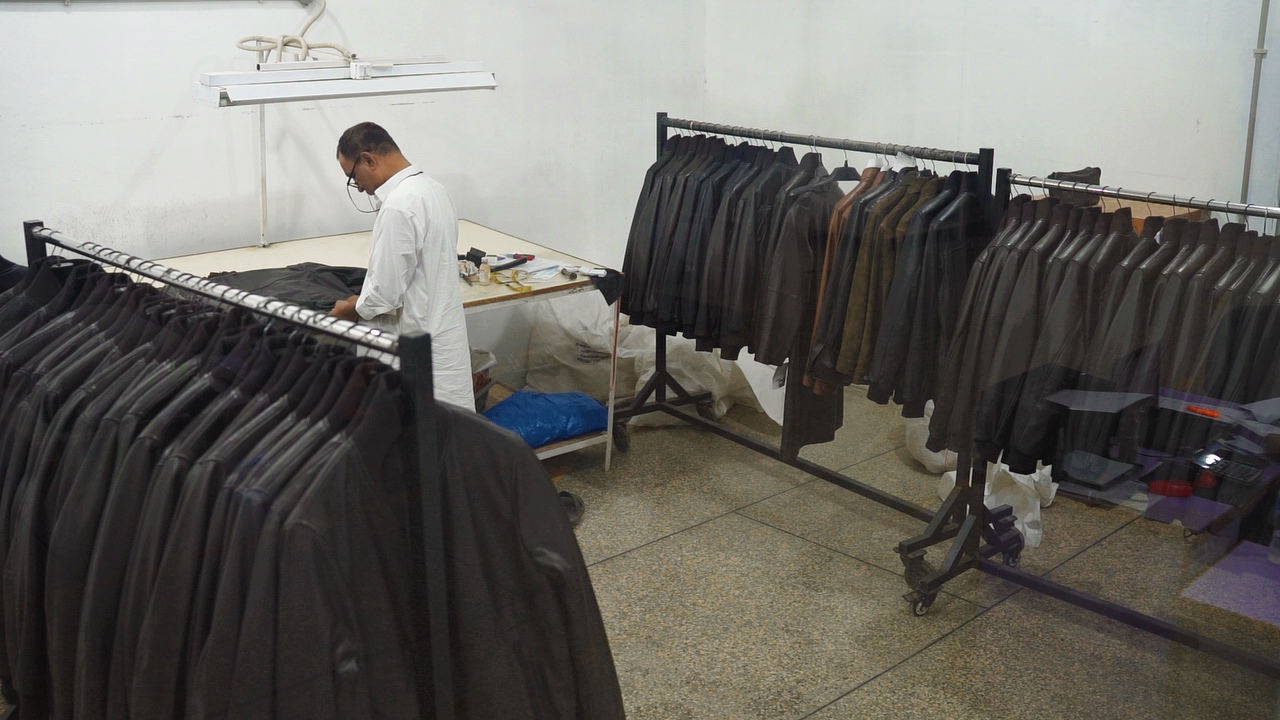
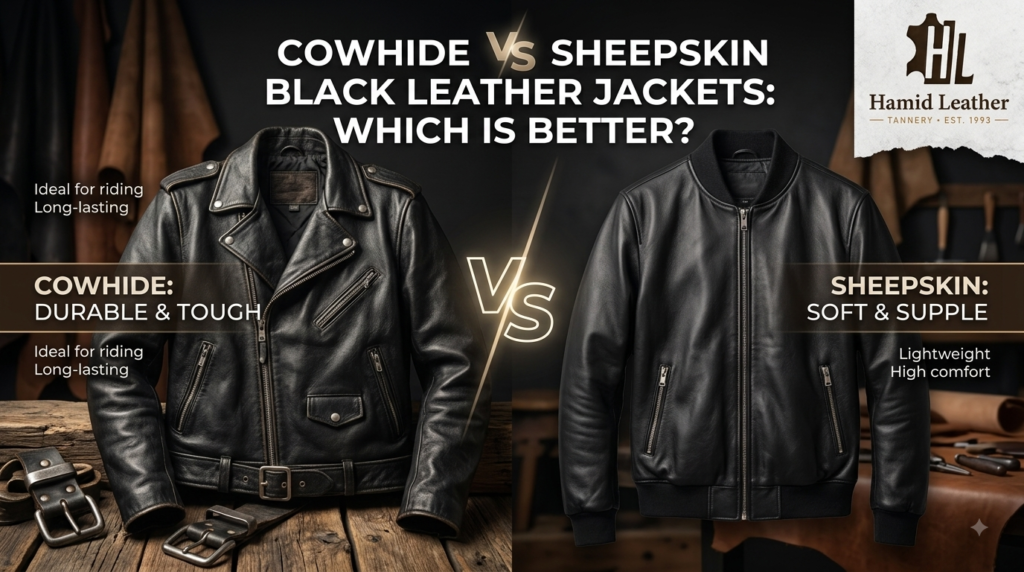
Choosing between cowhide and sheepskin is an important decision when buying or manufacturing a black leather jacket. Although both materials are genuine leather, they differ considerably in weight, softness, durability, appearance and suitability for different jacket styles.
Cowhide is generally stronger, thicker and more resistant to demanding use. It is commonly selected for biker jackets, café racers and structured outerwear. Sheepskin is softer, lighter and more flexible, making it particularly suitable for fashion jackets, fitted silhouettes and comfortable everyday wear.
Neither material is universally better. The right choice depends on the jacket’s intended purpose, target customer, climate, design and price position.
This guide compares cowhide vs sheepskin black leather jackets to help consumers, fashion brands, wholesalers and retailers select the most suitable material.
Cowhide vs Sheepskin Black Leather Jackets at a Glance
| Feature | Cowhide leather | Sheepskin leather |
|---|---|---|
| Durability | Excellent | Moderate |
| Weight | Medium to heavy | Light |
| Softness | Firm at first | Naturally soft |
| Flexibility | Moderate | Excellent |
| Break-in period | Often required | Minimal |
| Grain | Strong and visible | Fine and smooth |
| Abrasion resistance | Higher | Lower |
| Warmth | Depends mainly on lining | Comfortable but relatively light |
| Shape retention | Excellent | Softer drape |
| Best styles | Biker, café racer and structured jackets | Fashion, fitted and lightweight jackets |
| Maintenance | Generally more forgiving | Requires gentler handling |
| Typical price | Varies by grade and finish | Varies by softness and hide quality |
Cowhide is usually better when strength, structure and long-term durability are the main priorities. Sheepskin is generally better when softness, flexibility and lightweight comfort matter most.
What Is Cowhide Leather?
Cowhide is leather produced from cattle hides. It is one of the most widely used materials in the leather industry because cattle hides provide a large cutting area, strong fibre structure and substantial durability.
The material can be produced in different thicknesses and finishes. Heavy cowhide is commonly used for rugged motorcycle-inspired jackets, while thinner garment-grade cowhide can be used for more flexible fashion outerwear.
Common cowhide characteristics include:
- Strong fibre structure
- Good resistance to wear
- Medium to heavy weight
- Firm initial feel
- Visible natural grain
- Excellent shape retention
- Long-term durability
- Ability to develop character with age
The final quality still depends on hide selection, tanning, thickness and finishing. Not every cowhide jacket provides the same level of quality.
What Is Sheepskin Leather?
Sheepskin leather is produced from sheep hides. When the wool is removed, the resulting leather is generally soft, lightweight and flexible. When the wool remains attached, the material is commonly called shearling.
This distinction is important. A lightweight sheepskin fashion jacket is different from a thick shearling aviator jacket, even though both originate from sheep hides.
Typical sheepskin leather characteristics include:
- Soft hand feel
- Lightweight construction
- Natural flexibility
- Fine grain
- Comfortable drape
- Minimal break-in period
- Suitability for fitted designs
- Greater sensitivity to abrasion
Sheepskin is frequently used when comfort and appearance are more important than maximum resistance to rough conditions.
Which Leather Is More Durable?
Cowhide is generally more durable than sheepskin.
Its dense fibre structure gives it greater resistance to:
- Abrasion
- Tearing
- Repeated wear
- Surface damage
- Stretching
- Stress around seams and pockets
For this reason, cowhide is commonly selected for jackets that need to maintain their structure or withstand frequent use.
Sheepskin can still provide good durability when the hide is carefully selected and the jacket is properly constructed. However, it is normally thinner and more vulnerable to scratches, stretching and rough handling.
A well-made sheepskin jacket can remain wearable for many years, but it usually requires more careful use than a heavy cowhide jacket.
The construction quality also matters. Poor stitching, weak zips or an unsuitable lining can shorten the life of a cowhide jacket, while strong construction can help a sheepskin jacket perform reliably.
Which Leather Is Softer?
Sheepskin is usually much softer than cowhide.
A sheepskin jacket often feels comfortable from the first wear. The leather bends easily and follows the body without creating significant stiffness.
Cowhide normally has a firmer feel, particularly when thick leather is used. New cowhide jackets may require a break-in period before the sleeves, shoulders and body become more flexible.
Manufacturers can soften cowhide during processing, but very soft cowhide may still feel more substantial than sheepskin.
Customers who prioritise immediate comfort will usually prefer sheepskin. Those who appreciate a structured jacket that gradually adapts to their body may prefer cowhide.
Which Leather Is Lighter?
Sheepskin is generally lighter than cowhide.
This makes it particularly suitable for:
- Mild climates
- Indoor wear
- Travel
- Layering
- Slim-fit jackets
- Customers who dislike heavy outerwear
Cowhide jackets can feel noticeably heavier, especially when they include thick leather, multiple pockets, metal hardware and insulated linings.
However, leather thickness must also be considered. A thin garment cowhide jacket may be lighter than a heavily insulated shearling jacket.
When comparing ordinary smooth cowhide with ordinary smooth sheepskin, sheepskin is usually the lighter option.
Which Leather Provides Better Protection?
Cowhide generally provides greater resistance to abrasion and surface damage. It is therefore the better option for rugged outerwear and motorcycle-inspired fashion jackets.
However, an ordinary cowhide fashion jacket should not automatically be treated as specialist motorcycle protection.
Protective riding equipment requires more than a strong outer material. It may also need:
- Abrasion-tested leather
- Reinforced seams
- Impact protectors
- Secure closures
- Suitable sleeve construction
- Safety certification
- Appropriate testing
Sheepskin is more appropriate for fashion and general everyday use than demanding protective applications.
Appearance and Grain
Cowhide and sheepskin create different visual results.
Cowhide Appearance
Cowhide commonly has a stronger, more visible grain. It can create a rugged, substantial and structured appearance.
Black cowhide may be finished in several ways, including:
- Smooth
- Pebbled
- Matte
- Glossy
- Waxed
- Oiled
- Distressed
- Vintage
- Two-tone
The visible grain and firm structure make cowhide particularly effective for biker and heritage-inspired designs.
Sheepskin Appearance
Sheepskin usually has a finer and more delicate grain. Its softer structure creates a smoother drape around the body.
Black sheepskin works well for:
- Minimalist designs
- Fitted jackets
- Lightweight bombers
- Cropped jackets
- Leather blazers
- Contemporary fashion pieces
The surface can look polished and refined without appearing excessively heavy.
Comfort and Flexibility
Sheepskin generally offers better immediate comfort and flexibility.
Its natural softness allows easier movement through the shoulders, elbows and torso. This makes it suitable for close-fitting patterns and jackets intended for long periods of casual wear.
Cowhide provides more resistance at first. A heavy jacket may feel stiff around the arms and shoulders until it has been worn several times.
Once broken in, good-quality cowhide can become very comfortable while retaining more structure than sheepskin.
The pattern remains important for both materials. Even the softest leather will feel uncomfortable if the armholes, shoulders, chest or sleeves are incorrectly sized.
Warmth and Seasonal Use
Leather thickness, lining and construction influence warmth more than the animal source alone.
A standard sheepskin leather jacket is usually lightweight and suitable for spring, autumn and mild winter conditions. It may not provide enough warmth for extremely cold weather unless insulation is added.
Cowhide blocks wind effectively and can support heavier linings. A cowhide jacket with quilted insulation may provide better cold-weather performance than an unlined sheepskin jacket.
Shearling is a separate case. Because it retains natural wool, it can offer considerably more insulation than ordinary cowhide or smooth sheepskin.
For winter jackets, buyers should examine:
- Leather thickness
- Lining material
- Insulation
- Collar design
- Cuff construction
- Front closure
- Hem adjustment
- Overall jacket length
The word “sheepskin” alone does not confirm whether a jacket contains wool or provides substantial warmth.
Water and Weather Resistance
Neither cowhide nor sheepskin is completely waterproof.
Finished cowhide usually tolerates light moisture better because it is thicker and may have a more protective surface coating. It can still become stained, stiff or damaged if it is soaked repeatedly.
Sheepskin is generally more sensitive to water. Thin, soft leather may develop marks, changes in texture or stretching if it becomes excessively wet.
If either jacket becomes wet:
- Blot away excess moisture
- Hang it on a wide hanger
- Allow it to dry naturally
- Keep it away from radiators and heaters
- Do not use a hair dryer
- Condition it only after it has dried, if necessary
Waterproofing or protective products should always be tested on a hidden area first because they can change the black shade or finish.
Best Jacket Styles for Cowhide
Cowhide works particularly well for jackets that require durability and structure.
Black Biker Jackets
A classic biker jacket benefits from cowhide’s strength and ability to support large lapels, metal zips, belts and multiple pockets.
Café Racer Jackets
The clean design of a café racer places attention on the leather itself. Cowhide provides a firm silhouette and strong shape retention.
Motorcycle-Inspired Jackets
Cowhide is suitable for rugged fashion jackets inspired by motorcycle clothing. Specialist riding jackets still require appropriate protective construction and testing.
Structured Bomber Jackets
A medium-weight cowhide can create a substantial bomber with a defined shape.
Utility and Workwear Jackets
Cowhide supports patch pockets, reinforced seams and functional hardware effectively.
Vintage Jackets
Waxed, distressed or pull-up cowhide develops character and supports a heritage appearance.
Best Jacket Styles for Sheepskin
Sheepskin works well for jackets requiring softness, flexibility and lightweight comfort.
Fitted Fashion Jackets
The material follows the body naturally and can support waist shaping without excessive stiffness.
Lightweight Bomber Jackets
Sheepskin helps create the rounded bomber silhouette while remaining comfortable.
Cropped Jackets
Its low weight works well for short jackets designed for layering.
Leather Blazers
Soft sheepskin can provide a clean drape similar to tailored fabric while retaining the appearance of leather.
Minimalist Jackets
A smooth surface complements designs with simple seams and limited hardware.
Casual Everyday Jackets
Sheepskin is comfortable for customers who want the appearance of leather without the weight of a rugged cowhide jacket.
Cowhide vs Sheepskin for Men’s and Women’s Jackets
Both materials can be used for men’s, women’s and unisex jackets. The pattern and intended silhouette should guide material selection.
Cowhide is often used for broader, straighter and more structured designs. Sheepskin is frequently selected for fitted, cropped or softly draped jackets.
These are design tendencies rather than strict gender rules. Men’s jackets can be lightweight and fitted, while women’s jackets can be oversized and structured.
For a detailed explanation of pattern shaping, measurements and construction, read this guide to men’s vs women’s black leather jackets.
Which Leather Ages Better?
Cowhide generally develops a more noticeable patina.
Over time, the leather may:
- Soften around movement areas
- Develop subtle creases
- Gain tonal variation
- Show wear around seams and edges
- Become more personalised to the wearer
High-quality cowhide can age attractively when the finish is flexible and the jacket is maintained correctly.
Sheepskin can also age well, but its softer surface may show scratches and creases sooner. Because it is more delicate, careless use can appear as damage rather than attractive character.
The way either material ages depends heavily on its finish. Heavily pigmented leather may remain uniform for longer, while aniline or lightly finished leather displays natural changes more quickly.
Which Leather Is Easier to Maintain?
Cowhide is usually more forgiving.
Its stronger surface can tolerate regular wear and gentle cleaning better than delicate sheepskin. However, it still requires correct storage and occasional conditioning.
Sheepskin should be handled carefully because aggressive rubbing or unsuitable cleaning products may affect its colour, texture or finish.
For both leather types:
- Remove dust with a soft cloth
- Use products made specifically for garment leather
- Test products on a hidden section
- Avoid excessive conditioner
- Store the jacket in a ventilated area
- Use a wide, supportive hanger
- Avoid prolonged direct sunlight
- Do not keep the jacket permanently sealed in plastic
Professional cleaning is recommended for significant stains or heavily soiled jackets.
Which Leather Is More Expensive?
The price depends on more than the animal source.
Factors influencing cost include:
- Hide quality
- Leather grade
- Thickness
- Tanning method
- Surface finish
- Colour consistency
- Cutting yield
- Jacket pattern
- Hardware
- Lining
- Labour
- Order quantity
- Quality-control requirements
Premium sheepskin can cost more than basic corrected cowhide. Similarly, high-quality full-grain cowhide can be more expensive than commercial-grade sheepskin.
Consumers and B2B buyers should therefore compare actual specifications instead of assuming that one material is always cheaper.
Full-Grain and Top-Grain Cowhide
Cowhide may be described as full-grain, top-grain or corrected-grain.
Full-grain cowhide retains its natural grain and characteristics. It is valued for durability and the way it ages, but it may show natural markings.
Top-grain cowhide may be lightly corrected to create a smoother and more consistent appearance. It is widely used for commercial and premium fashion jackets.
Corrected-grain cowhide undergoes more surface treatment to reduce visible imperfections. It may then receive an embossed grain and pigmented coating.
These terms provide useful information, but they do not describe the entire jacket quality. Tanning, finishing and construction must also be assessed.
Is Sheepskin the Same as Lambskin?
Sheepskin and lambskin come from the same animal category, but the terms are not always interchangeable.
Lambskin comes from younger sheep and is generally known for:
- Exceptional softness
- Fine grain
- Lightweight feel
- Smooth appearance
- Luxury positioning
Sheepskin from mature animals may be slightly stronger or more visibly grained, depending on its origin and processing.
In commercial product descriptions, the terms are sometimes used loosely. Buyers should request accurate material specifications from the supplier.
How to Check the Quality of Cowhide and Sheepskin Jackets
The animal source alone cannot guarantee jacket quality. Buyers should inspect the complete product.
Examine the Leather
Look for suitable softness, thickness and grain. Natural variation is normal, but neighbouring panels should not have severely mismatched colour, texture or gloss.
Check the Finish
Gently flex the leather. The surface should not crack, separate or reveal weak coating adhesion.
Inspect the Stitching
Stitching should be straight and consistent around:
- Shoulders
- Armholes
- Collar
- Pockets
- Cuffs
- Hem
- Front closure
Loose threads, skipped stitches and uneven seam lines may indicate weak quality control.
Test the Zips
Open and close every zip several times. The movement should be smooth, and the zip should not catch the lining.
Review the Lining
The lining should sit evenly inside the jacket without sagging, twisting or extending below the leather shell.
Assess the Fit
Close the jacket and move the arms naturally. The shoulders, chest, back and sleeves should not feel severely restricted.
Inspect Stress Points
Areas around pocket openings, armholes and zips should be properly reinforced, especially when soft sheepskin is used.
Common Buying Mistakes
One common mistake is assuming cowhide is automatically the highest-quality leather. Poorly processed cowhide may feel excessively stiff, dry or heavily coated.
Another is selecting sheepskin only because it feels soft. Buyers must also check thickness, strength, reinforcement and suitability for the intended design.
Some customers buy a tight cowhide jacket expecting it to stretch considerably. Although cowhide softens, it will not necessarily correct an unsuitable shoulder or chest measurement.
Others assume every sheepskin jacket is suitable for winter. Smooth sheepskin without wool or insulation may be relatively lightweight.
Ignoring the lining, zips, stitching and hardware is another mistake. These components often determine how well the complete jacket performs.
Choosing Between Cowhide and Sheepskin for B2B Production
Fashion brands, wholesalers and retailers should choose leather according to the intended product rather than personal preference.
Important considerations include:
- Target customer
- Jacket style
- Intended use
- Required durability
- Desired weight
- Climate
- Retail price
- Surface grain
- Black shade
- Gloss level
- Leather thickness
- Size range
- Lining
- Hardware
- Care requirements
- Testing standards
- Order quantity
Cowhide is normally the stronger choice for rugged collections, structured silhouettes and customers who prioritise durability.
Sheepskin is often more suitable for lightweight fashion collections, fitted designs and customers who prioritise softness.
Before bulk production, buyers should approve:
- Leather swatches
- Colour standards
- Thickness ranges
- Grain expectations
- Finish
- Physical samples
- Hardware
- Lining
- Labels
- Packaging
A complete sample is essential because a small leather swatch cannot fully demonstrate the jacket’s weight, drape, movement and construction.
For custom development and bulk leather-garment production, Hamid Leather Ltd works with international fashion brands, wholesalers and retailers.
Sustainability and Responsible Production
The environmental performance of a leather jacket cannot be judged only by whether it uses cowhide or sheepskin.
Responsible manufacturing should consider:
- Material traceability
- Chemical management
- Wastewater treatment
- Energy efficiency
- Worker safety
- Material utilisation
- Waste handling
- Product durability
- Repairability
- Quality control
Efficient pattern placement can reduce leather waste during cutting. Smaller offcuts may sometimes be used for accessories, reinforcement components or product samples.
Brands should request documented evidence for environmental and social claims. Certifications, testing records and audit information are more reliable than unsupported descriptions such as “green” or “eco-friendly.”
Frequently Asked Questions
Is cowhide better than sheepskin for a black leather jacket?
Cowhide is better for strength, structure and rugged use. Sheepskin is better for softness, low weight and flexibility. The best choice depends on the jacket’s intended purpose.
Which leather lasts longer?
Cowhide generally lasts longer because it offers greater resistance to abrasion, stretching and rough use.
Which leather is softer?
Sheepskin is normally softer and more flexible than cowhide.
Is sheepskin leather suitable for everyday wear?
Yes. Sheepskin is comfortable for everyday fashion use, but it should be protected from rough surfaces, excessive moisture and sharp objects.
Is cowhide too heavy for a jacket?
Heavy cowhide can feel substantial, but thinner garment-grade cowhide offers a more manageable weight. Buyers should check the leather thickness and total jacket weight.
Which leather is best for a black biker jacket?
Cowhide is generally the best choice for a structured and durable black biker jacket. Sheepskin can be used for a softer, fashion-focused version.
Which leather is best for a lightweight jacket?
Sheepskin is usually the better option because it is naturally soft, flexible and lightweight.
Is sheepskin warm?
Smooth sheepskin provides some protection from wind but may not be suitable for extreme cold without insulation. Shearling, which retains natural wool, is significantly warmer.
Does cowhide become softer over time?
Yes. Good-quality cowhide generally softens and becomes more comfortable with regular wear.
Does sheepskin scratch easily?
Sheepskin is more vulnerable to scratches and abrasion than thick cowhide. Gentle handling helps preserve its surface.
Is cowhide waterproof?
No leather jacket is completely waterproof unless it has specialised treatment and construction. Finished cowhide may tolerate light moisture, but it should not be soaked.
Which leather has a better grain?
Cowhide usually provides a stronger and more rugged grain, while sheepskin has a finer and smoother appearance. The better grain depends on the desired style.
Can women wear cowhide jackets?
Yes. Cowhide can be used for women’s fitted, cropped, biker and oversized jackets when the pattern is properly developed.
Can men wear sheepskin jackets?
Yes. Sheepskin is suitable for men’s bombers, casual jackets, café racers and minimalist designs.
Is sheepskin more expensive than cowhide?
Not always. Prices depend on leather grade, hide selection, finish, thickness and product construction.
Which leather is best for wholesale production?
Cowhide works well for durable and structured collections, while sheepskin suits lightweight and fashion-focused products. The choice should match the target customer and retail price.
Final Thoughts
The choice between cowhide and sheepskin black leather jackets depends on the qualities the wearer or brand values most.
Cowhide is generally better for durability, structure and resistance to demanding use. Its stronger fibre structure makes it particularly suitable for biker jackets, café racers, utility jackets and rugged outerwear. Although it may feel heavy or stiff at first, it usually softens with wear and can develop attractive character over time.
Sheepskin is generally better for softness, flexibility and lightweight comfort. It works especially well for fitted jackets, lightweight bombers, cropped silhouettes, leather blazers and minimalist fashion designs. It requires gentler handling but provides immediate comfort with little or no break-in period.
For customers who want a substantial black leather jacket that can withstand frequent wear, cowhide is usually the stronger choice. For customers who prefer a soft jacket that moves naturally and feels comfortable from the first wear, sheepskin is likely to be more suitable.
Fashion brands and wholesale buyers should evaluate more than the animal source. Leather grade, thickness, tanning, surface finish, stitching, lining and hardware all influence the finished product.
Ultimately, neither cowhide nor sheepskin is universally superior. The better leather is the one that correctly matches the jacket’s design, climate, customer expectations and intended use.