A high-quality black leather jacket should offer more than an attractive appearance. The type of leather, surface finish, stitching, lining, hardware, fit and overall construction all determine how the jacket will feel, perform and age.
Two jackets may look similar in photographs but differ significantly in durability and comfort. One may use carefully selected hides, reinforced seams and reliable hardware, while the other may rely on heavily coated leather and weak construction.
Whether you are purchasing a single jacket or sourcing a collection for a fashion brand, knowing what to inspect can help you make a better decision. This guide explains how to identify a high-quality black leather jacket by examining every important component.
Start by Identifying the Leather Type
The animal source affects the jacket’s weight, softness, strength and appearance.
Common leathers used for black jackets include:
- Cowhide
- Sheepskin
- Lambskin
- Goatskin
- Buffalo leather
- Calfskin
Cowhide is generally strong, structured and resistant to demanding use. It is commonly selected for biker jackets, café racers and rugged outerwear.
Sheepskin is usually softer, lighter and more flexible. It works particularly well for fitted jackets, lightweight bombers and fashion-focused designs.
Lambskin offers exceptional softness and a refined surface, while goatskin provides an effective balance between strength and manageable weight. Buffalo leather has a bold grain and substantial feel, whereas calfskin is valued for its smooth and premium appearance.
No single leather is best for every jacket. The material should suit the intended style and use.
For a more detailed material comparison, read this guide to cowhide vs sheepskin black leather jackets.
Do Not Rely Only on the Term “Genuine Leather”
The phrase “genuine leather” confirms that a product contains real leather, but it does not provide enough information to determine its quality.
A genuine leather jacket may be made from full-grain, top-grain, corrected-grain or split leather. It may also have a light natural finish or a thick pigmented coating.
When evaluating a jacket, ask for more specific information, including:
- Animal source
- Leather grade
- Thickness
- Tanning method
- Surface finish
- Country of origin
- Colourfastness
- Physical testing
Precise specifications are particularly important for brands, wholesalers and retailers placing bulk orders.
Examine the Leather Surface
Natural leather is not expected to look completely artificial or identical across every panel. Small variations in grain, pores and texture can indicate the natural characteristics of the hide.
However, excessive variation may suggest poor panel selection or weak quality control.
Look for:
- Balanced grain across neighbouring panels
- Consistent black colour
- A flexible surface
- Natural texture
- Even finishing
- Clean cutting around seams and edges
Avoid leather that shows:
- Peeling
- Surface cracking
- Sticky areas
- Blisters
- Loose coatings
- Severe colour differences
- Poorly concealed defects
- Plastic-like rigidity
An extremely uniform surface does not necessarily mean the jacket is fake. Pigmented and corrected-grain leathers can have a consistent appearance. The important question is whether the finish remains flexible, properly bonded and suitable for the intended product.
Feel the Leather
Touch can reveal useful information about leather quality, although softness alone should not be treated as proof of quality.
A high-quality black leather jacket should feel appropriate for its design. A biker jacket may use firm and substantial cowhide, while a fitted fashion jacket may require soft lambskin or sheepskin.
Gently press and bend the leather. It should move naturally without feeling brittle, excessively dry or weak.
Good jacket leather may feel:
- Supple or intentionally structured
- Consistent in thickness
- Smooth without feeling artificial
- Flexible around movement areas
- Substantial without unnecessary stiffness
Some lower-quality jackets are mechanically softened or heavily coated to create an attractive first impression. Therefore, the leather’s feel must be considered alongside its strength, finish and construction.
Check the Leather Thickness
Leather thickness affects weight, structure, comfort and durability.
Thicker leather normally provides:
- Greater shape retention
- Better resistance to abrasion
- A substantial appearance
- Increased durability
- A longer break-in period
Thinner leather normally offers:
- Lower weight
- Greater flexibility
- Better drape
- Easier movement
- Suitability for fitted designs
A high-quality jacket does not always need thick leather. The thickness should match the pattern and purpose.
A heavy hide may be suitable for a rugged biker jacket but uncomfortable in a fitted blazer. Similarly, extremely thin leather may not provide enough structure for a jacket with large lapels, heavy zips or multiple pockets.
The leather should also feel reasonably consistent across the body and sleeves.
Inspect the Black Finish
The black finish has a major influence on the jacket’s appearance and long-term performance.
Black leather may have a:
- Matte finish
- Semi-matte finish
- Glossy surface
- Waxed appearance
- Oiled finish
- Distressed effect
- Vintage finish
- Two-tone effect
A good finish should remain flexible when the leather bends. It should not crack around the elbows, shoulders, cuffs or pocket openings.
Rub an inconspicuous area gently with a clean white cloth. Significant black colour transfer may indicate inadequate colourfastness. Minor transfer can occur with certain natural or heavily waxed finishes, so the test should be interpreted according to the product specification.
For B2B production, black leather should be assessed for:
- Dry rubbing
- Wet rubbing
- Flex resistance
- Finish adhesion
- Water spotting
- Light exposure
- Shade consistency
These tests help reduce the risk of fading, cracking and colour transfer after production.
Look at the Panel Matching
A leather jacket is normally constructed from several hide sections. Because natural leather varies, careful panel matching is essential.
Inspect the front panels, sleeves, shoulders, collar and back. Their grain, colour and gloss should appear balanced.
Poor panel matching may result in:
- One sleeve appearing darker than the other
- Different grain sizes across the front
- Uneven gloss
- Visible thickness differences
- One panel stretching more than another
Natural variation is acceptable and may even add character. However, the jacket should still look intentional and visually balanced.
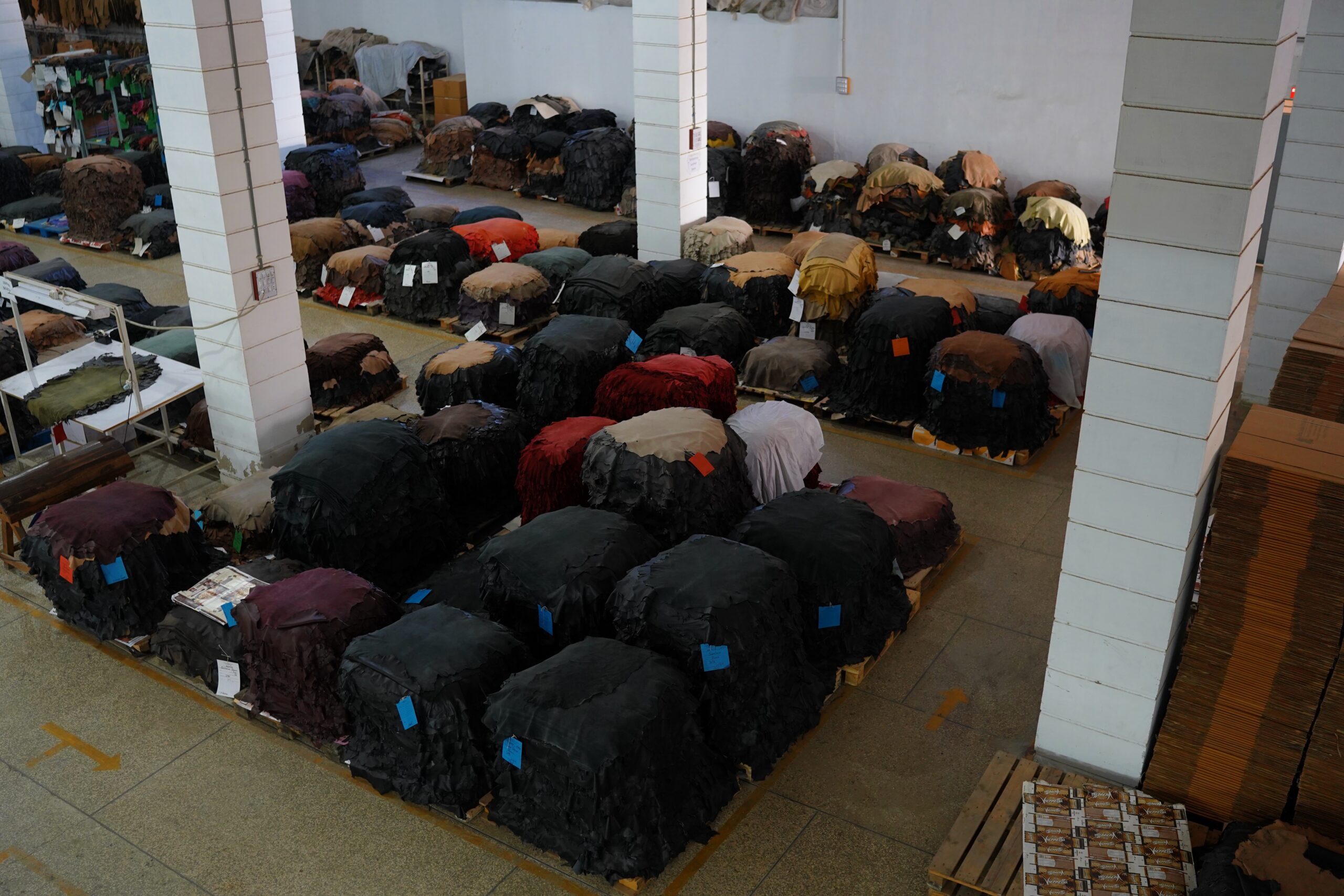
Manufacturers should inspect and group hides before cutting to maintain consistency across complete garments and bulk orders.
Inspect the Stitching
Strong and accurate stitching is one of the clearest signs of a well-made leather jacket.
Examine the seams around:
- Shoulders
- Armholes
- Collar
- Front closure
- Pockets
- Cuffs
- Side seams
- Hem
- Sleeve attachment
The stitches should be straight, evenly spaced and secure. Thread tension should remain consistent, and the leather should not appear excessively pulled or wrinkled around the seams.
Warning signs include:
- Loose threads
- Skipped stitches
- Crooked seam lines
- Unfinished thread ends
- Uneven stitch lengths
- Open seams
- Multiple unnecessary needle holes
- Puckering around panels
Leather retains needle holes permanently. If a seam is repeatedly unpicked and restitched, visible perforations may weaken the area and reduce the jacket’s appearance.
Check Reinforcement at Stress Points
Some areas of a leather jacket experience greater pressure than others.
Important stress points include:
- Pocket openings
- Underarms
- Shoulder seams
- Zip ends
- Cuff openings
- Belt attachments
- Snap fasteners
- Collar connections
These areas should be reinforced appropriately without becoming bulky.
Pocket corners may use extra stitching or hidden reinforcement. Zips should be secured firmly, and snaps should not pull the leather away from their surrounding material.
Reinforcement is particularly important when soft or lightweight leather is used because thin hides can stretch around hardware and openings.
Test the Zips and Hardware
High-quality hardware improves both function and appearance.
Open and close every zip several times. The movement should be smooth and controlled. The zip should not catch the lining, separate under light pressure or feel loosely attached.
Inspect:
- Main front zip
- Pocket zips
- Cuff zips
- Snaps
- Buckles
- Rivets
- Adjusters
- Decorative hardware
The hardware finish should be consistent across the jacket. Metal components should not have sharp edges that could damage the leather or lining.
A heavy zip is not automatically better. The zip weight should suit the leather. Oversized hardware can distort lightweight sheepskin or lambskin, while a weak zip may look unsuitable on a substantial cowhide jacket.
Examine the Lining
The lining affects comfort, warmth and the way the jacket sits on the body.
Common lining materials include:
- Polyester
- Viscose
- Cotton
- Satin
- Quilted fabric
- Wool blends
- Synthetic insulation
A quality lining should be cut according to the jacket pattern rather than simply attached loosely inside the shell.
Check that it:
- Sits smoothly inside the jacket
- Does not twist
- Does not sag below the hem
- Allows comfortable movement
- Is securely stitched
- Does not catch in the zips
- Has adequate ease around the shoulders and sleeves
Inspect the lining seams for loose threads, open sections and uneven stitching.
A breathable lining may be more comfortable for everyday wear, while a quilted lining may be suitable for colder climates. The right material depends on the jacket’s intended use.
Inspect the Pockets
Pockets should be functional, evenly positioned and securely constructed.
Place your hands inside the pockets to check their size and comfort. The pocket bags should feel strong enough for regular use and should not contain holes or unfinished seams.
Check whether the pockets:
- Sit at equal heights
- Open comfortably
- Have reinforced corners
- Use durable lining material
- Close properly
- Lie flat when empty
Interior pockets are useful, but they should not distort the jacket’s outer surface when carrying light items.
Evaluate the Collar and Cuffs
The collar is one of the most visible areas of a black leather jacket. It should sit cleanly without twisting, bubbling or lifting unevenly.
For biker jackets, inspect whether the lapels lie correctly and whether snaps are positioned evenly. For café racer jackets, check that the band collar closes comfortably without pressing excessively against the neck.
Cuffs should be equal in size and securely finished. If they include zips, snaps or ribbed material, each component should function smoothly.
Uneven collar points or poorly aligned cuffs can indicate inaccurate cutting or assembly.
Check the Jacket’s Symmetry
Place the jacket on a flat surface or supportive hanger and examine its overall balance.
Compare:
- Shoulder height
- Sleeve length
- Pocket placement
- Collar shape
- Front panel width
- Cuff size
- Hem alignment
- Zip position
Leather is a natural material, so perfect visual uniformity is not always possible. However, major differences between the left and right sides may indicate weak pattern cutting or construction.
The main front zip should lie straight when closed. If the jacket twists or one front panel hangs lower, the pattern, cutting or assembly may be inaccurate.
Assess the Fit and Movement
A jacket can use excellent leather and hardware but still be poor quality if the pattern does not fit properly.
Wear the jacket and perform natural movements:
- Raise both arms
- Bend the elbows
- Reach forward
- Sit down
- Close the front zip
- Place your hands in the pockets
The shoulders should align reasonably with the body unless the jacket intentionally uses an oversized design.
The sleeves should allow movement without excessive pulling through the back. The chest should close comfortably, and the armholes should not feel unnecessarily restrictive.
A fitted leather jacket may sit close to the body, but it should not depend on extreme stretching to become wearable.
Examine the Jacket’s Edge Finishing
Look carefully around the collar, front opening, cuffs, pocket edges and hem.
Edges may be folded, stitched, painted or bound, depending on the design. Regardless of the technique, they should appear clean and secure.
Poor edge finishing may show:
- Exposed adhesive
- Uneven folding
- Rough cutting
- Loose fibres
- Cracked edge paint
- Irregular stitching
- Lining visible from the outside
Clean edges contribute to a professional appearance and help protect frequently handled areas.
Smell Is Not a Reliable Quality Test
Real leather often has a recognisable smell, but scent alone cannot confirm authenticity or quality.
Manufacturers may use fragrances to imitate a leather smell, while tanning and finishing chemicals can alter the natural scent of genuine leather.
A strong chemical smell may suggest that the jacket has not been adequately aired or that certain finishing materials were used. However, the product should be evaluated through its specifications, surface, cut edges and construction rather than smell alone.
Review the Cut Edges
Where the leather edge is visible, genuine leather usually shows a fibrous internal structure.
Synthetic materials often reveal a fabric, foam or plastic backing. However, finished seams may conceal the edges, and some split leathers can also contain surface coatings.
Do not damage the jacket to inspect it. Instead, look at naturally visible areas around unfinished interior tabs, sample swatches or hidden seam allowances.
For wholesale orders, request a labelled leather swatch and written material specification before approving production.
Consider the Jacket’s Weight
Weight can provide information about leather thickness, hardware and lining, but it does not automatically indicate quality.
A heavy cowhide biker jacket may be designed to feel substantial. A high-quality lambskin jacket may be intentionally lightweight.
The important question is whether the weight matches the product description and intended purpose.
A jacket may feel unnecessarily heavy because of:
- Excessively thick leather
- Oversized hardware
- Heavy lining
- Poor material selection
- Unbalanced construction
The jacket should remain comfortable and balanced when worn.
Check the Labels and Product Information
Reliable product information should explain more than “100% genuine leather.”
Look for details such as:
- Leather type
- Lining composition
- Care instructions
- Country of manufacture
- Manufacturer or brand information
- Size information
- Product reference
- Required compliance labels
Labels should be securely attached and professionally finished.
For B2B orders, brands should also approve woven labels, care labels, size labels, hangtags and packaging before bulk manufacturing.
Understand the Difference Between Quality and Price
A high price does not always guarantee a high-quality black leather jacket.
Price may be influenced by:
- Brand positioning
- Marketing
- Retail location
- Design complexity
- Leather source
- Hardware
- Labour
- Order quantity
- Packaging
- Distribution costs
Similarly, an affordable jacket is not automatically poor quality.
The most reliable approach is to assess the leather, finishing, fit and construction directly. Buyers should compare specifications instead of judging the product only by its price or brand name.
Signs of a Poor-Quality Black Leather Jacket
Common warning signs include:
- Peeling or cracking surfaces
- Excessively plastic-like texture
- Strong colour transfer
- Uneven black shade
- Poor panel matching
- Crooked stitching
- Loose threads
- Weak pocket construction
- Misaligned zips
- Sharp hardware edges
- Twisted lining
- Uneven sleeves
- Poor collar shape
- Open seams
- Unreinforced stress points
- Unclear material specifications
One minor imperfection does not always make a jacket poor quality, particularly because natural leather varies. However, several problems appearing together can indicate weak material selection or quality control.
How B2B Buyers Should Evaluate Samples
Fashion brands, retailers and wholesalers should not approve bulk production from photographs alone.
The evaluation process should include:
- Reviewing leather swatches
- Confirming material specifications
- Approving the black shade and finish
- Examining a complete development sample
- Conducting a fitting session
- Testing hardware and closures
- Reviewing workmanship
- Confirming packaging and labels
- Approving a pre-production sample
- Inspecting bulk production
A small swatch cannot show how leather will behave across an entire jacket. The complete sample is necessary to evaluate drape, structure, movement, weight and panel matching.
Approved requirements should be documented clearly. General descriptions such as “premium soft black leather” are not detailed enough for consistent production.
Specifications may include:
- Animal source
- Leather thickness range
- Surface grain
- Black colour standard
- Gloss level
- Softness
- Stretch tolerance
- Colourfastness
- Hardware finish
- Stitch density
- Lining composition
- Measurement tolerances
For custom development and bulk manufacturing, Hamid Leather Ltd produces leather garments for international fashion brands, wholesalers and retailers.
Quality-Control Checks During Manufacturing
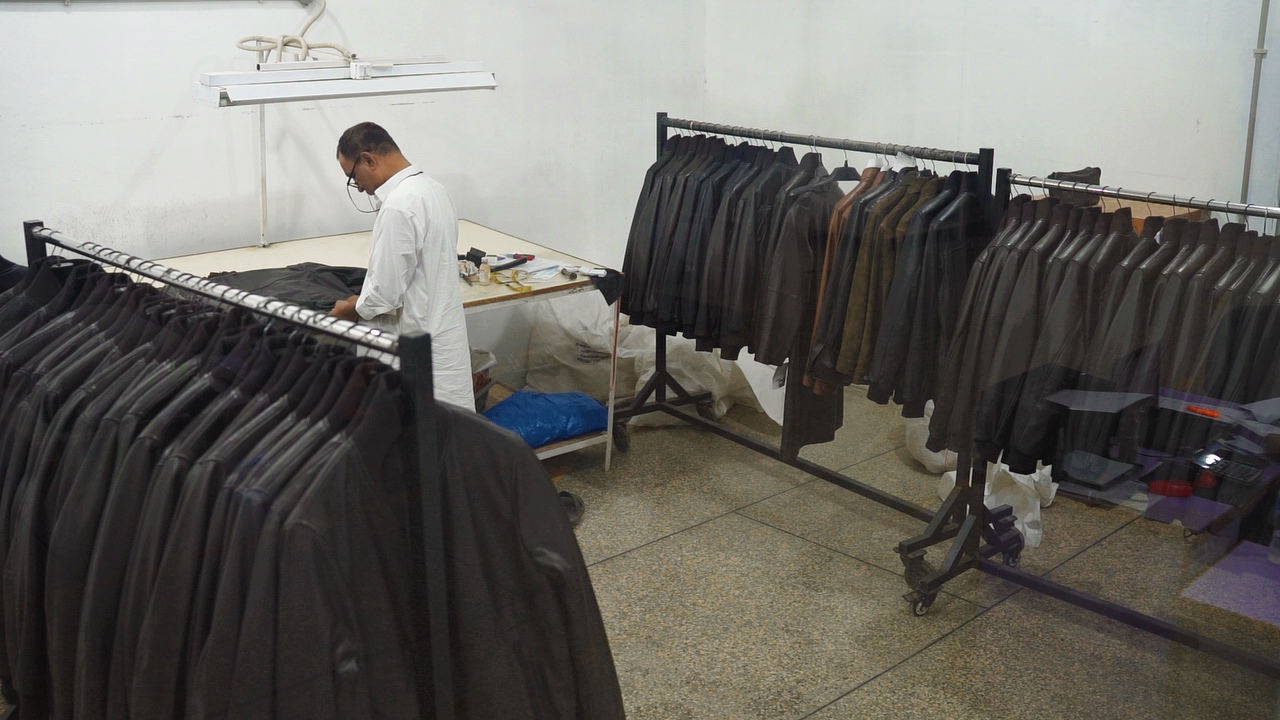
Quality should be controlled throughout production rather than inspected only after the jackets are completed.
Leather Inspection
Hides should be checked for shade, thickness, grain, defects and usable cutting area.
Cutting Inspection
Patterns must be positioned accurately, and visible panels should be matched for colour and grain.
Stitching Inspection
Operators should check stitch alignment, seam strength and thread tension during assembly.
Hardware Inspection
Zips, snaps and buckles should be tested before and after installation.
In-Line Inspection
Partially completed jackets should be reviewed so problems can be corrected before final assembly.
Final Inspection
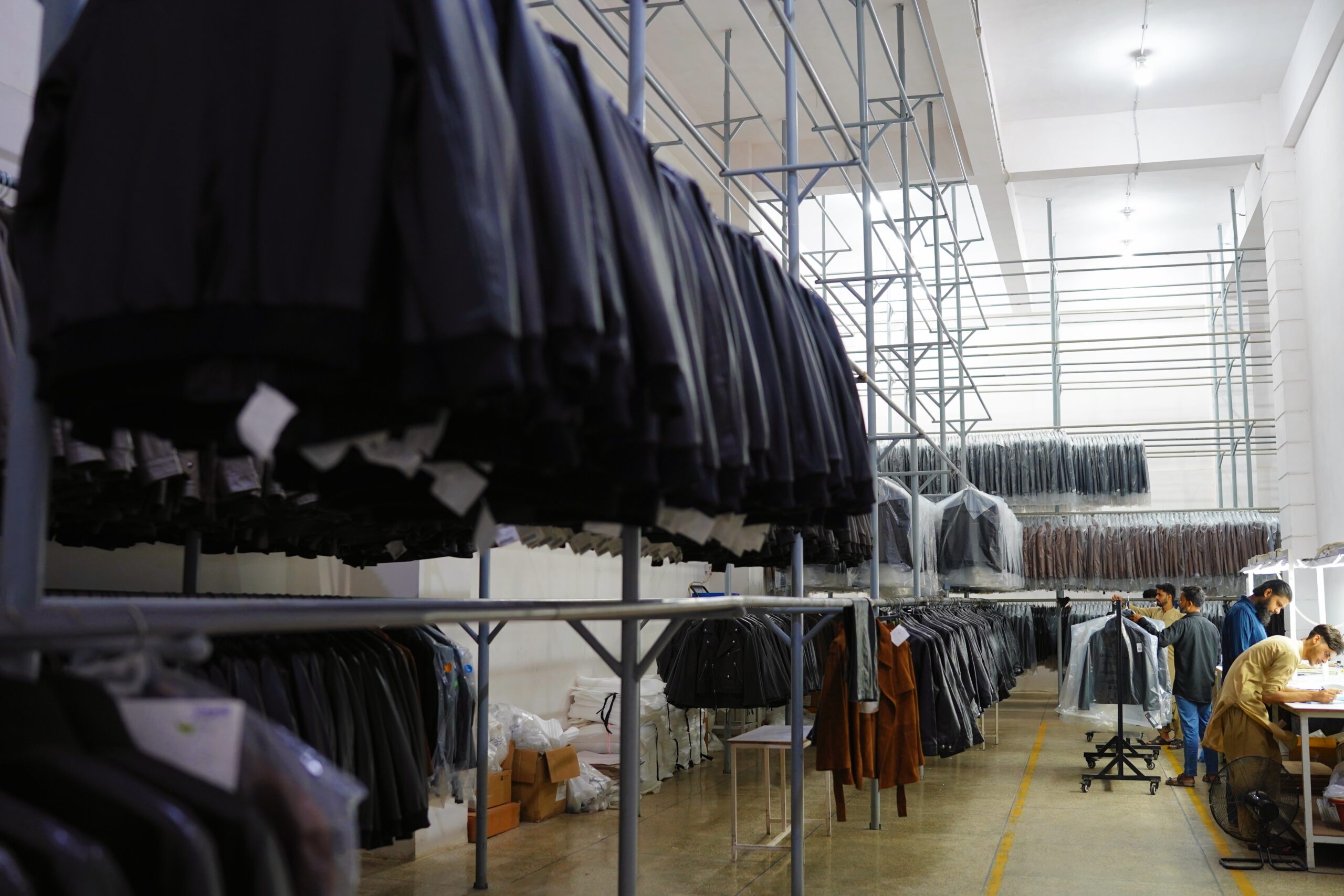
Finished garments should be measured, visually inspected and tested for function before packing.
Consistent quality control reduces defects and helps maintain uniformity across bulk orders.
How to Care for a Quality Black Leather Jacket
Even a well-made jacket requires appropriate care.
To protect it:
- Store it on a wide hanger
- Keep it in a ventilated space
- Avoid permanent plastic storage
- Protect it from prolonged sunlight
- Keep it away from sharp surfaces
- Let wet leather dry naturally
- Never place it against a radiator
- Use leather-specific cleaning products
- Test products on a hidden area
- Condition only when necessary
- Repair damaged stitching promptly
Different leathers require different treatments. Smooth cowhide and goatskin may tolerate gentle conditioning, while lambskin and sheepskin require more delicate products. Suede and nubuck need specialist brushes and cleaners.
Professional leather cleaning is recommended for serious stains.
Frequently Asked Questions
How can I tell whether a black leather jacket is high quality?
Inspect the leather surface, flexibility, panel matching, stitching, lining, hardware, fit and edge finishing. A quality jacket should use suitable materials and show consistent workmanship.
Does genuine leather always mean good quality?
No. “Genuine leather” confirms that real leather is present but does not explain its grade, animal source, thickness or finish.
Should high-quality leather be completely smooth?
Not necessarily. Natural leather may display grain, pores and subtle variations. The correct appearance depends on the leather type and finish.
Is soft leather always better?
No. Soft leather is suitable for lightweight and fitted jackets, while firmer leather may be better for structured and rugged designs.
Which leather is most durable for a black jacket?
Cowhide and buffalo leather are generally among the most durable options. Goatskin also offers excellent strength for its weight.
Which leather is best for a luxury jacket?
Lambskin and calfskin are popular luxury choices because of their softness, fine grain and refined appearance.
How should good stitching look?
The stitches should be straight, secure and evenly spaced. There should be no open seams, skipped stitches or excessive needle holes.
How can I test a jacket zip?
Open and close it several times. It should move smoothly, remain aligned and avoid catching the lining.
Is a heavier leather jacket higher quality?
Not automatically. The weight should match the jacket’s intended style and use. High-quality lambskin jackets can be very lightweight.
Should black leather transfer colour?
Significant colour transfer may indicate poor colourfastness. Some waxed or lightly finished leathers may show minor transfer, so testing requirements should match the finish.
How long should a quality leather jacket last?
A properly made and maintained leather jacket can last for many years. Longevity depends on the leather, construction, frequency of use and care.
Can a cheap leather jacket still be good quality?
Yes, although buyers should inspect the material and construction carefully. Price alone does not provide a reliable quality assessment.
Why is panel matching important?
Natural hides vary in grain and colour. Good panel matching creates a balanced appearance across the sleeves, front, back and collar.
What should wholesale buyers approve before production?
They should approve leather swatches, material specifications, colour, thickness, hardware, lining, labels, packaging and a complete pre-production sample.
Final Thoughts
Identifying a high-quality black leather jacket requires examining the complete product rather than focusing on one feature.
Start by confirming the leather type and determining whether it suits the jacket’s intended purpose. Cowhide is effective for structured and durable designs, while sheepskin and lambskin work well for softer, lightweight fashion jackets. Goatskin provides a useful balance between strength and flexibility.
Inspect the surface for consistent colour, flexible finishing and appropriate natural grain. Check that neighbouring panels are properly matched and that the leather does not crack or peel when gently flexed.
Stitching should be straight and secure, especially around the shoulders, armholes, pockets and zips. Hardware should operate smoothly, and the lining should sit evenly without twisting or catching.
The fit is equally important. A high-quality jacket should allow natural movement and maintain a balanced shape when worn. Even expensive leather cannot compensate for an inaccurate pattern or weak construction.
For B2B buyers, written specifications, physical samples and production inspections provide greater reliability than general marketing terms. Leather type, thickness, colour, finish, stitching, hardware and measurement tolerances should all be approved before bulk manufacturing.
Ultimately, a high-quality black leather jacket combines suitable leather with accurate cutting, skilled stitching, dependable components and careful quality control. When all these elements work together, the jacket will not only look better but also provide greater comfort, durability and long-term value.