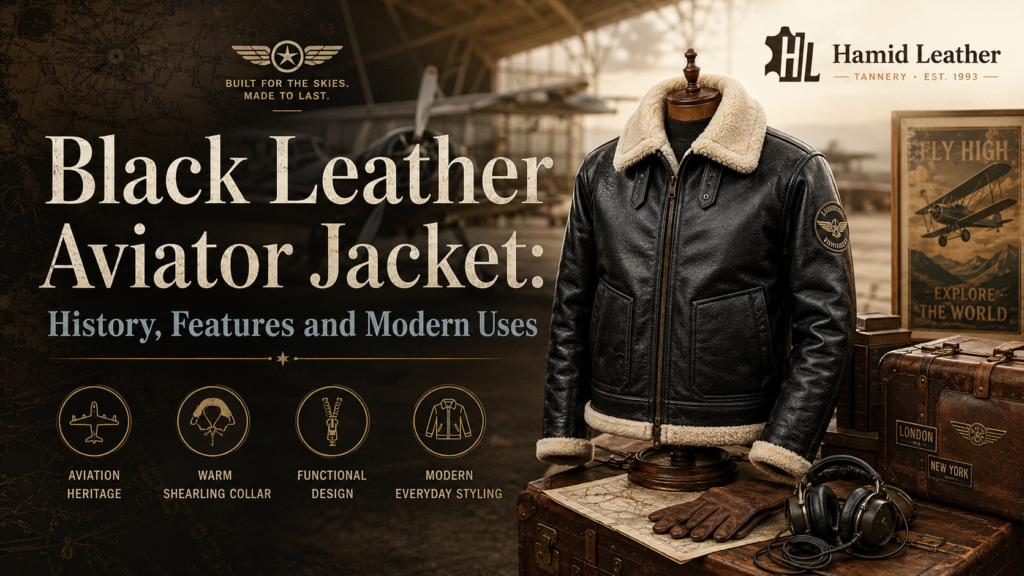
A black leather aviator jacket is more than a warm layer of clothing. It is a piece of fashion history shaped by military aviation, practical engineering and changing cultural trends. Originally developed to protect pilots in cold, exposed aircraft, the aviator jacket later moved beyond the cockpit and became a permanent part of everyday fashion.
Today, people wear black leather aviator jackets for many reasons. Some appreciate their military heritage, while others choose them for their warmth, durability and confident appearance. They can be worn with jeans and boots for a traditional look, combined with modern streetwear or adapted into premium fashion collections.
Although aviator jackets are widely available, their quality varies considerably. Two jackets may look similar in photographs but differ in leather type, lining, construction, warmth, comfort and durability. Understanding these differences is essential when choosing a jacket for personal use or developing one for a fashion brand.
This guide explores the history, key features and modern uses of the black leather aviator jacket. It also explains how to select the right leather, recognise quality construction, find the correct fit, style the jacket and care for it properly.
What Is a Black Leather Aviator Jacket?
A black leather aviator jacket is a waist-length or hip-length outer garment inspired by jackets originally worn by military pilots and aircrew. It is normally made from genuine or synthetic leather and designed to provide warmth, wind resistance and freedom of movement.
Traditional aviator jackets commonly include:
- A strong leather outer shell
- A fitted or ribbed waistband
- Ribbed or adjustable cuffs
- A secure front fastening
- A warm interior lining
- A structured collar
- Practical external or internal pockets
- A relatively short body length
Not every modern aviator jacket contains all these features. Fashion designers frequently reinterpret the traditional design by introducing slimmer fits, removable collars, lighter linings, modern hardware and decorative details.
The terms “aviator jacket,” “flight jacket” and “bomber jacket” are sometimes used interchangeably. However, there can be differences between them. An aviator jacket usually maintains a stronger connection to early pilot clothing, while a bomber jacket is a broader category that may include leather, nylon, cotton and other materials.
A classic leather aviator jacket often looks more substantial than a lightweight bomber. It may include a shearling collar, thick leather, visible seams and a warm lining. Modern versions can be softer, lighter and more suitable for ordinary urban wear.
The Early History of Aviator Jackets
The story of the aviator jacket begins with the early years of military aviation. The first aircraft often had open cockpits or limited insulation, leaving pilots exposed to intense wind and low temperatures at higher altitudes.
Ordinary clothing could not provide sufficient protection. Pilots needed garments that were warm, durable and practical without seriously restricting movement. Leather became a natural choice because it could block wind, resist regular wear and provide better protection than many lightweight fabrics available at the time.
Early flying coats were often long and heavy. They offered substantial coverage but could become uncomfortable inside increasingly compact aircraft. As cockpit designs changed, shorter jackets became more practical.
These shorter flight jackets allowed pilots to remain seated without a long coat gathering around the waist or legs. They also made it easier to reach instruments, controls and equipment.
Several military flight-jacket designs appeared during the twentieth century. Some used horsehide, goatskin or sheepskin leather, while others included fur or shearling for insulation. Each design reflected the aircraft, climate and operational requirements of its period.
The combination of a short body, strong leather shell and warm interior gradually created the silhouette now recognised as the aviator jacket.
Aviator Jackets During the World Wars
Military aviation expanded rapidly during the First and Second World Wars. As aircraft travelled higher and faster, pilots faced increasingly cold conditions. Warm flight clothing became essential equipment rather than a matter of personal preference.
During the First World War, leather flying coats and heavy jackets were commonly used to protect aircrew. Many designs were still relatively long and influenced by traditional outerwear.
By the Second World War, flight jackets had become more specialised. Different military organisations introduced jackets designed for particular aircraft, altitudes and crew positions.
Some models used heavy sheepskin with the wool facing inward. These jackets offered excellent insulation for personnel working in unpressurised aircraft. Others used horsehide or goatskin shells with knitted cuffs and waistbands to prevent cold air from entering.
The shorter jacket shape was particularly useful inside a cockpit. It provided warmth around the upper body while allowing the wearer to sit, bend and move more comfortably.
Large collars could be turned upward for extra protection. Strong front fastenings reduced wind penetration, while fitted cuffs and waistbands helped trap warmth.
These functional features eventually became important elements of the aviator jacket’s visual identity. Even modern fashion jackets continue to use details originally created for practical military purposes.
How the Aviator Jacket Entered Civilian Fashion
After military flight jackets became widely recognised, their influence spread into civilian clothing. Veterans continued wearing similar garments, military surplus became available and manufacturers began producing flight-inspired jackets for the public.
The jacket represented qualities that appealed to civilian consumers: courage, adventure, independence and technical competence. Its connection with pilots gave it a distinctive identity that ordinary outerwear did not possess.
Cinema also played an important role. Pilots, rebels and action heroes frequently appeared in leather flight jackets. These characters helped transform military clothing into a symbol of confidence and personal freedom.
Musicians and youth cultures later adopted leather jackets as part of their visual identity. Although biker and aviator styles had different origins, both became associated with individuality and rebellion.
Fashion designers gradually refined the aviator silhouette. Some reduced its weight, introduced softer leather or changed the proportions. Others retained the traditional shearling collar and rugged appearance while improving comfort for everyday wear.
The black leather aviator jacket became particularly popular because black created a cleaner, more versatile appearance. Brown leather continued to reflect the jacket’s historical origins, but black made it easier to combine with modern wardrobes.
Why Black Aviator Jackets Remain Popular
The aviator jacket has survived numerous fashion cycles because its appeal is based on more than a temporary trend.
Strong Historical Identity
Many garments become fashionable for a short period and then disappear. The aviator jacket is different because its design is connected to a real history and purpose.
Its practical origins give it authenticity. Features such as the short body, warm collar and fitted cuffs were originally developed to solve genuine problems faced by pilots.
Timeless Appearance
A well-proportioned black leather aviator jacket does not depend heavily on one season’s trends. Small details may change, but the basic shape remains familiar.
This makes it a valuable long-term wardrobe investment. A simple, well-made design can remain wearable for many years.
Easy Colour Coordination
Black works with almost every colour. A black aviator jacket can be worn with blue denim, grey knitwear, white shirts, neutral trousers or completely black outfits.
It also looks more urban and contemporary than many traditional brown flight jackets.
Warmth and Practicality
A properly lined aviator jacket can offer considerable warmth. Ribbed cuffs, secure closures and insulated collars help reduce cold air entering the garment.
The exact warmth depends on the leather, lining and construction. A lightweight fashion jacket should not be expected to perform like a heavy shearling flight jacket.
Durability
Quality leather can handle years of regular wear when properly maintained. It may develop creases and natural tonal changes without immediately losing its character.
However, durability depends on more than the outer leather. Weak stitching, poor zips and fragile lining materials can shorten the life of the jacket.
Confident Style
An aviator jacket adds structure and personality to a simple outfit. It can make an ordinary T-shirt and jeans look more deliberate without requiring complicated styling.
Main Features of a Black Leather Aviator Jacket
Understanding the jacket’s main features can help buyers distinguish a genuine aviator-inspired design from an ordinary leather jacket.
Short, Practical Length
Most aviator jackets finish around the waist or upper hip. This length developed because pilots needed to sit comfortably and operate aircraft controls.
Modern designs sometimes extend slightly lower for additional coverage. However, an excessively long body can remove the traditional aviator proportions.
Front Zip Closure
A strong central zip is one of the most common features. It allows the jacket to be opened quickly and provides a clean, functional appearance.
The zip should move smoothly without catching the lining. It should also remain straight when closed. A weak main zip can make an otherwise good jacket difficult to use.
Ribbed Waistband
Many aviator and bomber jackets include a knitted waistband. It helps hold the jacket close to the body and reduces cold air entering from below.
The rib should recover its shape after stretching. Poor-quality ribbing can become loose, uneven or damaged after limited use.
Some leather aviator jackets replace knitted ribbing with an adjustable leather waist. This creates a more structured and refined appearance.
Ribbed or Adjustable Cuffs
Fitted cuffs help retain warmth and prevent wind from moving through the sleeves. They may be made from knitted rib or leather with snaps, zips or adjustment tabs.
The cuffs should feel secure without restricting blood circulation or becoming uncomfortable.
Shearling Collar
A shearling or fur-style collar is one of the most recognisable aviator details. It adds warmth around the neck and reinforces the jacket’s historical character.
The collar may use genuine shearling, synthetic pile or a removable trim. Buyers should check the material description carefully.
A removable collar increases versatility because the jacket can be worn with a rugged winter appearance or a cleaner transitional-season look.
Warm Lining
Traditional aviator jackets were designed for cold conditions, so insulation is an important feature.
Modern linings may include shearling, quilted polyester, cotton blends or smooth synthetic materials. Heavy shearling provides warmth but also adds weight and bulk.
A lightweight lining is more suitable for mild climates and indoor-to-outdoor wear.
Practical Pockets
Aviator jackets commonly include two side pockets, chest pockets and internal storage. Some military-inspired designs also use sleeve pockets.
Pockets should be positioned naturally and provide enough depth for practical use. Decorative pocket flaps or zips should not be mistaken for functional storage.
Structured Shoulders
A traditional aviator jacket generally has a strong upper-body shape. Shoulder panels, seams or epaulettes can reinforce this structure.
The design should still allow comfortable arm movement. Excessive stiffness around the shoulders can make the jacket tiring to wear.
Durable Hardware
Zips, snaps and buckles contribute to both function and appearance. Silver, gunmetal, antique brass and matte-black hardware are all commonly used.
The finish should suit the leather and remain consistent across the jacket. Hardware should operate smoothly and have no sharp edges.
Different Types of Black Leather Aviator Jackets
The term “aviator jacket” includes several related styles. Understanding them can make the buying process easier.
Classic Flight Jacket
The classic flight jacket normally features a central zip, knitted cuffs, a ribbed waistband and a structured collar.
It has a clean shape that works well for casual and smart-casual outfits. This is one of the most versatile options for everyday wear.
Shearling Aviator Jacket
A shearling aviator jacket uses a leather or suede exterior with a wool interior. The shearling may also appear along the collar, cuffs and hem.
This style offers excellent warmth and a distinctive winter appearance. However, it can be heavy and may feel unsuitable in mild weather.
B-3-Inspired Jacket
The B-3-inspired jacket is based on heavy flight clothing associated with aircrew operating in cold conditions. It usually has a substantial shearling interior, wide collar and visible leather straps.
Modern fashion versions often maintain the dramatic shape while reducing the original weight.
A-2-Inspired Jacket
An A-2-inspired jacket generally has a leather shell, central zip, shirt-style collar, knitted cuffs and fitted waistband.
It has a cleaner appearance than a bulky shearling jacket and can be easier to wear during autumn and spring.
MA-1-Inspired Leather Jacket
The original MA-1 style is strongly associated with nylon flight jackets, but designers frequently reinterpret it in leather.
A leather MA-1-inspired jacket usually features a rounded bomber silhouette, ribbed collar, sleeve pocket and minimal external decoration.
Hooded Aviator Jacket
A hooded version introduces a casual, modern element. The hood may be attached permanently or designed as a removable feature.
Some designs combine a leather body with a fabric hood. The two materials should have compatible strength and care requirements.
Minimalist Aviator Jacket
A minimalist design reduces traditional military details. It may use smooth leather, black hardware, a simple collar and fewer pockets.
This option is suitable for people who appreciate the aviator shape but prefer clean, understated clothing.
Vintage Aviator Jacket
Vintage-inspired jackets use distressed leather, antique hardware and heritage-style linings. Their surfaces may display tonal variation intended to create an aged appearance.
Distressing should look controlled and natural. It should not hide poor-quality leather or weak construction.
Oversized Aviator Jacket
An oversized aviator jacket has wider sleeves, dropped shoulders and a relaxed body. It is popular in modern streetwear and fashion collections.
A true oversized jacket is deliberately patterned with balanced proportions. Purchasing a standard jacket several sizes too large can create incorrect sleeve, pocket and shoulder placement.
Aviator Jacket vs Biker Jacket
Aviator and biker jackets are both iconic leather garments, but their original purposes and visual details are different.
An aviator jacket was designed for pilots. It usually has a central zip, warm collar, ribbed waistband and a rounded or structured flight-jacket silhouette.
A classic biker jacket was developed for motorcycle riders. It often uses an asymmetrical front zip, wide lapels, zipped cuffs, adjustable belt and prominent metal hardware.
Aviator jackets generally focus on warmth and wind protection. Biker jackets traditionally focus on mobility, durability and the needs of motorcycle riding.
The aviator jacket often feels softer and more relaxed, especially when it includes a shearling collar. A double-rider biker jacket usually creates a sharper and more rebellious appearance.
Prefer a more motorcycle-inspired style? Read our black leather biker jacket guide.
Both styles can work in the same wardrobe. The better option depends on personal taste, climate and intended use.
Best Leather Types for an Aviator Jacket
The type of leather affects weight, softness, grain, durability and price.
Cowhide Leather
Cowhide is strong, substantial and naturally suitable for rugged jackets. It can create a structured aviator silhouette and withstand regular use.
New cowhide may initially feel stiff, particularly when the material is thick. It normally becomes more flexible through wear.
Heavy cowhide can feel uncomfortable for customers seeking a lightweight fashion layer, so thickness should match the jacket’s intended use.
Goatskin Leather
Goatskin provides a useful balance of strength, flexibility and moderate weight. Its natural pebble grain adds character without appearing excessively rough.
It is historically relevant to certain flight-jacket designs and remains a practical option for modern aviator jackets.
Sheepskin Leather
Sheepskin is soft, flexible and relatively lightweight. When the wool remains attached, it creates genuine shearling.
A sheepskin aviator jacket can offer excellent insulation while maintaining a luxurious appearance. Quality shearling can be expensive and requires careful maintenance.
Lambskin Leather
Lambskin is appreciated for its smooth surface, light weight and soft feel. It works particularly well for premium fashion jackets intended for urban use.
It is generally more delicate than heavy cowhide. Scratches and surface damage may appear more easily if the jacket is treated roughly.
Buffalo Leather
Buffalo leather has a prominent grain and rugged personality. It works well for vintage-inspired jackets that need a substantial appearance.
Panel matching is important because the grain and shade can vary noticeably across the hide.
Horsehide Leather
Horsehide is associated with some heritage-style flight jackets. It can be dense, durable and capable of developing an attractive patina.
It may require a longer breaking-in period and is not as widely used in mainstream fashion production.
Faux Leather
Faux leather provides an animal-free and generally less expensive alternative. Modern synthetic materials can create an attractive appearance, but quality differs significantly.
Low-quality faux leather may peel or crack, particularly around the sleeves, cuffs and folds. It does not normally age in the same way as genuine leather.
Understanding Leather Quality
The label “genuine leather” does not provide enough information to determine a jacket’s quality. Buyers should also consider the grade, finish and construction.
Full-grain leather retains the hide’s natural surface. It may show scars, wrinkles and grain variation. These characteristics can add authenticity and allow the jacket to develop a rich patina.
Top-grain leather is lightly corrected to create greater surface consistency. It can provide a good balance between natural appearance and practical durability.
Corrected-grain leather is sanded and finished more heavily. It offers a uniform surface that can be useful for larger production runs.
Split leather comes from a lower layer of the hide. It is generally more affordable and may be coated or embossed to create a smoother appearance.
No grade should be judged in isolation. Tanning, finishing, thickness and manufacturing quality also influence the performance of the final jacket.
How Should a Black Leather Aviator Jacket Fit?
A good aviator jacket should feel comfortable, secure and slightly relaxed without appearing shapeless.
The shoulder seams should sit near the natural edges of the shoulders unless the design is intentionally oversized. If the seams sit too far inward, movement may feel restricted.
The chest should provide enough room for the layers you intend to wear. A winter aviator jacket may need to fit over a jumper, while a lightweight jacket may be designed for a shirt or T-shirt.
The main zip should close without strong pulling or horizontal creases. However, the body should not be so loose that cold air easily enters.
Sleeves should normally finish around the wrist bone or slightly below it. Ribbed cuffs may sit closer to the wrist and hold the leather sleeve in position.
The waistband should rest securely without rising excessively when you move. Test the jacket by reaching forward, raising your arms and bending your elbows.
Leather may soften with wear, but it should not be expected to correct seriously incorrect measurements.
When shopping online, compare the garment measurements with a jacket that already fits well. Check the chest, shoulders, sleeves, body length and waist rather than relying only on a general size label.
How to Check the Quality Before Buying
A careful inspection can reveal whether an aviator jacket is likely to perform well.
Inspect the Leather
The leather should feel appropriate for the intended design. A rugged cowhide jacket may be firm, while lambskin should feel soft and smooth.
Natural variation is normal, but neighbouring panels should not look completely unrelated in colour, grain or shine.
Examine the Stitching
Look for straight and even stitching around the shoulders, armholes, pockets, collar and zip.
Skipped stitches, loose threads and uneven seam lines may indicate poor quality control. High-stress areas should be reinforced properly.
Test the Main Zip
Open and close the zip several times. It should move without sticking, separating or catching the lining.
The front panels should remain balanced when the jacket is closed.
Check the Ribbing
Stretch the cuffs and waistband gently. They should return to their original shape without becoming loose or distorted.
The ribbing should be securely attached to the leather.
Examine the Lining
The lining should sit smoothly inside the jacket. It should not twist, sag or extend below the outer shell.
Inspect the internal seams and pockets because hidden areas often reveal the manufacturer’s attention to detail.
Review the Collar
If the jacket has genuine or synthetic shearling, check its density, softness and attachment.
A removable collar should connect securely without leaving visible gaps.
Test Every Pocket
Confirm that the pockets are functional and deep enough for their intended purpose. Open and close all pocket zips and snaps.
Check the Hardware
Hardware should feel secure and consistent. Poor plating may wear quickly, while sharp edges can damage the leather.
Modern Uses of a Black Leather Aviator Jacket
The aviator jacket is no longer limited to pilots or military personnel. Its modern uses are diverse.
Everyday Casual Wear
The jacket works naturally with jeans, T-shirts, jumpers and boots. It adds visual structure without making a casual outfit feel excessively formal.
A lightweight leather aviator jacket is especially useful during autumn and spring.
Winter Outerwear
A shearling-lined aviator jacket can provide meaningful warmth in cold weather. It can be worn with knitwear, scarves and sturdy footwear.
However, insulation varies between products. A fashion jacket should not automatically be treated as specialist clothing for extreme conditions.
Smart-Casual Clothing
A minimalist black aviator jacket can be worn with a roll-neck jumper, tailored trousers and Chelsea boots.
Smooth leather, limited hardware and a clean collar work best when the goal is a refined appearance.
Streetwear
Oversized aviator jackets are frequently combined with hoodies, wide-leg trousers, cargo trousers and trainers.
The jacket provides volume and structure, while black makes the larger silhouette easier to coordinate.
Travel
A well-designed aviator jacket can be useful for travel because it provides warmth, practical pockets and versatile styling.
Weight should be considered. A heavy shearling jacket may become inconvenient when moving between warm airports, vehicles and outdoor environments.
Workwear-Inspired Fashion
Rugged leather, large pockets and durable hardware allow the jacket to fit naturally into workwear-inspired wardrobes.
It can be combined with denim, heavy cotton shirts and boots.
Brand and Retail Collections
For fashion brands, the aviator jacket can serve as a dependable seasonal product. Its recognisable identity makes it suitable for heritage, luxury, streetwear and contemporary collections.
Brands can adjust the leather, lining, colour, hardware and fit for different markets.
How to Style a Black Leather Aviator Jacket for Men
For a classic casual outfit, wear the jacket with a white T-shirt, blue jeans and leather boots. This simple combination allows the jacket to remain the main feature.
For a monochrome look, combine it with a black jumper, black jeans and dark footwear. Use different textures to prevent the outfit from looking flat.
A minimalist aviator jacket can also be worn with a fine-knit roll-neck, tailored trousers and Chelsea boots for a smart-casual appearance.
For colder weather, layer a medium-weight jumper underneath. Add dark denim, boots and a neutral scarf.
For streetwear, choose a relaxed or oversized jacket and wear it over a hoodie with cargo trousers and trainers.
Avoid combining too many military-inspired items in one outfit. An aviator jacket, combat trousers, heavy boots and multiple patches may make the look feel more like a costume than everyday clothing.
How to Style a Black Leather Aviator Jacket for Women
A black aviator jacket can add structure to both casual and polished outfits.
Pair it with high-waisted jeans, a fitted top and ankle boots for an easy everyday look.
For contrast, wear a structured jacket over a midi dress. The leather adds weight and definition, while the dress softens the jacket’s military character.
A cropped aviator jacket works well with wide-leg trousers or a high-waisted skirt because it helps define the waist.
An oversized design can be worn over leggings, knitwear and trainers for a comfortable streetwear outfit.
For a more polished appearance, combine a smooth lambskin aviator jacket with tailored trousers, a blouse and loafers or heeled boots.
When the jacket has a large shearling collar, keep jewellery and other accessories relatively simple.
Common Buying Mistakes
One common mistake is selecting a jacket based only on appearance. A beautiful jacket may still have uncomfortable armholes, weak zips or poor lining.
Another mistake is buying a size that is too tight. Leather may soften, but the shoulders and chest will not necessarily expand enough to correct a poor fit.
Some buyers assume that heavier leather always means better quality. Weight should match the climate and intended use.
Others purchase a heavily insulated aviator jacket for a mild climate. It may look attractive but become too warm for regular use.
Focusing only on the outer shell is another mistake. The lining, ribbing, stitching and hardware are equally important to the jacket’s lifespan.
Buyers should also avoid relying entirely on the phrase “genuine leather.” Ask about the animal source, grade, thickness and finish.
Finally, do not ignore the return policy when shopping online. Exact measurements and flexible exchange terms are especially important when purchasing fitted leather clothing.
How to Care for a Black Leather Aviator Jacket
Hang the jacket on a wide, supportive hanger. Thin wire hangers can distort the shoulders.
Store it in a cool, dry and ventilated space away from prolonged sunlight. Direct sunlight may fade black leather.
Avoid sealing the jacket permanently in plastic. A breathable garment cover is a better choice.
Remove dust using a soft cloth. For stains, use a cleaner developed for the specific leather type and test it on a hidden area first.
Condition smooth leather when it begins to feel dry. Use the product sparingly because excessive conditioner can darken the leather or leave a greasy surface.
If the jacket gets wet, blot away excess moisture and allow it to dry naturally. Keep it away from radiators, heaters and hair dryers.
Shearling requires appropriate specialist care. Ordinary leather cream should not be applied directly to the wool.
Do not place the jacket in a household washing machine unless the manufacturer explicitly states that it is safe.
Broken zips, torn linings and loose seams should be repaired promptly. Early repairs can prevent greater damage.
Can You Wear an Aviator Jacket in the Rain?
A small amount of light rain may not seriously damage properly finished leather, but a leather aviator jacket should not be considered completely waterproof.
A suitable protective spray can improve resistance to moisture. Always test it on a hidden area because it may alter the colour or shine.
If the jacket becomes wet, blot it gently and allow it to dry at room temperature. Do not rub the surface aggressively.
Heavy or prolonged rain can create water marks, stiffness and changes in colour. Waterproof technical outerwear is more suitable for severe weather.
Custom Black Leather Aviator Jacket Manufacturing
Custom manufacturing enables fashion brands, wholesalers and retailers to develop aviator jackets for a specific market instead of relying on generic designs.
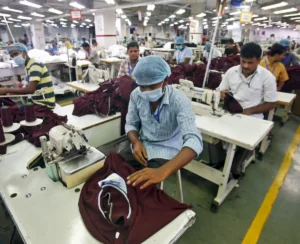
The process normally begins with a sketch, reference sample or technical pack. The buyer and manufacturer then confirm the leather, thickness, finish, lining, measurements, hardware and branding.
Pattern development is especially important. Leather behaves differently from woven fabric, so the pattern must account for thickness, movement and seam construction.
A sample is produced before bulk manufacturing. The buyer should assess the fit, comfort, collar shape, pocket position, sleeve movement and overall balance.
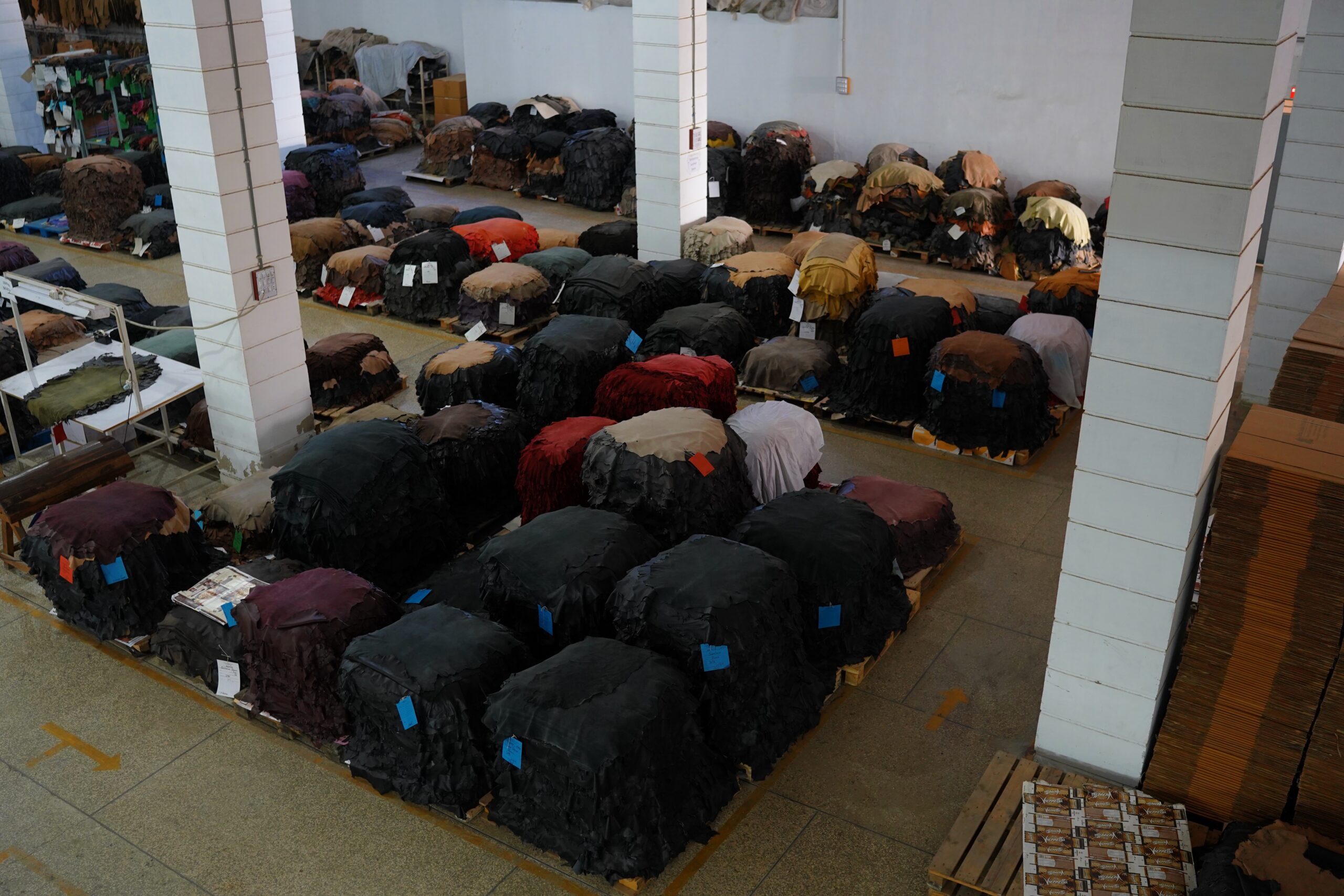
Revisions may be required before approval. Once the sample is confirmed, hides are inspected and cut. Skilled cutting helps manage natural marks, shade differences and grain direction.
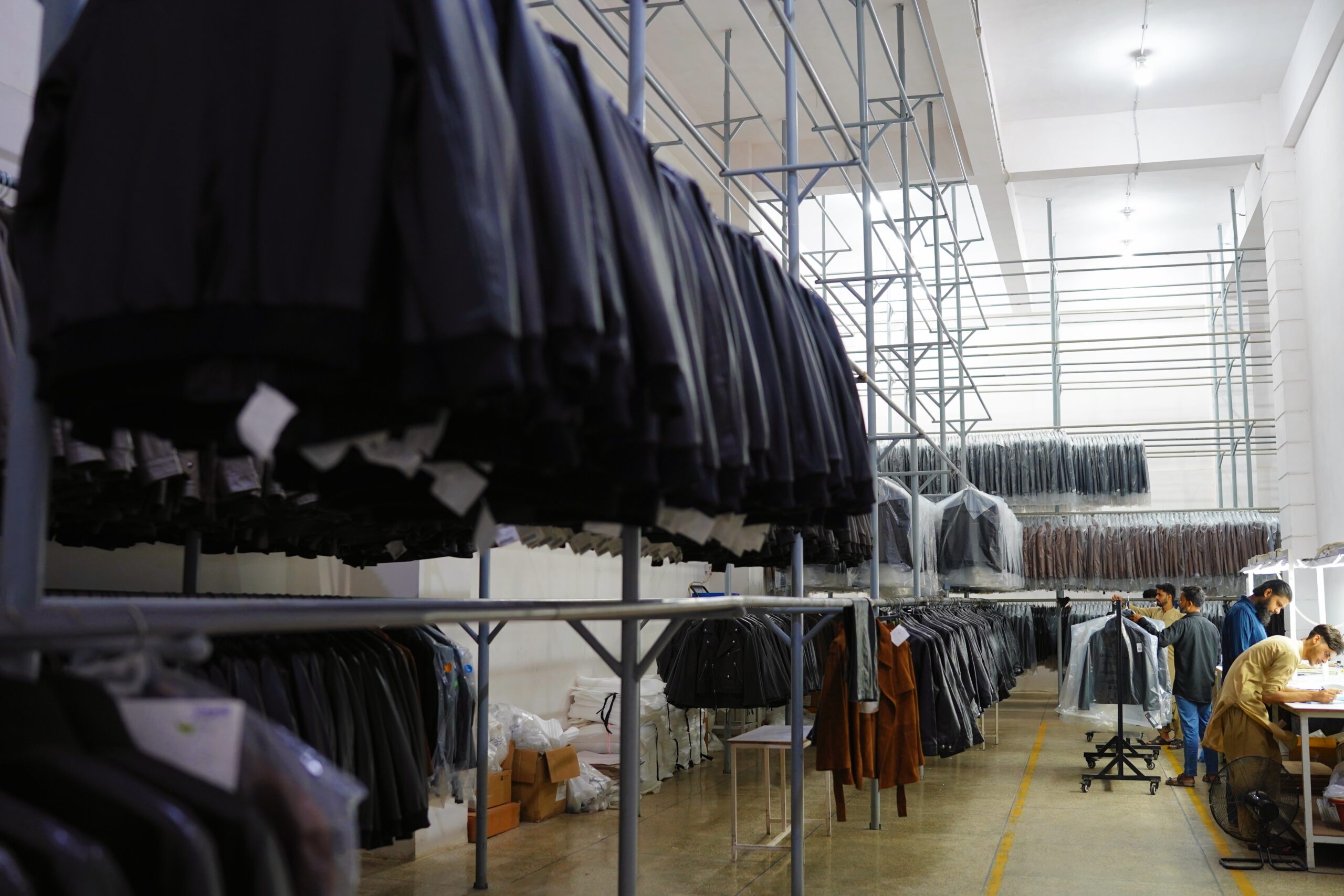
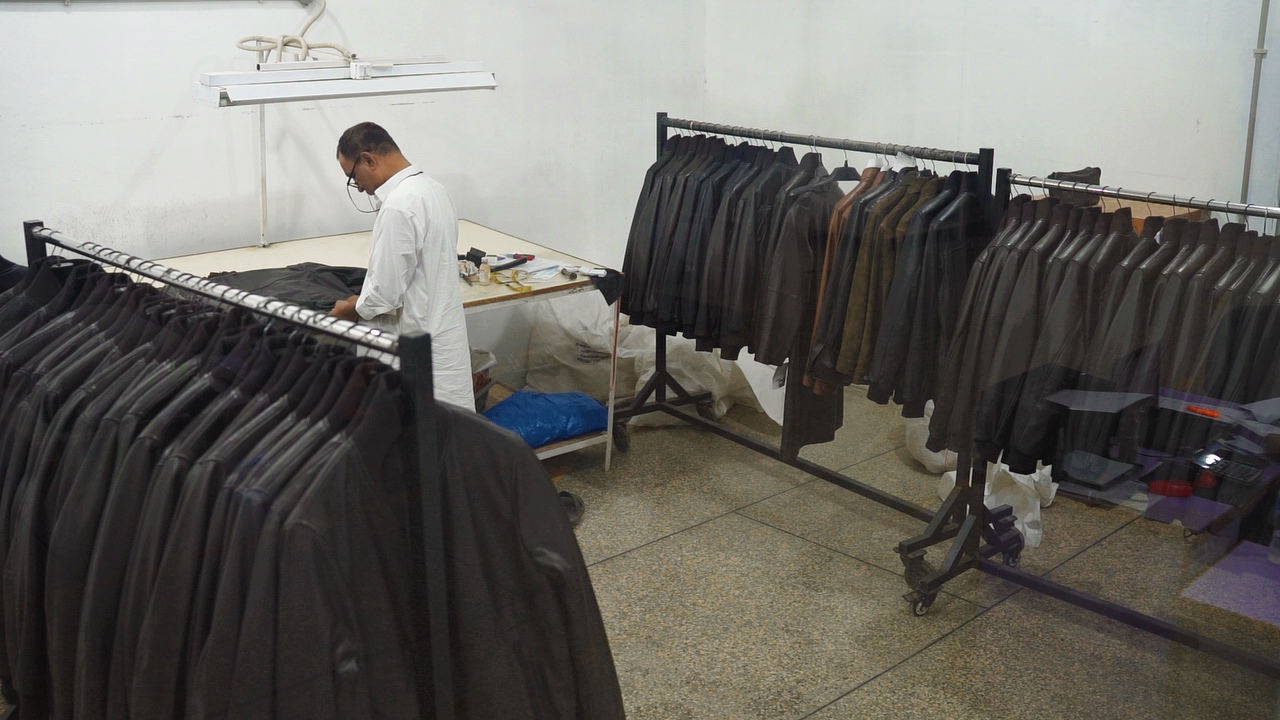
During assembly, manufacturers must reinforce stress points and maintain consistent stitching. Final inspection should cover measurements, panel matching, hardware, lining, labels and packaging.
For B2B buyers, Hamid Leather Ltd manufactures custom leather garments for international brands, wholesalers and retailers.
What Fashion Brands Should Consider
Before ordering aviator jackets in bulk, brands should clearly identify the target customer and intended climate.
A heavy shearling jacket designed for a cold European winter requires different specifications from a lightweight fashion jacket intended for transitional weather.
The technical pack should define:
- Leather type and thickness
- Colour and finish
- Lining material
- Rib composition
- Hardware finish
- Garment measurements
- Pocket construction
- Stitching requirements
- Branding positions
- Acceptable production tolerances
Physical sampling is essential. Photographs alone may not reveal excessive weight, restricted movement or an unbalanced collar.
Brands should also agree on acceptable natural variation. Leather is not perfectly uniform, so colour, grain and surface standards must be discussed before production.
Minimum order quantities, lead times, size ratios, packaging and inspection procedures should be confirmed in writing.
Sustainability and Responsible Production
Sustainability claims should be supported by measurable practices rather than broad marketing language.
A durable aviator jacket that remains wearable for many years may reduce the need for frequent replacement. Longevity depends on strong materials, repairable construction and timeless design.
Responsible production can involve improved water management, controlled chemical use, energy efficiency and careful waste handling.
Efficient pattern placement can reduce leather waste. Smaller offcuts may be used for labels, accessories or reinforcement components.
Brands should request relevant certifications, audit information and environmental documentation from suppliers.
Social responsibility is also important. Workplace safety, fair labour practices and supply-chain traceability should form part of the sourcing process.
Frequently Asked Questions
Are black leather aviator jackets still fashionable?
Yes. Their military heritage and practical design have allowed them to remain relevant. Modern versions are available in classic, minimalist, oversized and luxury styles.
Is an aviator jacket the same as a bomber jacket?
The terms overlap, but they are not always identical. Aviator jackets generally maintain a stronger connection to pilot clothing, while bomber jackets include a broader range of materials and designs.
Which leather is best for an aviator jacket?
Cowhide provides rugged structure, goatskin balances durability and flexibility, sheepskin offers warmth, and lambskin creates a softer luxury garment. The right option depends on the intended use.
Should an aviator jacket fit tightly?
It should feel secure but not restrictive. There should be enough room for the clothing you plan to wear underneath.
Are shearling aviator jackets warm?
Yes, genuine shearling can provide excellent insulation. The level of warmth depends on wool density, jacket construction and coverage.
Can women wear men’s aviator jackets?
Yes. A men’s jacket can create an oversized appearance, but the sleeve length and shoulder placement should still look intentional.
Can an aviator jacket be worn in summer?
A lightweight, uninsulated leather version may work on cool summer evenings. Heavy cowhide and shearling jackets are generally too warm for hot conditions.
How long can a leather aviator jacket last?
A well-made genuine leather jacket can last for many years or even decades. Its lifespan depends on the leather, construction, frequency of wear and maintenance.
Does black leather fade?
Yes. Sunlight, friction, moisture and unsuitable products can affect the colour. Proper storage and leather-specific care can reduce fading.
Is faux leather suitable for an aviator jacket?
It can be suitable for customers seeking a lower price or animal-free material. However, quality varies, and some synthetic surfaces may peel or crack earlier than genuine leather.
Can a leather aviator jacket be repaired?
Many problems, including torn linings, broken zips and damaged ribbing, can be repaired by a leather specialist.
What should I wear under an aviator jacket?
T-shirts, shirts, hoodies, jumpers and roll-neck tops can all work. Choose the layer according to the jacket’s fit and the weather.
Final Thoughts
The black leather aviator jacket has travelled a remarkable path from military aviation equipment to modern fashion essential. Its original design was shaped by practical needs: pilots required warmth, wind resistance, durability and freedom of movement inside demanding aircraft environments.
Those functional qualities created a silhouette that remains recognisable today. The short body, secure front closure, fitted cuffs, structured collar and warm lining all contribute to the jacket’s lasting appeal.
Modern consumers can choose from many versions. A heavy shearling jacket offers warmth and strong historical character. A goatskin flight jacket provides flexibility and durability, while a soft lambskin aviator creates a more refined fashion look.
The best jacket is not necessarily the heaviest or most expensive. It is the one that suits the wearer’s climate, intended use, personal style and comfort requirements.
Before purchasing, inspect the leather, stitching, lining, ribbing and hardware. Check exact garment measurements, especially when ordering online. Do not rely only on size labels or broad claims such as “genuine leather.”
Proper care can significantly extend the jacket’s useful life. Store it correctly, protect it from excessive moisture and heat, use appropriate cleaning products and repair small problems before they become serious.
For fashion brands and wholesale buyers, the aviator jacket offers extensive customisation opportunities. Leather type, finish, insulation, collar, hardware, fit and branding can all be adapted for a particular market. Detailed specifications, careful sampling and reliable quality control are essential for successful production.
Whether worn with jeans and boots, tailored trousers or contemporary streetwear, a thoughtfully selected black leather aviator jacket can remain a dependable and distinctive part of the wardrobe for many years.