Which Leather Is Best for a Black Leather Jacket?
Choosing the right leather is one of the most important decisions when buying or manufacturing a black leather jacket. The leather determines how the jacket feels, fits, ages and performs over time. It also influences the jacket’s weight, warmth, appearance, durability and price. There is no single leather that is best for every black leather jacket. Cowhide is often preferred for durability and structure, lambskin for softness and luxury, goatskin for flexibility and strength, and sheepskin for lightweight comfort. Buffalo leather offers a rugged appearance, while suede and nubuck provide a softer, more textured finish. The best choice depends on the intended style and use. A protective motorcycle jacket requires different qualities from a lightweight fashion jacket. Similarly, a winter aviator jacket needs different materials from a minimalist leather blazer. This guide compares the most common types of leather used for black leather jackets. It explains their characteristics, benefits, limitations and suitability for different styles, customers and climates. Why Does Leather Type Matter? Leather jackets may appear similar in photographs, but their performance can vary considerably depending on the hide and finishing process. Leather type affects: Durability Weight Softness Flexibility Surface grain Water resistance Breathability Warmth Maintenance Ageing Price Suitability for different jacket styles A thick cowhide jacket may feel firm and require time to soften. A lambskin jacket can feel comfortable from the first wear but may be more vulnerable to scratches. Goatskin offers a useful balance between these two qualities, while shearling provides considerably more insulation. The tanning and finishing processes are also important. Two jackets made from cowhide can feel completely different if one uses thick, heavily finished leather and the other uses thin, garment-grade leather. Buyers should therefore consider both the animal source and the way the leather has been processed. Which Leather Is Best for a Black Leather Jacket? For most buyers, the best leather depends on the jacket’s intended purpose: Leather type Best suited for Main advantage Main limitation Cowhide Biker, café racer and structured jackets Excellent durability Can feel heavy and stiff Lambskin Luxury, fitted and minimalist jackets Very soft and lightweight More delicate Goatskin Bomber, flight and everyday jackets Strong, flexible and moderately light Distinct grain may not suit every design Sheepskin Lightweight fashion jackets Soft and comfortable Less resistant to rough use Shearling Aviator and winter jackets Excellent insulation Heavy and expensive Buffalo leather Vintage and rugged jackets Strong character and durability Often thick and heavy Calfskin Premium fashion jackets Smooth, refined and durable Higher cost Suede Fashion and casual jackets Soft, textured appearance Sensitive to water and stains Nubuck Premium casual jackets Velvety surface with strength Requires careful maintenance Faux leather Affordable and animal-free fashion jackets Lower initial cost Quality and lifespan vary Cowhide is generally the best choice for maximum durability. Lambskin is usually best for softness and luxury. Goatskin is one of the strongest all-round options because it combines durability, flexibility and manageable weight. Cowhide Leather Cowhide is one of the most widely used materials for black leather jackets. It is known for its strength, substantial feel and ability to withstand regular wear. Characteristics of Cowhide Cowhide commonly has: A firm structure Good abrasion resistance Moderate to heavy weight Visible natural grain Strong tear resistance A longer breaking-in period Excellent long-term durability The exact feel depends on the hide thickness and finish. Heavy cowhide can create a rugged motorcycle-style jacket, while thinner garment cowhide can be used for more comfortable fashion designs. Advantages of Cowhide The main benefit of cowhide is durability. A properly constructed cowhide jacket can remain wearable for many years when maintained correctly. Cowhide also holds its shape well. This makes it suitable for jackets with structured shoulders, defined lapels, multiple pockets and substantial hardware. Black cowhide develops an attractive character as it ages. Areas exposed to movement and friction may gradually become softer and develop subtle tonal variation. Limitations of Cowhide Cowhide can be heavier than other garment leathers. A thick jacket may feel tiring during extended wear, particularly in a mild or warm climate. New cowhide can also feel stiff. Although it usually becomes more comfortable with use, buyers should not choose an incorrectly sized jacket and expect the leather to solve the fitting problem. Best Jacket Styles for Cowhide Cowhide works particularly well for: Biker jackets Motorcycle-inspired jackets Café racer jackets Structured bombers Utility jackets Vintage jackets Heavy winter jackets For a black leather biker or café racer jacket intended for frequent use, cowhide is often the most dependable option. Lambskin Leather Lambskin is valued for its smooth surface, soft hand feel and low weight. It is frequently used in premium fashion jackets. Characteristics of Lambskin Lambskin generally offers: Exceptional softness A smooth and refined surface Lightweight construction Natural flexibility Comfortable drape Minimal breaking-in time A luxurious appearance A lambskin jacket usually feels comfortable from the first wear. It follows the body more naturally than thick cowhide and works well for fitted or flowing silhouettes. Advantages of Lambskin Softness is lambskin’s greatest advantage. It is suitable for customers who want a leather jacket that does not feel heavy or restrictive. Its smooth surface also accepts black dyes and finishes well, creating a rich and polished appearance. Depending on the finish, black lambskin can appear glossy, semi-matte or completely matte. Lambskin works especially well for designs that require close-fitting sleeves, waist shaping or clean minimalist panels. Limitations of Lambskin Lambskin is more delicate than heavy cowhide and goatskin. It can be vulnerable to: Scratches Scuffs Abrasion Sharp objects Rough storage Excessive moisture It is not normally the best option for a jacket that will be exposed to demanding outdoor conditions. Best Jacket Styles for Lambskin Lambskin is ideal for: Luxury fashion jackets Slim-fit jackets Minimalist jackets Leather blazers Fitted women’s jackets Cropped jackets Lightweight café racers Smart-casual jackets For a soft, refined and lightweight black leather jacket, lambskin is often the best choice. Goatskin Leather Goatskin is a strong and flexible material with a naturally visible grain. It offers a useful balance
Men’s vs Women’s Black Leather Jackets: Key Design Differences
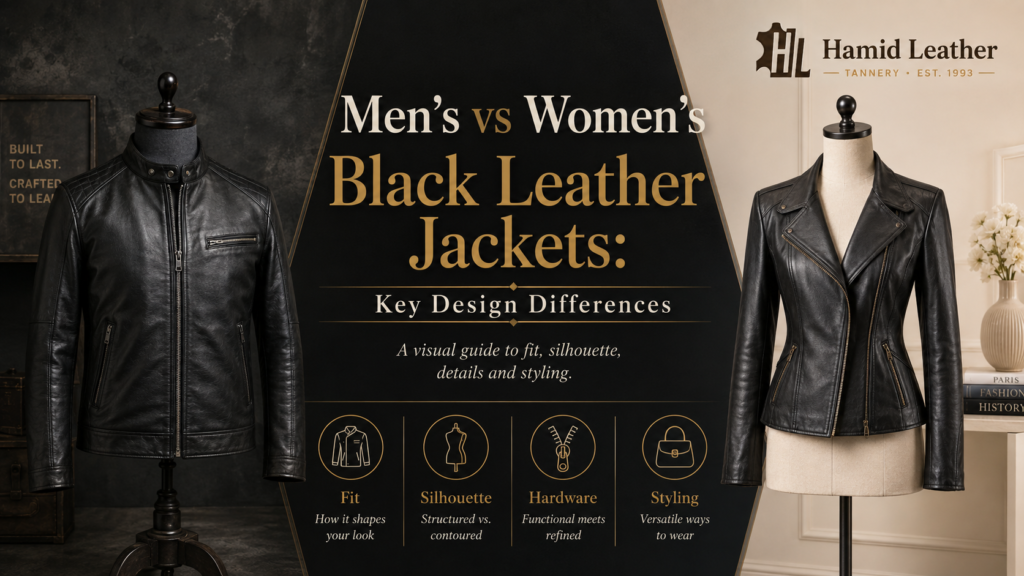
Black leather jackets are worn by men and women across almost every major fashion market. Their appeal comes from their durability, versatility and ability to add structure and confidence to an outfit. Although many styles appear similar at first, men’s and women’s black leather jackets often differ considerably in their patterns, proportions, fit and detailing. The main differences are not simply based on size. A women’s leather jacket is not necessarily a smaller version of a men’s jacket. Manufacturers usually adjust the shoulder width, chest shaping, waist, hips, sleeve proportions and overall length to suit the intended customer. However, modern fashion is making these categories more flexible. Oversized jackets, unisex collections, gender-neutral sizing and relaxed silhouettes allow customers to choose designs according to their preferred appearance instead of following traditional labels. This guide explains the key design differences between men’s and women’s black leather jackets. It covers fit, measurements, popular styles, leather selection, construction, styling and important considerations for fashion brands and wholesale buyers. What Is a Men’s Black Leather Jacket? A men’s black leather jacket is normally developed using a pattern based on typical male body proportions. It usually provides greater width through the shoulders and chest, a straighter body shape and more room in the upper arms. Common characteristics include: Broad shoulder construction Straight or slightly tapered body shape Longer sleeves Greater chest width Lower or less pronounced waist shaping Larger pockets Substantial hardware Longer body length Structured collars and lapels Heavier leather in some classic styles These features vary according to the jacket’s category. A men’s café racer may have a slim and minimal shape, while a bomber may be fuller through the body. A biker jacket can be closely fitted, whereas an oversized streetwear jacket may use deliberately dropped shoulders. The term “men’s jacket” describes the intended pattern and size system rather than a rule about who can wear it. Women may choose a men’s jacket when they want a straighter, longer or more oversized silhouette. What Is a Women’s Black Leather Jacket? A women’s black leather jacket is generally designed around typical female body proportions. It may have narrower shoulders, additional room through the bust, a more defined waist and greater accommodation around the hips. Common characteristics include: Narrower shoulder width Shaping around the bust A more defined waist Shorter body and sleeve proportions Curved side seams Higher armholes Smaller or differently positioned pockets Lighter hardware Cropped or hip-length options Greater variation in silhouette Women’s leather jackets are available in many styles, including biker jackets, bombers, blazers, cropped jackets, aviators, oversized designs and leather overshirts. Not every women’s jacket is closely fitted. Modern collections frequently include boxy, oversized and unisex-inspired silhouettes. The key difference is that these shapes are usually developed intentionally rather than created by simply increasing a standard size. The Main Difference Between Men’s and Women’s Leather Jackets The most important difference is the pattern. A garment pattern determines the jacket’s shape before the leather is cut. It controls the shoulders, chest, waist, hips, armholes, sleeves, collar, pockets and overall length. Men’s jackets normally begin with broader shoulders and a straighter torso. Women’s patterns frequently require more shaping between the bust, waist and hips. This affects how the jacket hangs when worn. A men’s jacket placed on a female body may fit correctly at the shoulders but feel narrow around the hips. Alternatively, choosing a larger size to accommodate the hips may make the shoulders and sleeves excessively large. Similarly, a women’s jacket worn by a man may feel restrictive across the shoulders, chest or upper arms even when the waist measurement appears suitable. These differences are general rather than universal. Individual body shapes vary widely, which is why exact garment measurements are more useful than gender labels alone. Men’s vs Women’s Black Leather Jackets: Quick Comparison Feature Men’s black leather jacket Women’s black leather jacket Shoulders Usually broader and more structured Generally narrower or softly shaped Chest Wider with less shaping Often shaped to accommodate the bust Waist Straight or slightly tapered Frequently more defined Hips Limited additional width May include extra room or curved shaping Body length Usually longer Often shorter, cropped or hip length Sleeves Generally longer and wider Usually shorter and more tapered Armholes Often lower and wider Frequently higher and more shaped Pockets Larger and placed lower Often smaller and placed to suit the waist Hardware Commonly larger or heavier May be lighter, smaller or decorative Fit options Regular, slim, relaxed and oversized Fitted, cropped, boxy, relaxed and oversized Common styles Biker, bomber, café racer and aviator Biker, cropped, blazer, bomber and oversized Overall shape Straighter and broader More curved or deliberately shaped Differences in Shoulder Construction Shoulder width is one of the clearest differences between many men’s and women’s leather jackets. Men’s patterns usually provide more width across the back and shoulders. This allows the jacket to fit a broader upper body and creates the structured appearance commonly associated with men’s outerwear. Women’s jackets often have narrower shoulders. The shoulder seam may sit closer to the natural shoulder point, while the sleeve head can be shaped to create a cleaner line. Shoulder construction affects comfort as well as appearance. If the jacket is too narrow, the wearer may feel pulling across the upper back when reaching forward. The sleeves may also rise excessively when the arms move. If the shoulders are too wide, the seams may fall down the upper arms. This can be intentional in an oversized jacket, but it may look poorly fitted in a classic biker or café racer design. Leather does soften with use, but the shoulder structure will not completely change. Buyers should therefore prioritise the shoulder fit when choosing a fitted jacket. Differences in Chest and Bust Shaping Men’s jackets usually have a relatively straight chest construction. The pattern provides space across the chest without creating pronounced curves. Women’s jackets may require additional shaping for the bust. This can be achieved through: Curved front panels Princess seams Side-panel shaping Carefully
Classic vs Modern Black Leather Jackets: What Is the Difference?
Black leather jackets have remained an important part of fashion for generations. They have been worn by military pilots, motorcyclists, musicians, film stars and everyday consumers who value their durability and confident appearance. Although the colour has remained consistent, the way these jackets are designed, manufactured and styled has changed significantly. Classic black leather jackets are closely connected to established designs such as biker, bomber, aviator and café racer jackets. They usually preserve traditional proportions, practical details and durable materials. Modern black leather jackets take inspiration from these familiar styles but reinterpret them through updated fits, lighter materials, minimalist hardware, oversized silhouettes and new manufacturing techniques. The difference between classic and modern black leather jackets is not simply a matter of age. A jacket manufactured today can still follow a classic design, while an older jacket may contain experimental features that appear modern. The distinction is mainly based on silhouette, detailing, materials, construction and intended use. This guide explains the key differences between classic and modern black leather jackets. It also covers popular styles, leather choices, fit, quality, styling, care and important considerations for brands developing leather jackets for international markets. What Is a Classic Black Leather Jacket? A classic black leather jacket is based on a recognised design that has remained relevant for many years. Its appearance is usually connected to a particular historical or practical purpose. Some classic jackets were originally designed for military aviation. Others were developed for motorcycle riders who needed protection from wind and road conditions. Over time, these functional garments entered mainstream fashion without completely losing their original features. A traditional black leather jacket commonly includes: A structured silhouette Genuine leather with a visible natural grain Strong metal zips and snaps Practical pockets Reinforced seams A waist-length or hip-length body Traditional collars, lapels or ribbed edges Limited dependence on temporary fashion trends Classic does not necessarily mean old-fashioned. A well-designed biker, bomber or café racer jacket can look just as relevant today as it did several decades ago. The main attraction of a classic jacket is familiarity. Buyers understand its identity immediately. The jacket does not require unusual styling to create an effective appearance because its proportions and details are already well established. What Is a Modern Black Leather Jacket? A modern black leather jacket uses contemporary design ideas, materials or proportions. It may be inspired by a traditional style, but it adapts that foundation to current lifestyles and fashion preferences. Modern jackets often focus on comfort, versatility and visual simplicity. Some eliminate decorative hardware, while others introduce bold shapes, mixed materials or experimental construction. Common modern features include: Slim, relaxed or deliberately oversized fits Minimalist collars and concealed fastenings Lightweight leather Matte-black or tonal hardware Cropped or extended body lengths Removable hoods, collars or linings Mixed leather and textile panels Sustainable or alternative materials Unisex sizing and styling Technology-friendly internal pockets A modern jacket may also be created for a specific fashion movement. Oversized streetwear jackets, cropped women’s designs and minimalist leather overshirts are examples of contemporary interpretations. Unlike many traditional jackets, modern designs do not always have a direct connection with military, aviation or motorcycle use. Their main purpose may be fashion, everyday comfort or brand identity. A Brief History of the Black Leather Jacket Understanding the history of leather jackets makes the difference between classic and modern styles easier to recognise. Leather has been used as protective clothing for centuries, but the modern leather jacket developed largely during the twentieth century. Military organisations and motorcycle manufacturers needed garments that could block wind, withstand regular wear and allow practical movement. Early flight jackets were designed for pilots operating in exposed or poorly insulated aircraft. Leather provided useful protection against cold air, while shorter body lengths allowed pilots to sit and operate controls more comfortably. Motorcycle jackets developed around a different set of requirements. Riders needed strong outerwear that could resist wind and provide some protection. Diagonal zips, wide lapels, secure waist belts and zipped cuffs became recognisable biker-jacket features. During the middle of the twentieth century, cinema and music transformed leather jackets into cultural symbols. They became associated with rebellion, individuality, confidence and youth. Later decades introduced slimmer silhouettes, brighter colours, luxury materials and fashion-focused details. Designers began treating the leather jacket as a creative garment rather than purely practical outerwear. Modern versions continue this process. They borrow from classic military and motorcycle styles while adapting them for streetwear, luxury fashion, gender-neutral collections and changing consumer expectations. The Main Difference Between Classic and Modern Black Leather Jackets The clearest difference is the relationship each jacket has with tradition. A classic jacket normally follows an established design. Its collar, closure, pocket arrangement and overall shape reflect a recognisable category. A modern jacket has greater freedom to alter or remove these familiar elements. For example, a traditional biker jacket may feature an asymmetrical zip, wide lapels, a waist belt and several metal pockets. A modern biker-inspired jacket may keep only the angled fastening while removing the belt, reducing the hardware and using a softer leather. Similarly, a classic bomber jacket usually has a central zip, rounded body, ribbed cuffs and fitted waistband. A modern version may use an oversized body, dropped shoulders, concealed pockets or an extended length. Classic jackets often express heritage, durability and authenticity. Modern jackets generally place greater emphasis on contemporary proportions, comfort and styling flexibility. Neither approach is automatically better. The right choice depends on the customer, intended use, wardrobe and desired brand position. Comparison of Classic and Modern Black Leather Jackets Feature Classic black leather jacket Modern black leather jacket Design inspiration Military, aviation, motorcycle and heritage clothing Contemporary fashion, streetwear and minimalist design Fit Structured, fitted or traditionally relaxed Slim, cropped, oversized or unisex Hardware Visible metal zips, snaps and buckles Minimal, concealed, tonal or decorative Leather Often heavier cowhide, goatskin or horsehide Frequently softer lambskin, lightweight leather or alternatives Length Usually waist or hip length Cropped, traditional, oversized or extended Colour treatment Solid black, polished or
Black Leather Aviator Jacket: History, Features and Modern Uses
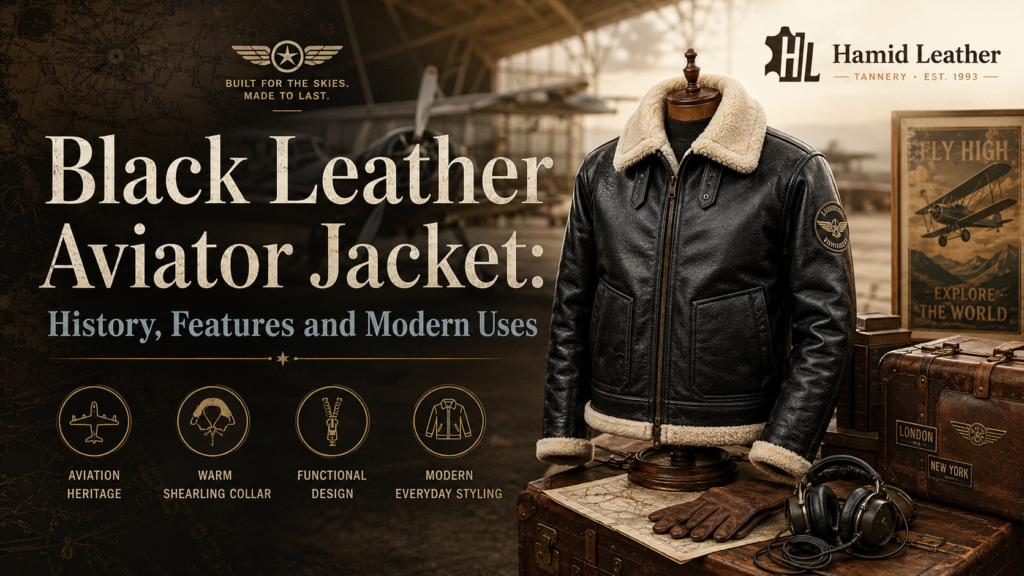
A black leather aviator jacket is more than a warm layer of clothing. It is a piece of fashion history shaped by military aviation, practical engineering and changing cultural trends. Originally developed to protect pilots in cold, exposed aircraft, the aviator jacket later moved beyond the cockpit and became a permanent part of everyday fashion. Today, people wear black leather aviator jackets for many reasons. Some appreciate their military heritage, while others choose them for their warmth, durability and confident appearance. They can be worn with jeans and boots for a traditional look, combined with modern streetwear or adapted into premium fashion collections. Although aviator jackets are widely available, their quality varies considerably. Two jackets may look similar in photographs but differ in leather type, lining, construction, warmth, comfort and durability. Understanding these differences is essential when choosing a jacket for personal use or developing one for a fashion brand. This guide explores the history, key features and modern uses of the black leather aviator jacket. It also explains how to select the right leather, recognise quality construction, find the correct fit, style the jacket and care for it properly. What Is a Black Leather Aviator Jacket? A black leather aviator jacket is a waist-length or hip-length outer garment inspired by jackets originally worn by military pilots and aircrew. It is normally made from genuine or synthetic leather and designed to provide warmth, wind resistance and freedom of movement. Traditional aviator jackets commonly include: A strong leather outer shell A fitted or ribbed waistband Ribbed or adjustable cuffs A secure front fastening A warm interior lining A structured collar Practical external or internal pockets A relatively short body length Not every modern aviator jacket contains all these features. Fashion designers frequently reinterpret the traditional design by introducing slimmer fits, removable collars, lighter linings, modern hardware and decorative details. The terms “aviator jacket,” “flight jacket” and “bomber jacket” are sometimes used interchangeably. However, there can be differences between them. An aviator jacket usually maintains a stronger connection to early pilot clothing, while a bomber jacket is a broader category that may include leather, nylon, cotton and other materials. A classic leather aviator jacket often looks more substantial than a lightweight bomber. It may include a shearling collar, thick leather, visible seams and a warm lining. Modern versions can be softer, lighter and more suitable for ordinary urban wear. The Early History of Aviator Jackets The story of the aviator jacket begins with the early years of military aviation. The first aircraft often had open cockpits or limited insulation, leaving pilots exposed to intense wind and low temperatures at higher altitudes. Ordinary clothing could not provide sufficient protection. Pilots needed garments that were warm, durable and practical without seriously restricting movement. Leather became a natural choice because it could block wind, resist regular wear and provide better protection than many lightweight fabrics available at the time. Early flying coats were often long and heavy. They offered substantial coverage but could become uncomfortable inside increasingly compact aircraft. As cockpit designs changed, shorter jackets became more practical. These shorter flight jackets allowed pilots to remain seated without a long coat gathering around the waist or legs. They also made it easier to reach instruments, controls and equipment. Several military flight-jacket designs appeared during the twentieth century. Some used horsehide, goatskin or sheepskin leather, while others included fur or shearling for insulation. Each design reflected the aircraft, climate and operational requirements of its period. The combination of a short body, strong leather shell and warm interior gradually created the silhouette now recognised as the aviator jacket. Aviator Jackets During the World Wars Military aviation expanded rapidly during the First and Second World Wars. As aircraft travelled higher and faster, pilots faced increasingly cold conditions. Warm flight clothing became essential equipment rather than a matter of personal preference. During the First World War, leather flying coats and heavy jackets were commonly used to protect aircrew. Many designs were still relatively long and influenced by traditional outerwear. By the Second World War, flight jackets had become more specialised. Different military organisations introduced jackets designed for particular aircraft, altitudes and crew positions. Some models used heavy sheepskin with the wool facing inward. These jackets offered excellent insulation for personnel working in unpressurised aircraft. Others used horsehide or goatskin shells with knitted cuffs and waistbands to prevent cold air from entering. The shorter jacket shape was particularly useful inside a cockpit. It provided warmth around the upper body while allowing the wearer to sit, bend and move more comfortably. Large collars could be turned upward for extra protection. Strong front fastenings reduced wind penetration, while fitted cuffs and waistbands helped trap warmth. These functional features eventually became important elements of the aviator jacket’s visual identity. Even modern fashion jackets continue to use details originally created for practical military purposes. How the Aviator Jacket Entered Civilian Fashion After military flight jackets became widely recognised, their influence spread into civilian clothing. Veterans continued wearing similar garments, military surplus became available and manufacturers began producing flight-inspired jackets for the public. The jacket represented qualities that appealed to civilian consumers: courage, adventure, independence and technical competence. Its connection with pilots gave it a distinctive identity that ordinary outerwear did not possess. Cinema also played an important role. Pilots, rebels and action heroes frequently appeared in leather flight jackets. These characters helped transform military clothing into a symbol of confidence and personal freedom. Musicians and youth cultures later adopted leather jackets as part of their visual identity. Although biker and aviator styles had different origins, both became associated with individuality and rebellion. Fashion designers gradually refined the aviator silhouette. Some reduced its weight, introduced softer leather or changed the proportions. Others retained the traditional shearling collar and rugged appearance while improving comfort for everyday wear. The black leather aviator jacket became particularly popular because black created a cleaner, more versatile appearance. Brown leather continued to reflect the jacket’s historical origins, but black made
Black Leather Biker Jacket: A Complete Buyer’s Guide
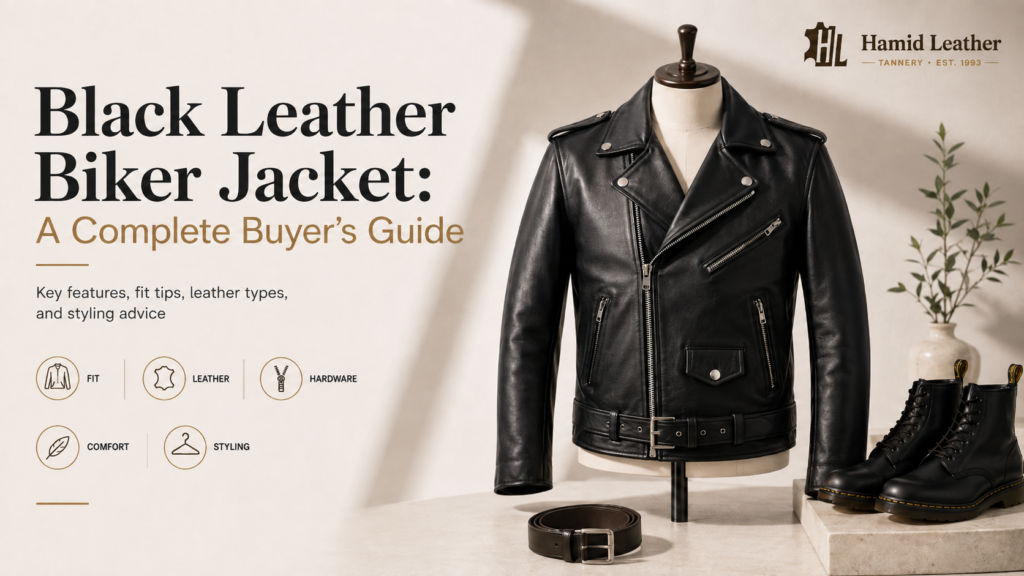
A black leather biker jacket is more than a piece of protective outerwear. It is a timeless fashion icon associated with confidence, independence and effortless style. Originally designed for motorcyclists, the jacket has moved far beyond the world of motorcycles and become an essential item in modern wardrobes. Its lasting popularity comes from a powerful combination of function and appearance. Genuine leather offers durability and protection, while the black colour works naturally with almost every wardrobe. Details such as metal zips, wide lapels, reinforced panels and fitted silhouettes give the jacket its distinctive character. However, not every black leather biker jacket offers the same quality, comfort or value. Jackets can differ significantly in leather type, thickness, construction, hardware, fit, lining and intended use. A jacket designed mainly for fashion may look similar to specialist motorcycle gear, but it may not provide the same protection on the road. This complete buyer’s guide explains everything you should know before purchasing a black leather biker jacket. It covers its history, defining features, leather options, fits, styling ideas, quality indicators and care requirements. It also provides practical guidance for fashion brands, wholesalers and retailers interested in sourcing custom leather biker jackets. What Is a Black Leather Biker Jacket? A black leather biker jacket is a short leather jacket inspired by protective clothing worn by motorcycle riders. It is normally made from durable leather and includes a front zip, fitted sleeves, functional pockets and metal hardware. The most recognisable version is the asymmetrical biker jacket, sometimes called a double-rider jacket. Its diagonal front zip creates overlapping leather panels across the chest. This design originally helped reduce wind penetration while riding a motorcycle. Traditional versions also feature wide lapels, snap fasteners, zipped cuffs and an adjustable waist belt. Some include shoulder epaulettes, coin pockets and additional reinforcement around areas that may experience greater wear. Not all biker jackets follow the same design. Café racer jackets, for example, normally have a straight central zip, a clean stand collar and minimal decoration. Contemporary fashion jackets may preserve only a few biker-inspired elements, such as silver hardware or zipped sleeves. The black leather biker jacket is now worn by both men and women. It can be styled with casual, smart-casual and even certain semi-formal outfits. The right version depends on whether the buyer wants genuine riding protection, everyday durability or a fashionable appearance. The History of the Leather Biker Jacket The development of the leather biker jacket is closely connected to the growing popularity of motorcycles in the early twentieth century. Riders required outerwear that could protect them from cold air, dirt and minor road debris while allowing enough movement to control a motorcycle. Leather was an appropriate material because of its strength, wind resistance and ability to withstand regular use. Early motorcycle jackets were primarily functional, but manufacturers gradually developed more specialised designs for riders. The asymmetrical zip became one of the jacket’s most important features. When closed, the overlapping front provided an additional barrier against wind. The diagonal closure also prevented the zip from sitting directly over the centre of the chest. As motorcycles became associated with freedom and rebellion, the leather jacket gained a powerful cultural identity. Actors, musicians and members of different youth movements adopted the style. It appeared in films, on music stages and throughout street fashion. During later decades, designers reinterpreted the biker jacket with slimmer fits, softer leather, unusual colours and decorative details. Luxury fashion houses introduced refined versions, while streetwear brands experimented with oversized shapes and custom graphics. Despite these changes, black remains the most recognisable colour. It highlights the jacket’s bold structure, works well with metal hardware and is easy to combine with other clothing. The black leather biker jacket has therefore remained relevant even as fashion trends have changed. Why Are Black Leather Biker Jackets So Popular? Few jackets have maintained their appeal as successfully as the black leather biker jacket. Its popularity is supported by several practical and stylistic advantages. First, it has a distinctive appearance. The strong lines, visible zips and structured silhouette can add character to even a simple outfit. A plain T-shirt and jeans immediately look more considered when combined with a well-fitting biker jacket. Second, black is extremely versatile. It pairs naturally with white, grey, beige, blue denim, olive, burgundy and almost any other colour. Buyers do not need to create an entirely new wardrobe to wear it successfully. Third, quality leather can remain wearable for many years. Instead of losing its appeal after one season, genuine leather often develops additional character through creasing and natural ageing. The jacket also represents confidence and individuality. Although it has become widely accepted in mainstream fashion, it still carries connections to motorcycle culture, rock music and independent style. Finally, modern versions are available for different customers. Buyers can choose rugged cowhide jackets, soft lambskin fashion pieces, protective riding garments, minimal café racers or oversized streetwear designs. Main Features of a Black Leather Biker Jacket Understanding the defining features makes it easier to compare different jackets and identify the design that best suits your needs. Asymmetrical Front Zip The diagonal zip is the most recognisable feature of the classic double-rider jacket. It allows one side of the front to overlap the other when closed. This construction was originally practical because the overlapping panels helped block cold wind. When the jacket is open, they form wide lapels that create the familiar biker appearance. The zip should move smoothly and remain properly aligned. Because it is used frequently and placed under pressure, weak hardware can quickly affect the jacket’s performance. Wide Lapels Classic biker jackets often have broad lapels secured with snap buttons. These fasteners prevent the lapels from moving excessively when the jacket is worn open. Large lapels give the jacket a bold, structured appearance. Minimalist interpretations may use narrower lapels for a cleaner and more refined look. Buyers should check how the lapels sit when the jacket is both open and closed. They should lie naturally without
Black Leather Bomber Jacket: Features, Benefits and Styling Ideas
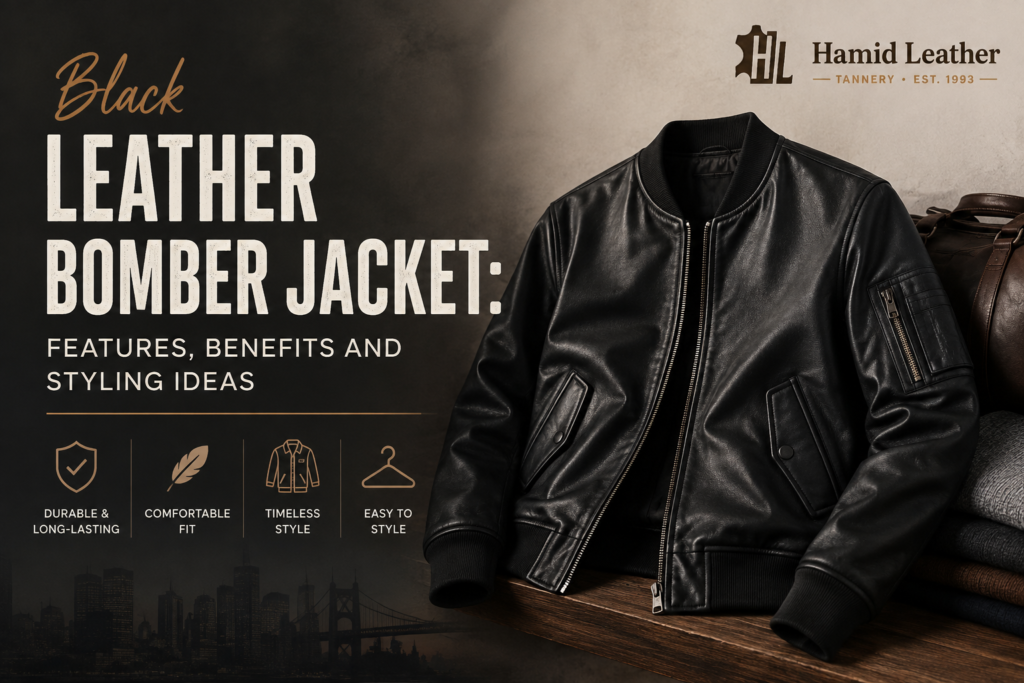
A black leather bomber jacket is one of those rare wardrobe pieces that can feel classic, contemporary, practical and stylish at the same time. Originally developed as functional outerwear for military pilots, the bomber jacket has evolved into an essential fashion item worn by men and women across different cultures, age groups and personal styles. Its popularity is easy to understand. The black colour works with almost anything, while genuine leather gives the jacket a premium appearance and long-lasting structure. The familiar bomber silhouette—usually featuring a shorter length, fitted cuffs, a ribbed waistband and a front zip—also creates a balanced shape that is comfortable without looking untidy. Today, black leather bomber jackets are available in many forms. Some preserve the rugged appearance of traditional flight jackets, while others use lightweight leather, minimal detailing and slimmer fits for modern urban wardrobes. Fashion brands can also customise the leather, lining, hardware, collar and other details to create products suited to a particular audience. This guide explores the main features, benefits, materials and styling possibilities of a black leather bomber jacket. It also explains what buyers and fashion brands should consider when selecting, sourcing or manufacturing one. What Is a Black Leather Bomber Jacket? A black leather bomber jacket is a short outerwear garment inspired by the jackets historically worn by military aviators. Although designs vary, a typical bomber jacket includes a front zip, fitted cuffs, a defined waistband and a relatively relaxed body. The jacket usually sits at or slightly below the waist. This shorter cut separates it from longer leather coats and gives it a recognisable, practical silhouette. Its fitted waistband helps retain the jacket’s shape, while the roomier upper body allows comfortable movement. Leather versions offer more structure and durability than bombers made from nylon, cotton or polyester. When produced in black leather, the design becomes particularly versatile. It can be worn with jeans and trainers for a casual outfit or combined with tailored trousers and smart footwear for a more refined appearance. Modern interpretations do not always follow the original design exactly. Some black bomber jackets have ribbed collars, while others use shirt-style, stand or shearling collars. Certain designs feature multiple pockets and visible hardware, whereas minimalist styles may have concealed pockets and subtle zips. This flexibility allows the black leather bomber jacket to appeal to many different markets, from heritage menswear and premium streetwear to women’s fashion and contemporary luxury collections. A Brief History of the Leather Bomber Jacket The history of the bomber jacket begins with aviation. Early military aircraft had open or poorly insulated cockpits, exposing pilots to extremely cold temperatures at high altitudes. Aviators therefore needed warm, durable outerwear that allowed sufficient freedom of movement. Leather was a natural choice. It provided resistance against wind, offered good durability and could be combined with warm linings. Early flight jackets were designed primarily for protection rather than fashion, but many features developed for practical reasons later became important parts of the bomber jacket’s identity. Shorter lengths made it easier for pilots to sit and move inside confined cockpits. Fitted cuffs and waistbands helped prevent cold air from entering the jacket. Strong front closures, functional pockets and protective collars added further comfort and practicality. Different flight-jacket models were introduced over time, including the A-2, B-3 and later MA-1. Not every historical flight jacket was made from leather, and their silhouettes varied, but together they influenced what consumers now recognise as the bomber jacket. After military jackets entered civilian wardrobes, they became associated with confidence, adventure and rebellion. Film stars, musicians and youth subcultures helped transform the bomber from functional uniform into a global fashion item. Designers eventually began experimenting with colour, material, proportion and embellishment. Nevertheless, black leather remained one of the most enduring choices because it strengthened the jacket’s bold character while making it easy to style. Key Features of a Black Leather Bomber Jacket Although bomber jackets are available in countless variations, several features commonly define the style. Short, Waist-Length Silhouette A bomber jacket generally finishes near the waist or upper hip. This compact length gives it a sporty appearance and prevents the garment from overwhelming the wearer’s shape. The shorter silhouette works particularly well with jeans, trousers, skirts and dresses because it creates a clear division between the upper and lower body. It can also make the legs appear longer when worn with high-waisted clothing. Manufacturers must carefully balance the length. A jacket that is too short may feel restrictive, while one that is too long can lose the traditional bomber appearance. Ribbed or Fitted Waistband The waistband is one of the most recognisable bomber jacket features. Traditional designs often use a rib-knit band that gently draws the jacket inward at the waist. This detail was originally intended to keep cold air out, but it also creates the distinctive rounded bomber shape. Some modern leather bomber jackets replace ribbing with an elasticated leather hem or a clean, straight waistband for a more minimalist finish. The quality of the ribbing matters. A weak waistband may stretch or lose its shape, while dense, resilient ribbing helps the jacket maintain its structure through repeated wear. Fitted Cuffs Bomber jackets typically include ribbed, elasticated or adjustable cuffs. Like the waistband, the cuffs were originally designed for insulation and protection against wind. From a styling perspective, fitted cuffs give the sleeves a controlled shape. They can also create a subtle gathered effect, particularly in relaxed or oversized designs. Premium cuffs should feel secure without being uncomfortably tight. They should also recover their original shape after being stretched. Front Zip Closure Most black leather bomber jackets use a central front zip. The zip makes the jacket easy to wear and complements its clean, practical character. Metal zips are especially common because they suit the strength and visual weight of leather. Depending on the design, manufacturers may choose silver, gunmetal, antique brass or black hardware. A premium zip should move smoothly, align correctly and withstand frequent opening and closing. Poor-quality hardware
What Are the Most Popular Black Leather Jacket Styles?
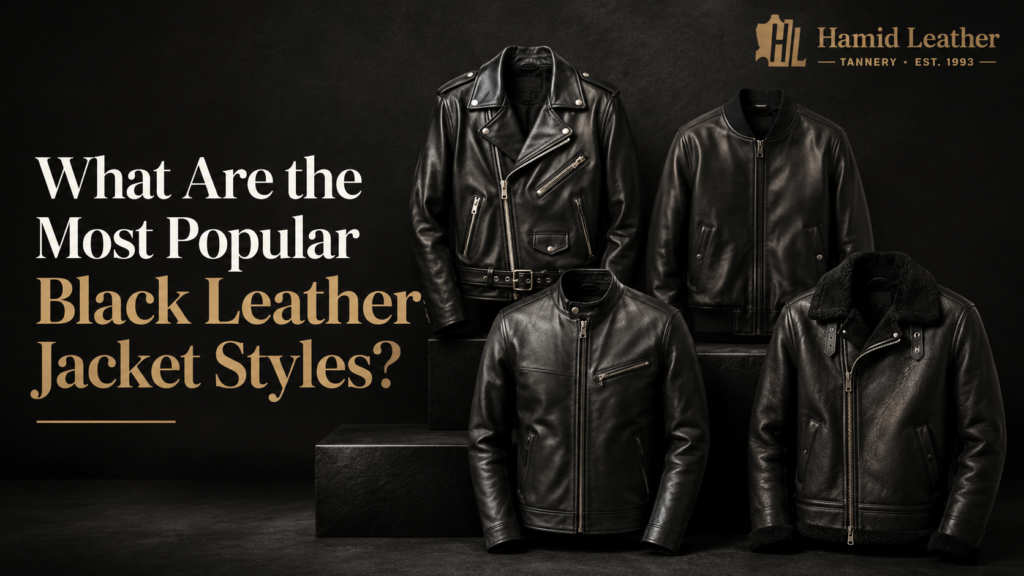
A black leather jacket is one of the rare garments that can look rebellious, refined, practical and luxurious without losing its identity. It has moved through military history, motorcycle culture, music, cinema and high fashion, yet it still feels relevant in a modern wardrobe. That staying power is not the result of one universal design. It comes from the wide variety of black leather jacket styles available to wearers and fashion brands. Some designs are built around protection and function. Others focus on a clean silhouette, warmth or visual impact. A cropped biker jacket makes a very different statement from a minimalist leather blazer, while a shearling-lined aviator serves a completely different purpose from a lightweight café racer. Understanding these differences helps customers choose a jacket that suits their lifestyle, and it helps clothing brands develop collections for the right audience. This guide explores the most popular black leather jacket styles, their defining features, their origins and the factors to consider when choosing one. It also explains how leather type, fit, hardware and construction can change the character of a jacket. Whether you are shopping for yourself or sourcing leather outerwear for a fashion business, the goal is the same: to find a design that looks good, feels comfortable and remains useful beyond a single season. Why Are Black Leather Jackets So Popular? Black is naturally versatile. It works with denim, tailoring, knitwear, dresses, boots and trainers. It can make an outfit feel sharper without requiring bright colours or elaborate patterns. On leather, black also highlights the material’s texture. Smooth lambskin reflects light softly, polished cowhide creates a stronger surface, and naturally grained leather adds depth to an otherwise simple colour. The popularity of the black leather jacket also comes from association. Over decades, it has been worn by pilots, motorcyclists, musicians, actors and designers. These cultural connections give the garment a sense of confidence and independence. However, its appeal is not limited to a rebellious image. Clean designs now appear in smart-casual wardrobes, premium fashion collections and professional settings. Practicality matters too. Quality leather provides a useful barrier against wind and light cold. With suitable lining and care, a jacket can be worn for many years. Unlike a trend-led garment that quickly looks dated, a well-designed black leather jacket often becomes more attractive as it develops gentle creases and a personal patina. 1. The Classic Biker Jacket The biker jacket is probably the most recognisable black leather jacket style. It is known for its asymmetrical front zip, wide lapels, metal hardware and fitted shape. Many versions include zipped cuffs, a waist belt, shoulder epaulettes and several angled pockets. These details were originally functional, helping riders close the jacket securely, adjust the fit and carry small essentials. The diagonal zip is more than a visual feature. When closed, the overlapping front panels can provide extra protection against wind. When open, the lapels create the bold shape associated with rock music and motorcycle culture. Silver-toned zips and snaps offer the traditional look, while black hardware gives the same construction a quieter, more contemporary character. A classic biker jacket works well with a plain T-shirt, dark jeans and boots, but it is more flexible than that familiar combination suggests. Men can wear it over fine knitwear or a hoodie, while women can use it to add contrast to a soft dress, tailored trousers or a long skirt. Oversized versions feel relaxed and fashion-forward; close-fitting versions look sharper and more traditional. Cowhide and goatskin are good choices when structure and durability are priorities. Lambskin or sheepskin creates a softer biker jacket that feels lighter and drapes closer to the body. Brands developing this style should balance visual impact with comfort because too much heavy hardware can make the finished garment tiring to wear. 2. The Leather Bomber Jacket The bomber is another enduring black leather jacket style. Its typical features include a zip front, ribbed cuffs, a ribbed waistband and a relatively simple body. The neckline may have a rib-knit collar, a shirt-style leather collar or a low standing collar. Compared with a biker jacket, a bomber usually has fewer exposed zips and a rounder, more relaxed silhouette. Bomber jackets developed from aviation clothing designed to keep pilots warm and allow movement in confined cockpits. Modern fashion versions retain the comfortable shape while offering many interpretations. A traditional model may have a roomy body and substantial leather, while a contemporary bomber may be lightweight, slightly cropped or cleanly tailored. A black leather bomber is easy to style because it sits between casual and smart-casual clothing. It works with jeans and trainers for everyday wear, but a streamlined version can also complement tailored trousers and a fine-gauge sweater. For colder markets, quilted or padded lining increases warmth. Lightweight lining makes the garment suitable for transitional seasons. Fit is important. A very loose bomber can appear bulky, particularly when made from thick leather. A very tight one loses the comfort and mobility that define the style. The ideal fit normally allows room through the chest and shoulders while the ribbed waistband gently shapes the lower body. 3. The Café Racer Jacket The café racer is the minimalist member of the motorcycle-jacket family. It generally has a straight front zip, a slim silhouette, a short stand collar and limited decoration. The collar often closes with a single snap. Pockets are usually zipped but positioned neatly, and the front is kept clean without broad lapels or a waist belt. The design is linked to riders who raced lightweight motorcycles between cafés in mid-twentieth-century Britain. Its stripped-back construction matched the speed-focused machines and clothing of that culture. Today, it appeals to people who like the attitude of a leather jacket but prefer a more refined appearance. Because the design has few distractions, material and fit become especially visible. Smooth lambskin creates an elegant fashion piece, while cowhide produces a stronger, more rugged jacket. Subtle seam panels can shape the garment without making it busy. A well-cut café