The black leather jacket is one of the most consistent-performing categories in European menswear wholesale. For B2B buyers, understanding which styles drive demand by region — classic biker, minimalist cut, structured blazer, oversized, vintage, and bomber — supports smarter inventory decisions, stronger margins, and lower clearance risk across seasonal cycles.
European retailers and wholesalers have long recognized that the black leather jacket is not a trend-dependent category. It turns reliably, holds its price point, and appeals across age groups and distribution channels. What shifts is the style. And for B2B buyers responsible for inventory planning, those distinctions carry real commercial weight.
A retailer in Milan operates in a different demand environment than a distributor supplying independent boutiques in Warsaw or a wholesale buyer stocking menswear chains across the Nordics. Each market has its own style preferences, price sensitivity, and consumer expectations — and the style decisions you make at the buying stage determine how well your inventory performs at the retail level.
This guide covers the six black leather jacket styles that generate consistent B2B demand across European markets, outlines the regional variation that should inform your assortment strategy, and addresses the sourcing and wholesale considerations that affect margin and inventory management.
Which Black Leather Jacket Styles Drive the Most Consistent B2B Demand in Europe?
Classic Biker Jacket: The Reliable Core SKU
The classic biker jacket — characterized by its asymmetrical zipper, snap-down lapels, and belt detailing — is the anchor of most European leather jacket assortments. Its design has remained commercially viable for decades, and its consumer recognition across age demographics is higher than any other silhouette in this category.
For wholesale buyers, the biker jacket offers predictable inventory behavior. It does not require a seasonal narrative to move. Consumers buy it as a replacement, an upgrade, or an entry point into leather outerwear — all of which are purchase motivations that persist year-round. Retailers who stock this style at the right quality tier consistently report stable sell-through without significant markdown pressure.
Premium pricing is achievable in this silhouette when material quality and construction detail can be demonstrated clearly at point of sale. Buyers should look for hardware weight, stitching consistency, and lining quality as the differentiators that support higher wholesale margins in this segment.
Minimalist and Modern Cut: Growing Share Among Urban Retailers
The minimalist leather jacket — clean lines, no decorative hardware, streamlined silhouette — is gaining consistent ground in European urban markets. Contemporary buyers, particularly those supplying fashion-forward independent retailers and multi-brand boutiques, are reporting increased demand for this style as it bridges casualwear and elevated everyday dressing.
The commercial case for this silhouette lies in its versatility. It works across multiple seasonal collections without requiring repositioning, and its neutral aesthetic makes it easier to merchandise alongside a broader range of surrounding garments. For retailers with limited floor space, that cross-category compatibility reduces the cost of assortment complexity.
Wholesale buyers sourcing for urban professional demographics should treat the minimalist cut as a growth position within the leather jacket category — not yet the volume driver that the classic biker represents, but trending in the right direction in key Western European markets.
Structured Blazer Jacket: Expanding the Addressable Market
The leather blazer jacket — tailored construction, notched lapel, business-casual silhouette — opens the leather jacket category to consumer segments that typically fall outside its reach. Corporate and professional buyers who would not consider a biker jacket will engage with a leather blazer as an alternative to wool or technical outerwear.
For B2B buyers, this matters because it expands the retailer types you can supply. Department stores, menswear specialists, and corporate casualwear retailers can all be viable channels for this style, whereas the classic biker and minimalist cuts skew more heavily toward fashion and lifestyle retail.
Margin potential in the leather blazer segment is higher than in most other leather jacket silhouettes, partly because the consumer comparison set shifts from other leather jackets to tailored outerwear — a category where price anchors are already elevated. Sourcing discipline is required, however: construction quality, lining, and silhouette precision matter more in this segment than in casual leather categories.
Oversized and Relaxed Fit: Trend-Responsive Without Full Trend Risk
The oversized leather jacket has moved from a narrow streetwear positioning into broader retail relevance across European markets, driven largely by social media visibility and its adoption by younger professional demographics. Unlike most trend-driven silhouettes, the relaxed fit leather jacket carries lower clearance risk than comparable fashion outerwear because the base garment — a black leather jacket — retains residual value even when a specific silhouette cools.
For wholesale buyers, the oversized fit is worth carrying as a secondary position in the assortment rather than a primary SKU. It generates retail foot traffic, performs well in digital merchandising contexts, and appeals to a demographic segment that is actively growing its share of European menswear spend. Cross-season wearability — worn over heavier knitwear in winter, over a single layer in autumn — extends the selling window and reduces the need for promotional clearance activity.
Vintage and Distressed Style: Premium Positioning With a Narrative Advantage
Vintage and distressed leather jackets carry a sourcing story that supports premium pricing in a way that most other silhouettes cannot. Authentic craftsmanship, aged patinas, and heritage construction details give retailers a specific quality narrative to communicate to consumers — and that narrative translates into willingness to pay higher price points.
For B2B buyers supplying heritage-focused retailers, specialty menswear stores, and collectors’ market channels, the vintage segment can support wholesale margins that outperform the category average. The challenge is sourcing consistency: distressed finishes need to be reproducible at scale without appearing manufactured, and the quality signals that justify premium pricing need to hold up under consumer scrutiny.
Buyers should qualify suppliers in this segment carefully, requesting production samples across a batch run rather than a single prototype. Finish variation is expected and often desirable, but structural consistency — seam integrity, hardware reliability, lining quality — should not vary.
Bomber and Cropped Silhouette: High Turnover in Fast-Contemporary Retail
The leather bomber and cropped jacket perform well in fast-fashion-adjacent and contemporary retail environments. Their silhouette is familiar to younger professional demographics, their styling flexibility is high, and their production can support competitive wholesale pricing at accessible to mid-market tiers.
For distributors and wholesalers supplying volume retailers or regional chains, the bomber silhouette offers high turnover potential without the sourcing complexity of premium-tier styles. Margin profiles in this segment are solid when logistics are efficient and supplier relationships are stable. Buyers should approach this segment with a volume-first mentality and focus on lead time reliability and reorder flexibility rather than material differentiation.
How Do Regional Preferences Shape Wholesale Strategy Across European Markets?
European demand for black leather jackets is not uniform, and wholesale buyers operating across multiple territories should build assortments that reflect regional variation rather than defaulting to a single pan-European SKU.
Northern European markets — Scandinavia, Germany, the Netherlands — favor minimalist and structured cuts. Functionality matters in these markets: consumers expect a leather jacket to perform across a range of weather conditions, and clean silhouettes that layer well tend to outperform decorative styles. Structured blazer jackets also find a receptive audience in these markets given their professional consumer base.
Southern European markets — Italy, Spain, Portugal — show stronger demand for the classic biker silhouette and slim, tailored constructions. Italian consumers in particular bring category knowledge and quality expectations that reward suppliers who can demonstrate material provenance and construction detail. Premium pricing is more achievable in these markets than in Northern Europe, but it requires credible quality signals.
East-central European markets — Poland, Czech Republic, Hungary — are showing growing interest in premium vintage styles as consumer purchasing power increases and retail sophistication develops. This is a market segment worth monitoring for distribution positioning, particularly for buyers who already have supplier relationships in the heritage leather segment.
For distributors covering multiple European territories, a tiered assortment strategy — one or two core SKUs that work broadly, supplemented by region-specific styles — is likely to outperform a single uniform approach.
What Should B2B Buyers Prioritize When Sourcing Black Leather Jackets for European Markets?
Material quality standards and supplier qualification
European leather tanning operates under stricter environmental and chemical regulations than most global production regions. Leather Working Group (LWG) certification provides buyers with documentation of environmental compliance from tanneries — an increasingly relevant consideration as EU regulations on chemical restrictions and extended producer responsibility continue to tighten.
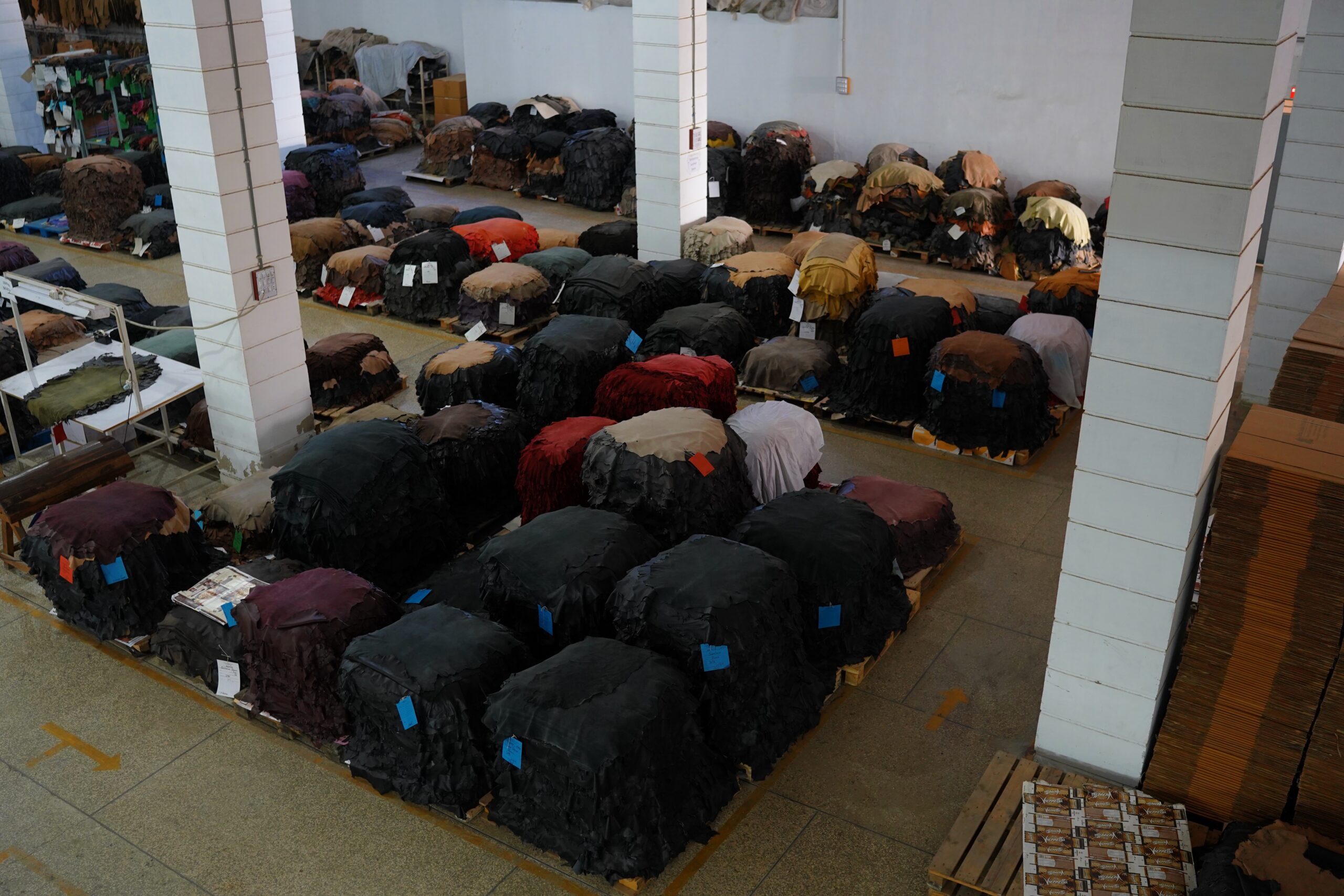
Beyond certification, material grade is the primary driver of product performance and consumer satisfaction. Full-grain leather holds its appearance over time and develops a patina that reinforces the premium narrative. Top-grain leather offers a more uniform finish at a lower price point and works well in mid-market positioning. Split leather and bonded leather carry lower sourcing costs but also lower durability — relevant if you are supplying volume retail but a risk if your retailers are building a quality reputation.
Request detailed material specifications from suppliers as a standard part of qualification, not as an afterthought.
Price-to-margin ratio by style category
Margin potential varies meaningfully across style categories. Vintage and structured blazer styles support the highest wholesale margins when quality signals are strong. Classic biker and minimalist styles offer reliable mid-range margins with stable volume. Bomber and oversized styles trade margin for turnover — a worthwhile position in volume channels but less suited to premium retail strategy.
Buyers should map their target retail channels to style categories and margin requirements before approaching suppliers, so that cost negotiations start from a clear commercial position.
Inventory management for a category with even demand
Black leather jackets turn more evenly across the year than most outerwear categories, which means inventory planning looks different here than it does for seasonal pieces. Buyers who can establish replenishment agreements with suppliers — rather than committing to a single large pre-season order — reduce working capital exposure and respond more effectively to in-season demand signals.
Wholesale buyers supplying independent retailers benefit particularly from short lead time flexibility, as independent buyers typically have less cash flow for deep pre-season commitments. Suppliers who can support in-season reorders at reasonable unit economics are a competitive advantage in this channel.
Building a Durable Position in European B2B Leather Jacket Markets
The black leather jacket category rewards buyers who approach it with specificity rather than broad strokes. Style selection, regional assortment strategy, material qualification, and supplier relationship depth all affect how this category performs in your portfolio — and each of those decisions compounds over time.
For retailers, the right style mix earns consistent floor space performance and reduces the cost of markdown management. For wholesalers and distributors, supplier reliability and assortment precision determine whether the category contributes to stable revenue or introduces inventory risk.
The next practical step is supplier qualification. Identify two or three production partners across your target style categories who can demonstrate LWG certification or equivalent, consistent quality between sample and bulk run, and lead time reliability for in-season replenishment. Build your price-tier strategy before entering negotiations so your commercial requirements are clear from the outset.
If you want to discuss assortment planning, regional sourcing strategy, or supplier evaluation criteria for the European leather jacket market, reach out and tell us where you are in the process.
Frequently Asked Questions
Which black leather jacket styles generate the most reliable wholesale demand across European markets?
The classic biker jacket generates the most consistent wholesale demand across European markets due to its broad consumer recognition, cross-demographic appeal, and stable sell-through behavior. Minimalist and modern cuts are growing in urban and fashion-forward retail channels. Structured blazer jackets expand the addressable market into professional and corporate-casual segments. Vintage and bomber styles serve more specific retail niches but can support strong margins in the right channels.
How should B2B buyers adjust their leather jacket assortment strategy by European region?
Northern European markets (Germany, Scandinavia, Netherlands) favor minimalist and structured styles with functional layering appeal. Southern European markets (Italy, Spain, Portugal) show stronger demand for classic biker silhouettes and tailored constructions, with higher premium pricing potential. East-central European markets are showing growing interest in vintage and heritage styles. Distributors covering multiple territories should build a tiered assortment rather than applying a single pan-European SKU approach.
What quality certifications should wholesale buyers require when sourcing leather jackets for European markets?
Leather Working Group (LWG) certification from tanneries confirms environmental compliance and is becoming an increasingly relevant sourcing requirement as EU regulations tighten. REACH compliance is the regulatory baseline for chemical safety in EU markets. Buyers supplying retailers with sustainability positioning should also request documentation for any additional certifications relevant to cattle sourcing or chemical processing.
What margin levels can B2B buyers expect across different leather jacket style categories?
Vintage and distressed styles and structured blazer jackets typically support the highest wholesale margins when quality signals are clearly documented and communicated. Classic biker and minimalist styles offer reliable mid-range margins with consistent volume. Bomber and oversized silhouettes generally trade higher margin for turnover, making them more suitable for volume retail channels than for premium or specialty positioning.
When is the best time for wholesale buyers to place leather jacket orders for the European market?
Wholesale purchasing concentrates in two windows: late summer for autumn/winter sell-in, and early spring for transitional season inventory. Buyers who commit to forward orders ahead of these windows are generally better positioned to negotiate unit pricing and secure production capacity. In-season replenishment capability — where suppliers can fulfill reorders on short lead times — reduces the need for large pre-season commitments and lowers inventory risk, particularly for buyers supplying independent retailers.
How does the oversized leather jacket silhouette perform compared to classic styles in European wholesale markets?
The oversized leather jacket performs best as a secondary assortment position rather than a primary SKU. It generates strong retail engagement, particularly in digital merchandising contexts and among younger demographics, without carrying the full clearance risk of most trend-driven outerwear. Its cross-season wearability — layering over knitwear in winter, worn lighter in autumn — extends the selling window. Classic biker styles still outperform in volume and turnover, but the oversized silhouette is a commercially sound complement in fashion-forward retail channels.