Why European Retailers Source Black Leather Jackets from Pakistan
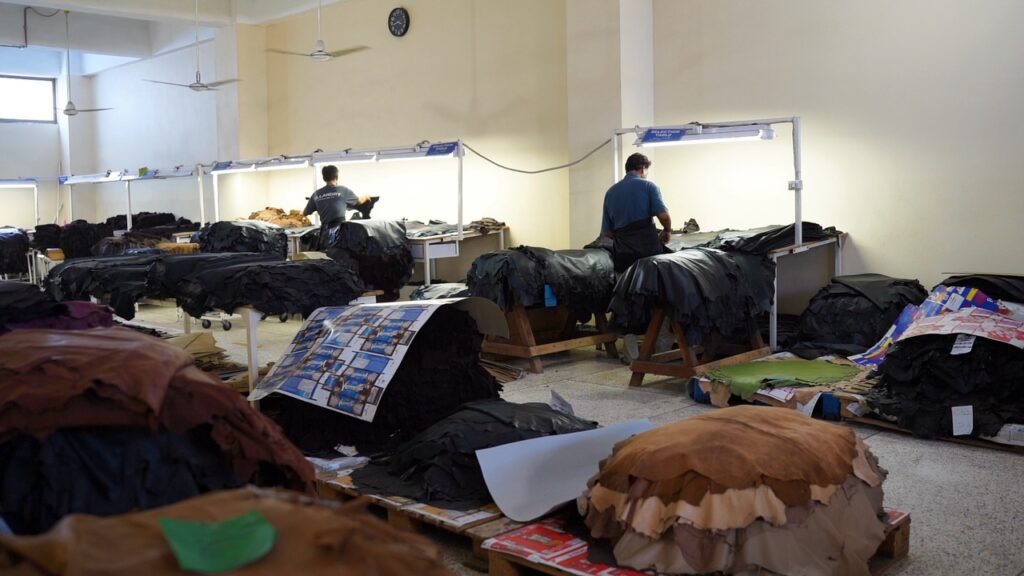
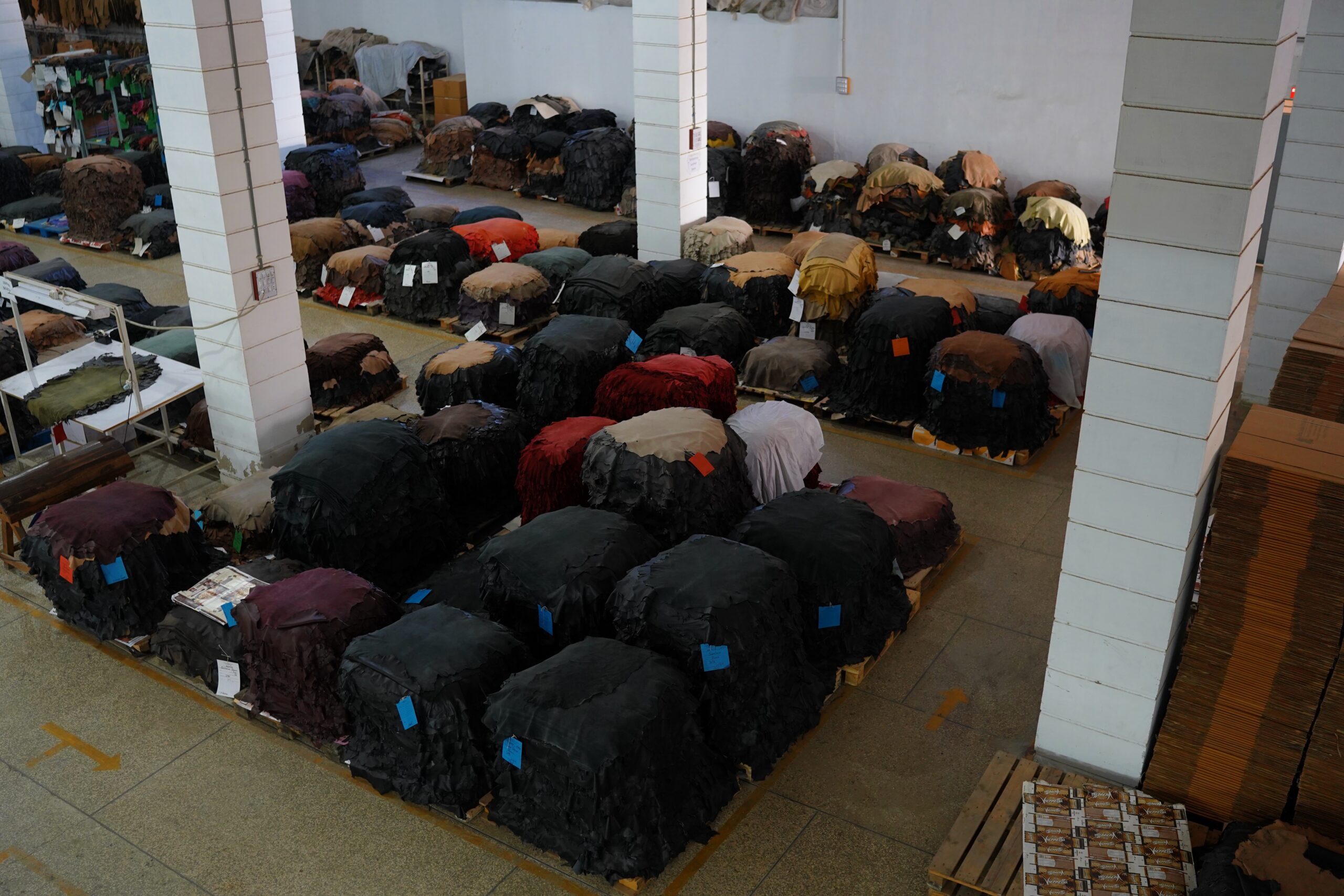
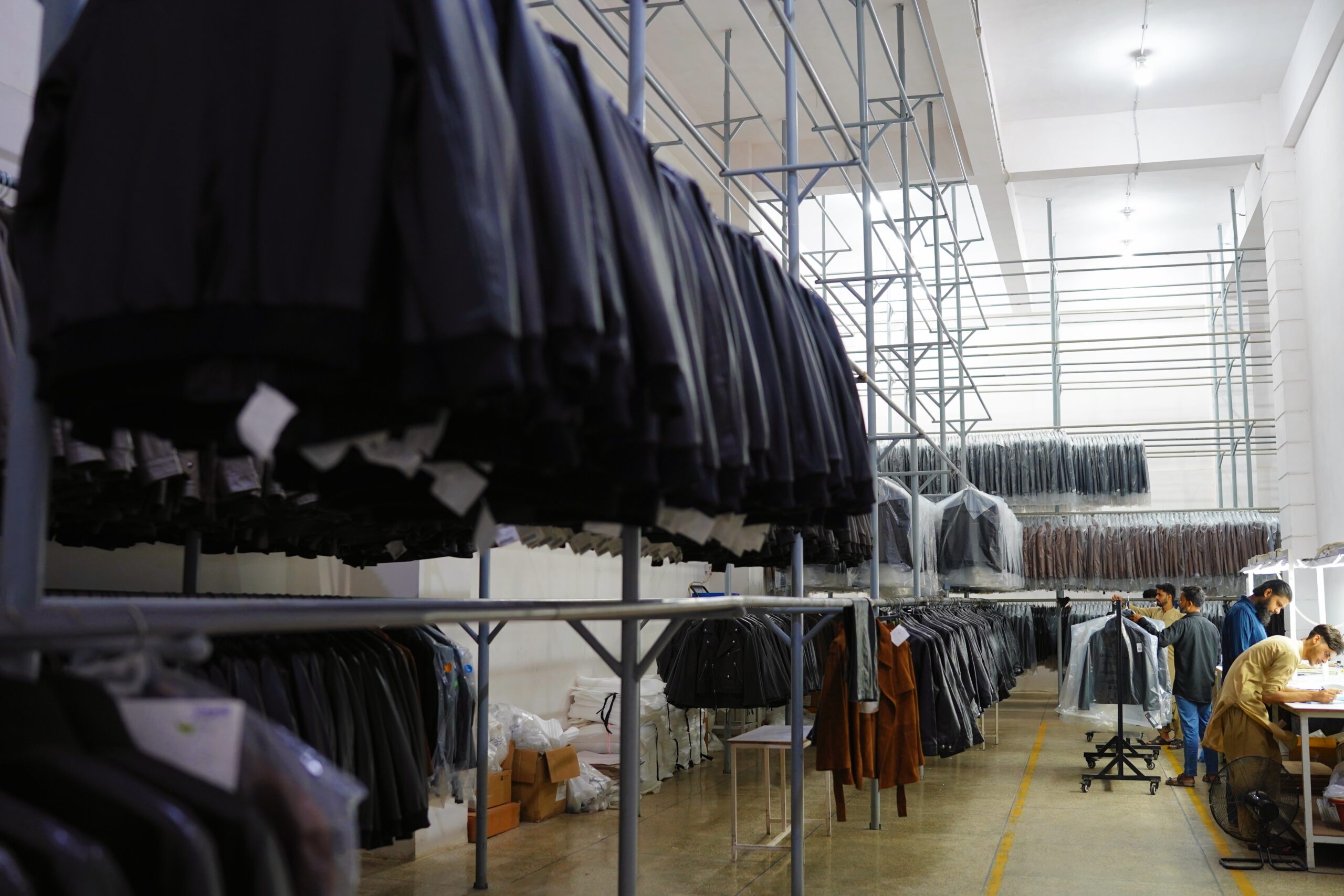
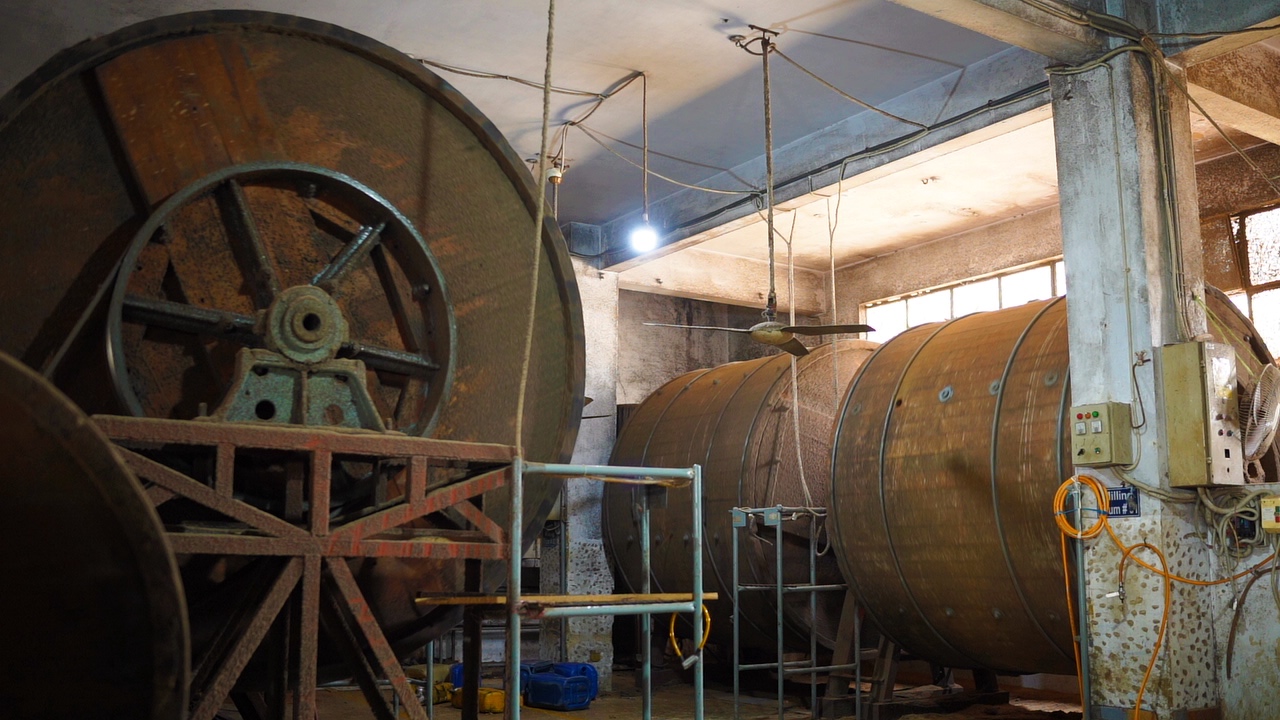
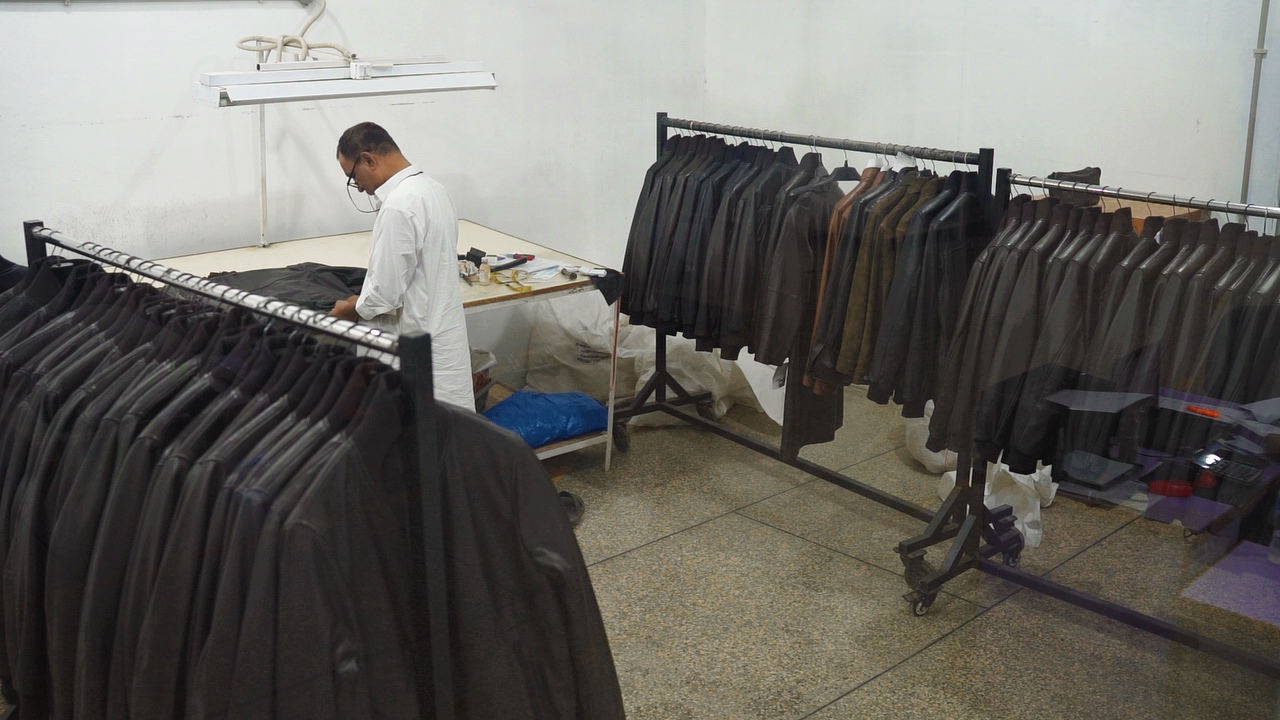
Pakistani leather manufacturers offer B2B buyers a combination of raw material access, skilled labor, vertical integration, and competitive pricing that makes them a practical sourcing option for black leather jackets. The country’s Sialkot and Kasur regions have supplied global fashion and workwear brands for decades, and established manufacturers can typically support MOQs, quality documentation, and custom specifications. Black leather jacket sourcing at scale requires more than a competitive price quote. You need a manufacturer that can work to spec, deliver consistent quality across production runs, and communicate reliably through sampling, production, and shipping. That combination is harder to find than most buyers expect. Pakistani leather manufacturers—particularly those based in Sialkot and Kasur—have built this kind of operational track record over several decades. They supply garments to buyers across Europe, North America, and the Middle East, working with everything from motorcycle-grade cowhide to fashion-forward lambskin. Understanding what they do well, where the risks sit, and how to evaluate individual suppliers can help you make a more grounded sourcing decision. Why Pakistan’s Leather Industry Is Structured for Jacket Production Pakistan ranks among the world’s top leather exporters, with the leather and leather goods sector contributing significantly to the country’s export revenue. The country’s tanneries—concentrated in Kasur and Karachi—process large volumes of bovine and ovine hides, supplying finished leather directly to garment manufacturers. This vertical proximity matters. When the tannery and the garment factory operate within the same supply chain ecosystem, lead times for material procurement are shorter, and the manufacturer has more direct control over leather selection. For black leather jackets specifically, consistent dye penetration and surface finish are critical quality factors. Manufacturers working with regional tanneries can often specify these parameters more precisely than those purchasing finished leather through intermediaries. Sialkot, in particular, has a concentrated cluster of leather garment producers with established export infrastructure. Many of these businesses have worked with international brands long enough to understand buyer expectations around labeling, packaging, documentation, and compliance requirements. What Pakistani Manufacturers Can Typically Support Most established Pakistani leather jacket manufacturers can support the following: Custom pattern and grading: Factories with export experience generally maintain in-house pattern-making capability and can grade across standard or custom size runs Material selection: Buyers can typically specify leather type (cowhide, lambskin, goatskin), weight, finish (matte, semi-gloss, pull-up), and hardware finish Black dyeing specifications: Tannery-level relationships allow some manufacturers to source leather dyed to a specific black standard, which helps reduce batch variation Sample development: Most export-oriented factories offer pre-production samples and production confirmation samples before full runs begin Certifications and documentation: Established manufacturers can provide test reports, packing lists, certificates of origin, and in some cases third-party quality audits That said, capability levels vary significantly between factories. A manufacturer producing for a volume retailer operates differently from one supplying a small fashion label. Before placing an order, confirm that the factory’s current production mix and client base aligns with what your product requires. Where Quality Risks Are Most Likely to Appear Pakistani leather jacket manufacturing is not without risk. Identifying where quality issues typically emerge helps you build the right controls into your sourcing process. Leather batch consistency is one of the more common issues. Natural leather has inherent variation, and without clear incoming material inspection protocols, color and texture can shift between production runs—or even within a single order. Ask the manufacturer how incoming leather is inspected and what their rejection criteria are. Stitching standards vary by factory tier. High-stress seams on leather jackets—shoulders, sleeve attachment points, zipper channels—require specific stitch density and thread specification to hold under wear. Review stitching specifications in your tech pack carefully and request a stress test on pre-production samples. Hardware quality is frequently underspecified. Zippers, snaps, and D-rings that are not rated for outerwear use will fail under regular wear. Specify your hardware brands or grades in writing, and confirm sourcing before production starts. Communication gaps can compound all of the above. Many quality problems traced back to Pakistani production runs are actually rooted in incomplete specifications, unclear change requests, or approval processes that moved too quickly. A manufacturer with a dedicated export coordinator or account manager helps reduce the frequency of these breakdowns. How to Evaluate a Pakistani Leather Jacket Manufacturer Before Committing A site visit or verified third-party audit is the most reliable evaluation method, but it is not always feasible at the early sourcing stage. In its absence, the following steps can help you assess a factory more rigorously: Request a factory profile that includes current client categories, annual production volume, and equipment list. This gives you a basic picture of whether the factory’s scale and capabilities match your requirements. Review existing samples from current or recent production, not purpose-built showroom samples. Production samples reflect actual factory output more accurately. Ask for references from current buyers in your product category. A manufacturer supplying similar black leather jackets to verified buyers in your target market is a more reliable indicator than certifications alone. Define your quality standard in writing before requesting a price. A tech pack with material specifications, construction details, hardware requirements, and finish standards gives the factory the information it needs to quote accurately—and gives you a basis for inspection. Clarify the sampling process and timeline before you commit. Know how many sample rounds are included, what the approval criteria are, and who signs off on production authorization. Pricing and Minimum Order Quantities: What to Expect Pakistani manufacturers are generally cost-competitive with comparable production in Turkey, India, and China, though pricing varies based on leather type, construction complexity, hardware, and order volume. Black leather jackets in lambskin or garment-grade cowhide from established Pakistani exporters typically fall within a range that allows for healthy margin at mid-tier wholesale pricing. Minimum order quantities vary: some factories work from 300–500 units per style, while larger facilities may require higher volumes to commit production capacity. If your order volume is below a factory’s standard MOQ, consider whether a sourcing agent or trading company with existing factory relationships can aggregate
Why Pakistani Manufacturers Are a Strong Source for Black Leather Jackets
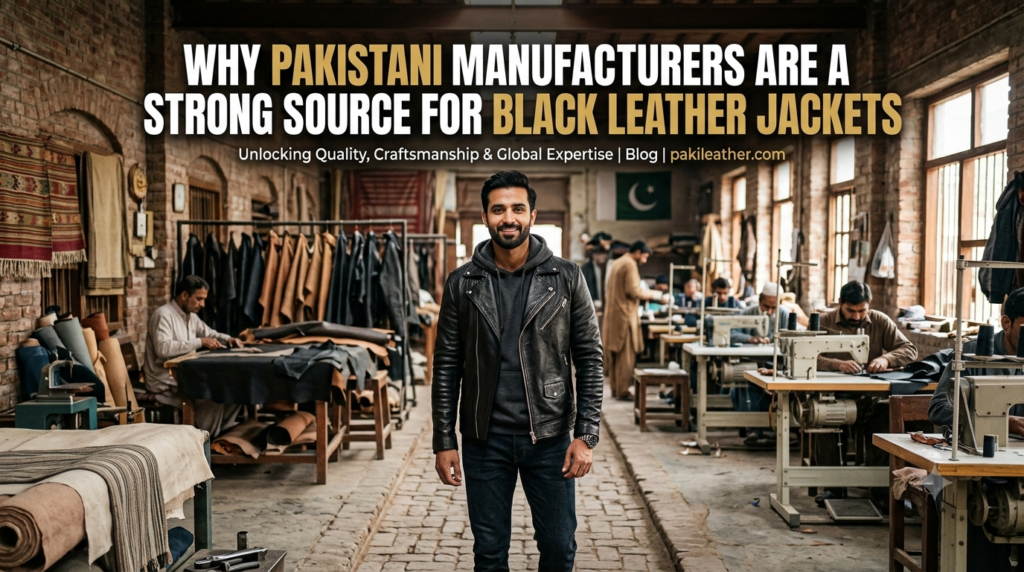
Pakistani leather manufacturers offer B2B buyers a combination of raw material access, skilled labor, vertical integration, and competitive pricing that makes them a practical sourcing option for black leather jackets. The country’s Sialkot and Kasur regions have supplied global fashion and workwear brands for decades, and established manufacturers can typically support MOQs, quality documentation, and custom specifications. Black leather jacket sourcing at scale requires more than a competitive price quote. You need a manufacturer that can work to spec, deliver consistent quality across production runs, and communicate reliably through sampling, production, and shipping. That combination is harder to find than most buyers expect. Pakistani leather manufacturers—particularly those based in Sialkot and Kasur—have built this kind of operational track record over several decades. They supply garments to buyers across Europe, North America, and the Middle East, working with everything from motorcycle-grade cowhide to fashion-forward lambskin. Understanding what they do well, where the risks sit, and how to evaluate individual suppliers can help you make a more grounded sourcing decision. Why Pakistan’s Leather Industry Is Structured for Jacket Production Pakistan ranks among the world’s top leather exporters, with the leather and leather goods sector contributing significantly to the country’s export revenue. The country’s tanneries—concentrated in Kasur and Karachi—process large volumes of bovine and ovine hides, supplying finished leather directly to garment manufacturers. This vertical proximity matters. When the tannery and the garment factory operate within the same supply chain ecosystem, lead times for material procurement are shorter, and the manufacturer has more direct control over leather selection. For black leather jackets specifically, consistent dye penetration and surface finish are critical quality factors. Manufacturers working with regional tanneries can often specify these parameters more precisely than those purchasing finished leather through intermediaries. Sialkot, in particular, has a concentrated cluster of leather garment producers with established export infrastructure. Many of these businesses have worked with international brands long enough to understand buyer expectations around labeling, packaging, documentation, and compliance requirements. What Pakistani Manufacturers Can Typically Support Most established Pakistani leather jacket manufacturers can support the following: Custom pattern and grading: Factories with export experience generally maintain in-house pattern-making capability and can grade across standard or custom size runs Material selection: Buyers can typically specify leather type (cowhide, lambskin, goatskin), weight, finish (matte, semi-gloss, pull-up), and hardware finish Black dyeing specifications: Tannery-level relationships allow some manufacturers to source leather dyed to a specific black standard, which helps reduce batch variation Sample development: Most export-oriented factories offer pre-production samples and production confirmation samples before full runs begin Certifications and documentation: Established manufacturers can provide test reports, packing lists, certificates of origin, and in some cases third-party quality audits That said, capability levels vary significantly between factories. A manufacturer producing for a volume retailer operates differently from one supplying a small fashion label. Before placing an order, confirm that the factory’s current production mix and client base aligns with what your product requires. Where Quality Risks Are Most Likely to Appear Pakistani leather jacket manufacturing is not without risk. Identifying where quality issues typically emerge helps you build the right controls into your sourcing process. Leather batch consistency is one of the more common issues. Natural leather has inherent variation, and without clear incoming material inspection protocols, color and texture can shift between production runs—or even within a single order. Ask the manufacturer how incoming leather is inspected and what their rejection criteria are. Stitching standards vary by factory tier. High-stress seams on leather jackets—shoulders, sleeve attachment points, zipper channels—require specific stitch density and thread specification to hold under wear. Review stitching specifications in your tech pack carefully and request a stress test on pre-production samples. Hardware quality is frequently underspecified. Zippers, snaps, and D-rings that are not rated for outerwear use will fail under regular wear. Specify your hardware brands or grades in writing, and confirm sourcing before production starts. Communication gaps can compound all of the above. Many quality problems traced back to Pakistani production runs are actually rooted in incomplete specifications, unclear change requests, or approval processes that moved too quickly. A manufacturer with a dedicated export coordinator or account manager helps reduce the frequency of these breakdowns. How to Evaluate a Pakistani Leather Jacket Manufacturer Before Committing A site visit or verified third-party audit is the most reliable evaluation method, but it is not always feasible at the early sourcing stage. In its absence, the following steps can help you assess a factory more rigorously: Request a factory profile that includes current client categories, annual production volume, and equipment list. This gives you a basic picture of whether the factory’s scale and capabilities match your requirements. Review existing samples from current or recent production, not purpose-built showroom samples. Production samples reflect actual factory output more accurately. Ask for references from current buyers in your product category. A manufacturer supplying similar black leather jackets to verified buyers in your target market is a more reliable indicator than certifications alone. Define your quality standard in writing before requesting a price. A tech pack with material specifications, construction details, hardware requirements, and finish standards gives the factory the information it needs to quote accurately—and gives you a basis for inspection. Clarify the sampling process and timeline before you commit. Know how many sample rounds are included, what the approval criteria are, and who signs off on production authorization. Pricing and Minimum Order Quantities: What to Expect Pakistani manufacturers are generally cost-competitive with comparable production in Turkey, India, and China, though pricing varies based on leather type, construction complexity, hardware, and order volume. Black leather jackets in lambskin or garment-grade cowhide from established Pakistani exporters typically fall within a range that allows for healthy margin at mid-tier wholesale pricing. Minimum order quantities vary: some factories work from 300–500 units per style, while larger facilities may require higher volumes to commit production capacity. If your order volume is below a factory’s standard MOQ, consider whether a sourcing agent or trading company with existing factory relationships can aggregate
Private Label Black Leather Jackets: A B2B Guide for European Fashion Businesses
Private label black leather jackets give European fashion businesses a reliable path to stronger margins, better supply chain control, and differentiated positioning. This guide covers regional demand patterns, the styles that generate the most consistent B2B sell-through, sourcing standards, and what a well-run private label program requires in practice. The black leather jacket is one of the few outerwear categories that does not depend on a seasonal trend cycle to move inventory. Retailers know it. Wholesalers know it. And increasingly, the businesses that treat it as a private label opportunity—rather than a branded wholesale purchase—are the ones capturing more of the margin that would otherwise go to a third-party label. For European fashion businesses at the wholesale, distribution, or retail level, private label sourcing in this category offers stable year-round demand, identifiable quality signals that support premium pricing, and enough style variation to serve multiple market segments without an unmanageable SKU count. Why Black Leather Jackets Remain a Core Category for European Wholesalers Most outerwear categories carry meaningful clearance risk. The black leather jacket behaves differently. Sell-through is driven by replacement purchasing, category entry, and gift purchasing—motivations that persist across the calendar year. Retailers who stock this category at the right quality tier consistently report more stable inventory performance than comparable outerwear. Markdown pressure is lower when the product has clear quality signals and a recognizable silhouette. For private label specifically, the category suits brand development well. Consumers already have reference points for quality in leather outerwear, which means your label can compete on demonstrable material and construction attributes rather than brand recognition alone. Which European Markets Are Driving Demand? Regional demand patterns vary significantly and carry real implications for which styles to prioritize. Northern European markets—Germany, Scandinavia, and the Netherlands—favor minimalist and structured cuts. Consumers expect leather outerwear to layer well across varied conditions. The structured blazer jacket also performs here, given the professional consumer base and preference for versatile investment pieces. Southern European markets—Italy, Spain, and Portugal—show stronger affinity for the classic biker silhouette and slim, tailored constructions. Italian consumers bring category knowledge that rewards suppliers who can document material provenance. Premium pricing is more achievable in these markets, but quality signals need to hold up under scrutiny. The UK market spans a wide price range, from fast-contemporary volume retail to premium independent boutiques. Vintage and heritage styles find a particularly engaged consumer base in independent retail. East-central European markets—Poland, Czech Republic, and Hungary—are showing growing interest in premium vintage styles as consumer purchasing power increases. For wholesalers covering multiple territories, a tiered assortment—one or two core styles that work broadly, supplemented by region-specific additions—will generally outperform a single uniform SKU strategy. The Styles That Generate the Most Consistent B2B Demand Style decisions at the buying stage determine how the category performs at the retail level. These are the most commercially reliable positions in European B2B markets. Classic Biker Jacket. The anchor SKU for most private label programs. Consumer recognition across age demographics is higher here than in any other silhouette, and purchase motivations—replacement, upgrade, category entry—persist year-round. Premium pricing is achievable when hardware weight, stitching consistency, and lining quality are clearly demonstrable. Minimalist and Modern Cut. Gaining consistent ground in urban and fashion-forward markets. Its cross-category versatility—working across multiple seasonal collections without repositioning—makes it easier to merchandise alongside a broader range of garments. Treat this as a growth position in your assortment. Structured Blazer Jacket. Expands the category to consumer segments that would not engage with a biker or minimalist style. Department stores, menswear specialists, and corporate-casual retailers are all viable channels. Margin potential is higher here because the consumer comparison set shifts to tailored outerwear, where price anchors are already elevated. Oversized and Relaxed Fit. Best carried as a secondary assortment position. It performs well in digital merchandising contexts and appeals to a demographic growing its share of European fashion spend. Cross-season wearability extends the selling window and reduces clearance pressure. Vintage and Distressed Style. Carries a sourcing story that supports premium pricing in a way most silhouettes cannot. Heritage construction details and aged patinas give retailers a quality narrative that supports higher willingness to pay. Qualify suppliers carefully—request production samples across a batch run, not just a single prototype. Bomber and Cropped Silhouette. Performs well in fast-contemporary and contemporary retail environments. Production supports competitive wholesale pricing, and styling flexibility is high. Focus supplier evaluation on lead time reliability and reorder flexibility rather than material differentiation. Sourcing and Quality Standards to Require Material grade drives product performance and consumer satisfaction across every style category. Full-grain leather holds its appearance over time and supports a premium quality narrative. Top-grain leather offers a more uniform finish at a lower price point and suits mid-market positioning well. Split and bonded leather carry lower costs but higher durability risk—acceptable for volume retail, but a liability if your retail partners are building a quality reputation. Construction quality should be assessed at multiple points: stitching consistency, hardware weight, and lining finish are what consumers notice and what retailers can communicate at point of sale. On compliance, Leather Working Group (LWG) certification from tanneries confirms environmental compliance and is becoming a standard requirement as EU regulations on chemical restrictions continue to tighten. REACH compliance is the regulatory baseline for chemical safety in EU markets. Request documentation for any additional certifications before finalizing supplier agreements. Customization options for private label programs typically include hardware finish and weight, lining material and color, branding placement, and packaging. Clarify the full scope of customization with suppliers early in the qualification process—before sampling—to avoid timeline delays. Pricing, Margin, and Buying Cycle Considerations Margin potential varies by style category. Vintage and structured blazer styles can support the highest wholesale margins when quality documentation is strong. Classic biker and minimalist styles offer reliable mid-range margins with consistent volume. Bomber and oversized silhouettes trade margin for turnover—better suited to volume retail than premium positioning. MOQs typically range from 50 to 200 units per style, depending on production scale and customization
Best Black Leather Jacket Styles for Men in European B2B Markets
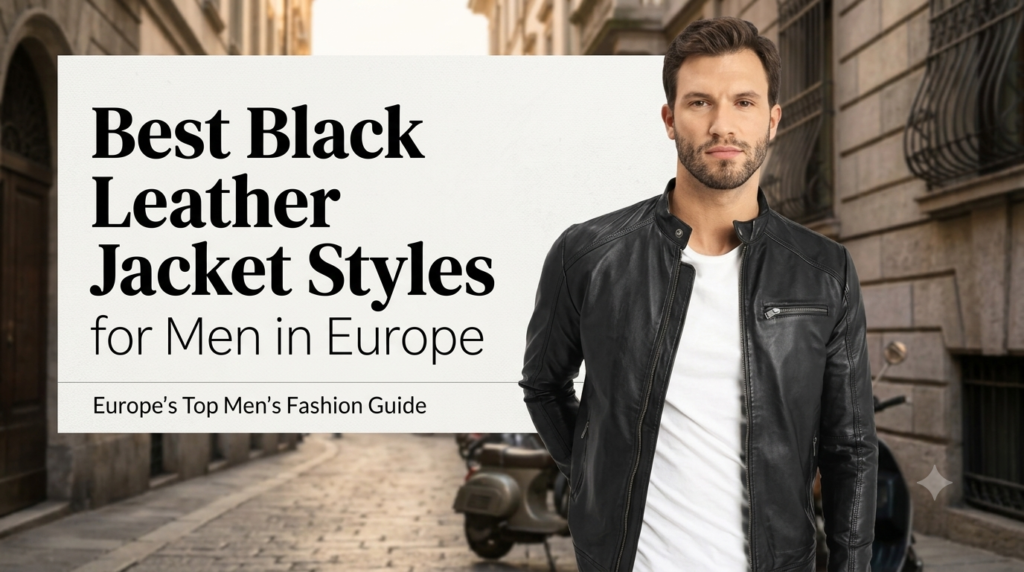
The black leather jacket is one of the most consistent-performing categories in European menswear wholesale. For B2B buyers, understanding which styles drive demand by region — classic biker, minimalist cut, structured blazer, oversized, vintage, and bomber — supports smarter inventory decisions, stronger margins, and lower clearance risk across seasonal cycles. European retailers and wholesalers have long recognized that the black leather jacket is not a trend-dependent category. It turns reliably, holds its price point, and appeals across age groups and distribution channels. What shifts is the style. And for B2B buyers responsible for inventory planning, those distinctions carry real commercial weight. A retailer in Milan operates in a different demand environment than a distributor supplying independent boutiques in Warsaw or a wholesale buyer stocking menswear chains across the Nordics. Each market has its own style preferences, price sensitivity, and consumer expectations — and the style decisions you make at the buying stage determine how well your inventory performs at the retail level. This guide covers the six black leather jacket styles that generate consistent B2B demand across European markets, outlines the regional variation that should inform your assortment strategy, and addresses the sourcing and wholesale considerations that affect margin and inventory management. Which Black Leather Jacket Styles Drive the Most Consistent B2B Demand in Europe? Classic Biker Jacket: The Reliable Core SKU The classic biker jacket — characterized by its asymmetrical zipper, snap-down lapels, and belt detailing — is the anchor of most European leather jacket assortments. Its design has remained commercially viable for decades, and its consumer recognition across age demographics is higher than any other silhouette in this category. For wholesale buyers, the biker jacket offers predictable inventory behavior. It does not require a seasonal narrative to move. Consumers buy it as a replacement, an upgrade, or an entry point into leather outerwear — all of which are purchase motivations that persist year-round. Retailers who stock this style at the right quality tier consistently report stable sell-through without significant markdown pressure. Premium pricing is achievable in this silhouette when material quality and construction detail can be demonstrated clearly at point of sale. Buyers should look for hardware weight, stitching consistency, and lining quality as the differentiators that support higher wholesale margins in this segment. Minimalist and Modern Cut: Growing Share Among Urban Retailers The minimalist leather jacket — clean lines, no decorative hardware, streamlined silhouette — is gaining consistent ground in European urban markets. Contemporary buyers, particularly those supplying fashion-forward independent retailers and multi-brand boutiques, are reporting increased demand for this style as it bridges casualwear and elevated everyday dressing. The commercial case for this silhouette lies in its versatility. It works across multiple seasonal collections without requiring repositioning, and its neutral aesthetic makes it easier to merchandise alongside a broader range of surrounding garments. For retailers with limited floor space, that cross-category compatibility reduces the cost of assortment complexity. Wholesale buyers sourcing for urban professional demographics should treat the minimalist cut as a growth position within the leather jacket category — not yet the volume driver that the classic biker represents, but trending in the right direction in key Western European markets. Structured Blazer Jacket: Expanding the Addressable Market The leather blazer jacket — tailored construction, notched lapel, business-casual silhouette — opens the leather jacket category to consumer segments that typically fall outside its reach. Corporate and professional buyers who would not consider a biker jacket will engage with a leather blazer as an alternative to wool or technical outerwear. For B2B buyers, this matters because it expands the retailer types you can supply. Department stores, menswear specialists, and corporate casualwear retailers can all be viable channels for this style, whereas the classic biker and minimalist cuts skew more heavily toward fashion and lifestyle retail. Margin potential in the leather blazer segment is higher than in most other leather jacket silhouettes, partly because the consumer comparison set shifts from other leather jackets to tailored outerwear — a category where price anchors are already elevated. Sourcing discipline is required, however: construction quality, lining, and silhouette precision matter more in this segment than in casual leather categories. Oversized and Relaxed Fit: Trend-Responsive Without Full Trend Risk The oversized leather jacket has moved from a narrow streetwear positioning into broader retail relevance across European markets, driven largely by social media visibility and its adoption by younger professional demographics. Unlike most trend-driven silhouettes, the relaxed fit leather jacket carries lower clearance risk than comparable fashion outerwear because the base garment — a black leather jacket — retains residual value even when a specific silhouette cools. For wholesale buyers, the oversized fit is worth carrying as a secondary position in the assortment rather than a primary SKU. It generates retail foot traffic, performs well in digital merchandising contexts, and appeals to a demographic segment that is actively growing its share of European menswear spend. Cross-season wearability — worn over heavier knitwear in winter, over a single layer in autumn — extends the selling window and reduces the need for promotional clearance activity. Vintage and Distressed Style: Premium Positioning With a Narrative Advantage Vintage and distressed leather jackets carry a sourcing story that supports premium pricing in a way that most other silhouettes cannot. Authentic craftsmanship, aged patinas, and heritage construction details give retailers a specific quality narrative to communicate to consumers — and that narrative translates into willingness to pay higher price points. For B2B buyers supplying heritage-focused retailers, specialty menswear stores, and collectors’ market channels, the vintage segment can support wholesale margins that outperform the category average. The challenge is sourcing consistency: distressed finishes need to be reproducible at scale without appearing manufactured, and the quality signals that justify premium pricing need to hold up under consumer scrutiny. Buyers should qualify suppliers in this segment carefully, requesting production samples across a batch run rather than a single prototype. Finish variation is expected and often desirable, but structural consistency — seam integrity, hardware reliability, lining quality — should not vary. Bomber
Why a Black Leather Jacket Belongs in Every European Retail Collection
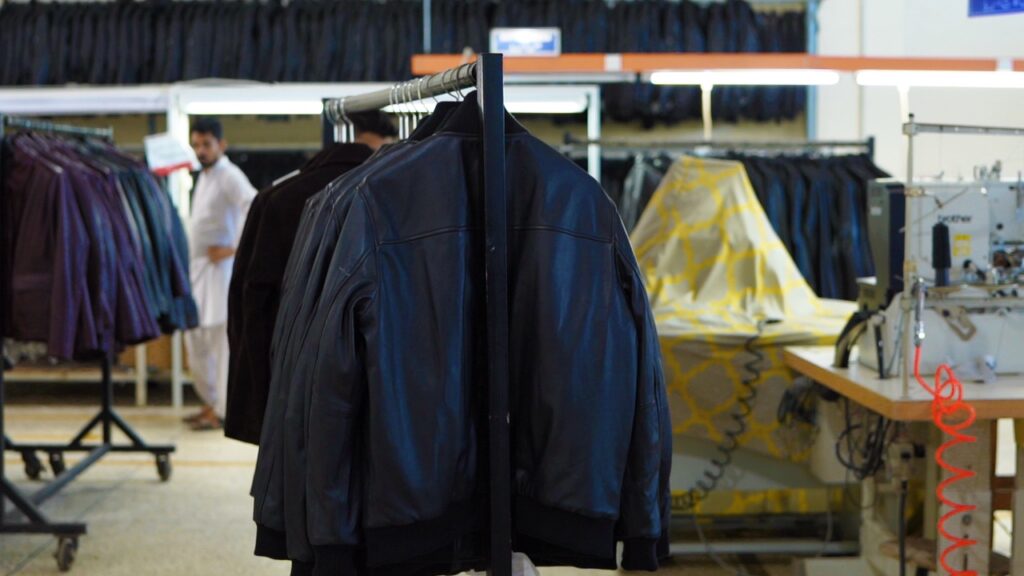
The black leather jacket is one of the most consistently purchased outerwear items across European fashion markets. For B2B buyers, retailers, and distributors, stocking this category offers reliable inventory turnover, broad consumer appeal, cross-season wearability, and strong margin potential — making it a sound addition to any wholesale or retail buying strategy. European consumers buy black leather jackets with a consistency that few other garments can match. Trends shift. Seasonal categories fluctuate. But the black leather jacket moves — month after month, across demographics, across price points, and across distribution channels. For retail buyers and trade professionals sourcing inventory for the European market, this is not a minor detail. It means the black leather jacket functions differently from most apparel categories. It does not need a seasonal promotional push to generate demand. It does not carry the same clearance risk as trend-dependent pieces. When sourced at the right quality and positioned at the right price, it holds its place in the assortment and contributes to steady revenue across the year. This post outlines the business case for prioritizing black leather jackets in your European B2B inventory strategy — from consumer demand patterns and quality sourcing considerations to margin potential, competitive positioning, and distribution advantages. If you are a buyer, wholesaler, or distributor evaluating where to direct category investment, the following sections provide the operational context you need to make a well-informed decision. What Makes the Black Leather Jacket a Durable B2B Category in Europe? The historical and cultural roots that sustain demand The black leather jacket has been embedded in European fashion culture for over a century. Its origins trace to functional military and aviation use in the early twentieth century, where European manufacturers — particularly in Germany, France, and the United Kingdom — developed leather outerwear for durability under harsh conditions. After World War II, the garment crossed into civilian and subcultural fashion across the continent, adopted by youth movements and eventually absorbed into mainstream wardrobes. This trajectory matters for B2B buyers because it means the black leather jacket carries cultural weight that advertising alone cannot manufacture. Demand is not being sustained by a single trend cycle — it is supported by decades of consumer familiarity and wardrobe habit. European shoppers are not discovering the black leather jacket; they are replacing, upgrading, or diversifying their existing relationship with it. That foundation translates into predictable purchase behavior, which is a meaningful advantage when planning inventory depth and replenishment cycles. Regional style variation across European markets European demand for black leather jackets is not uniform, and understanding regional variation helps buyers tailor their assortment more precisely. In Southern European markets — Italy, Spain, and Portugal — consumers tend to favor slimmer cuts with refined detailing, consistent with the region’s preference for tailored silhouettes. Heritage leather craftsmanship in Italy has also positioned higher-end leather jackets as investment pieces, with buyers in these markets demonstrating willingness to pay premium prices for provenance and construction quality. Northern and Western European markets, including Germany, the Netherlands, and Scandinavia, show stronger demand for functional designs — structured cuts with practical features that accommodate varied weather conditions. The UK market, historically a significant driver of leather jacket culture through its music and fashion industries, continues to support both classic biker-style silhouettes and contemporary interpretations. The next concrete step is supplier qualification. Buyers looking for a reliable production partner can explore Hamid Leather, an integrated tannery and leather apparel manufacturer offering manufacturing solutions for brands, wholesalers, retailers, and private-label businesses. When comparing suppliers, evaluate material transparency, production capacity, quality-control procedures, sample-to-bulk consistency, minimum order quantities, customisation options, and delivery lead times. Establish your preferred price tier and product specifications before requesting samples or quotations so you can negotiate from a clear commercial position. For distributors operating across multiple European territories, this means a tiered assortment strategy — rather than a single SKU — is likely to perform better across the full footprint. What Does European Consumer Demand Actually Look Like for B2B Buyers? Purchasing patterns among fashion buyers and retailers European fashion buyers consistently include black leather jackets in core assortments rather than treating them as seasonal additions. Unlike trend-driven outerwear that requires significant markdown activity at the end of a cycle, black leather jackets maintain sell-through rates across longer inventory windows. This reduces clearance exposure and supports more predictable margin outcomes. Retailers sourcing at wholesale report that black leather jackets tend to perform across a wide consumer age range — from younger shoppers seeking an entry-level leather piece to older consumers replacing a worn garment or trading up in quality. That breadth of consumer appeal reduces the risk associated with narrow demographic targeting and allows a single SKU to generate volume across multiple customer segments. Seasonal demand and wholesale timing considerations While consumer demand for black leather jackets remains relatively stable year-round, wholesale purchasing tends to concentrate in two windows: late summer for autumn/winter sell-in, and early spring as consumers begin refreshing wardrobes ahead of transitional weather. Buyers who establish supplier relationships ahead of these windows — and who can commit to forward orders — are typically better positioned to negotiate favorable unit pricing and secure priority production slots. Waiting until peak demand arrives limits both selection and leverage in supplier negotiations. For distributors managing multi-category assortments, the relatively even year-round demand for leather jackets provides an inventory counterbalance to categories with more pronounced seasonal peaks and troughs. How to position price across different European market segments The European market supports leather jacket price positioning across a wide range, from accessible fast-fashion price points to premium and luxury tiers. Each segment has distinct sourcing requirements and margin structures. At the accessible tier, high-volume production from established manufacturing regions can support competitive wholesale pricing. Margin in this segment depends on volume and efficient logistics rather than product differentiation. The mid-market segment — where many independent retailers and regional chains operate — offers stronger margin potential when the product can demonstrate clear quality signals: full-grain or top-grain