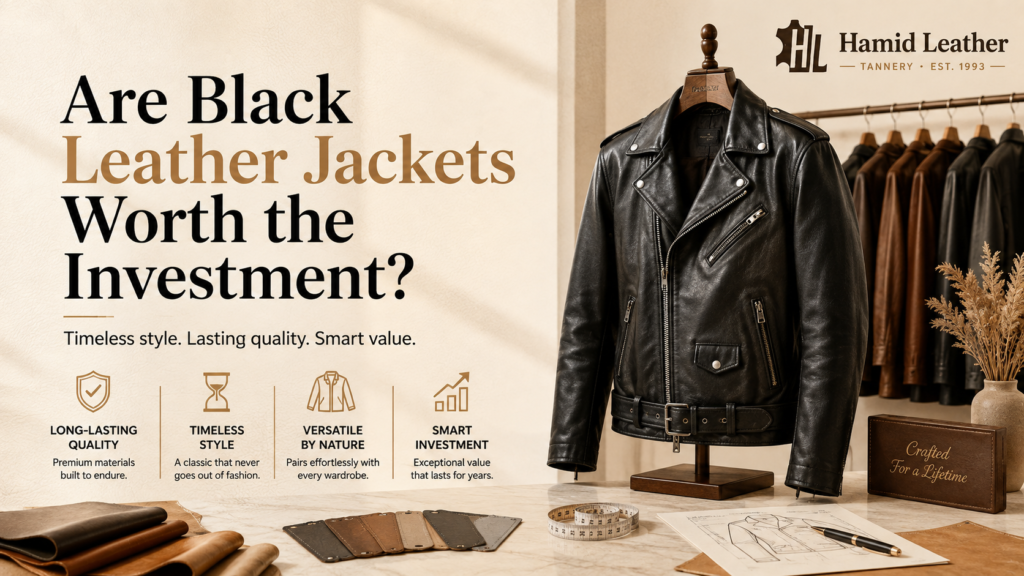
A high-quality black leather jacket can be worth the investment because it combines durability, versatility and timeless style. When the leather, construction and fit are appropriate, the jacket may remain useful for many years and become more comfortable and distinctive with wear.
However, not every expensive leather jacket represents good value. The investment depends on the leather type, workmanship, design, cost per wear, maintenance requirements and how frequently you expect to use it.
This guide explains whether black leather jackets are worth buying, what influences their long-term value and how individual customers and B2B buyers can make informed purchasing decisions.
Why Black Leather Jackets Are Considered an Investment
The word “investment” does not necessarily mean that a jacket will increase in financial value. In most cases, it refers to the long-term usefulness and value the garment provides.
A black leather jacket may be considered a worthwhile investment because it can offer:
- Long-term durability
- Versatile styling
- A timeless appearance
- Protection from wind and mild weather
- The ability to develop character with age
- Repairability
- Strong cost-per-wear value
- Compatibility with different wardrobes
- Less dependence on short-lived fashion trends
A well-made jacket may initially cost more than an ordinary synthetic outerwear garment. However, if it is worn frequently and maintained properly, its cost per use can become reasonable over time.
The key is to invest in a jacket that suits your lifestyle instead of choosing one based only on brand recognition, marketing or price.
How Long Can a Black Leather Jacket Last?
A well-constructed leather jacket can last for many years, although its actual lifespan depends on several factors.
These include:
- Leather type and grade
- Surface finish
- Leather thickness
- Stitching quality
- Hardware
- Lining
- Frequency of use
- Climate
- Storage conditions
- Cleaning methods
- Exposure to moisture and sunlight
- Timely repairs
Strong cowhide or goatskin jackets may perform particularly well under regular use. Lambskin and sheepskin jackets can also last for years, but their softer surfaces generally require more careful handling.
A jacket’s durability should not be judged by leather thickness alone. Heavy leather with poor stitching, weak hardware or an unstable finish may perform worse than carefully selected lightweight leather with skilled construction.
The Importance of Choosing the Right Leather
Different leather types provide different kinds of value.
Cowhide
Cowhide is widely used for biker jackets, café racers and structured outerwear. It is generally strong, substantial and resistant to demanding wear.
It may be a worthwhile investment for buyers who want:
- Durability
- A structured appearance
- Strong shape retention
- Rugged styling
- Regular outdoor use
Thicker cowhide can require a break-in period and may feel heavy in warm climates.
Sheepskin
Sheepskin is usually lighter, softer and more flexible than heavy cowhide.
It can be suitable for:
- Everyday fashion jackets
- Lightweight outerwear
- Fitted designs
- Buyers who prioritise comfort
- Mild or transitional weather
Its softer surface may require more protection from scratches and rough handling.
Lambskin
Lambskin is known for its smooth surface, low weight and luxurious feel.
It is often used for:
- Premium fashion jackets
- Tailored silhouettes
- Lightweight designs
- Refined casual wear
Lambskin can be a worthwhile choice for buyers who value softness and appearance, but it is generally less suitable for demanding use than substantial cowhide.
Goatskin
Goatskin offers a useful balance between strength, flexibility and manageable weight.
Its natural grain can hide minor wear effectively, making it practical for regular use. It may provide strong long-term value for buyers who want durability without the heaviness of thick cowhide.
Buffalo Leather
Buffalo leather often has a bold grain and rugged appearance. It is commonly used for heritage, vintage and distressed jackets.
Its substantial character can suit buyers who want a jacket that develops a distinctive appearance over time.
Calfskin
Calfskin generally provides a fine grain, smooth surface and refined appearance. It can combine softness with durability, although high-quality calfskin jackets may carry a premium price.
The best investment is not automatically the toughest or most expensive leather. The material must match the intended use and jacket design.
Does Genuine Leather Always Offer Good Value?
The phrase “genuine leather” is not enough to determine whether a jacket is worth the price.
A genuine leather jacket may use:
- Full-grain leather
- Top-grain leather
- Corrected-grain leather
- Split leather
- Heavily coated leather
These materials can vary considerably in strength, appearance and ageing characteristics.
Before purchasing, look for information about:
- Animal source
- Leather grade
- Thickness
- Surface finish
- Tanning method
- Lining composition
- Hardware
- Country of manufacture
- Care requirements
A seller that provides precise specifications allows buyers to compare the product’s actual value instead of relying on broad marketing terms.
Full-Grain and Top-Grain Leather
Full-grain leather retains the natural outer surface of the hide. It may display pores, grain variation, wrinkles and small natural marks.
It is valued for its strong fibre structure and ability to develop character with use. However, full-grain leather is not automatically suitable for every fashion jacket. Its natural variation and substantial character may not match designs that require a highly uniform or lightweight finish.
Top-grain leather normally receives some surface correction to create a cleaner appearance. It can offer a practical balance between consistency, durability and natural character.
Both options may provide good long-term value when the material is selected carefully and used appropriately.
Corrected-Grain and Split Leather
Corrected-grain leather is buffed and finished to reduce visible imperfections. It may also receive an embossed grain.
Good corrected-grain leather can be practical for jackets requiring:
- Consistent black colour
- Uniform grain
- Easier maintenance
- Greater stain resistance
- Competitive pricing
Split leather comes from the lower section of the hide and commonly receives a surface coating. It can be used to produce affordable genuine leather jackets, but it may not provide the same strength or ageing qualities as better full-grain or top-grain leather.
A corrected or coated material is not automatically unsuitable. Its price and product description should accurately reflect what the buyer is receiving.
Timeless Style Adds Long-Term Value
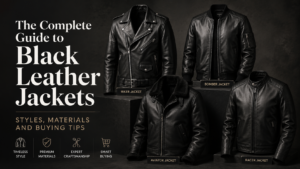
Black leather jackets have remained popular across many decades because they can adapt to changing fashion trends.
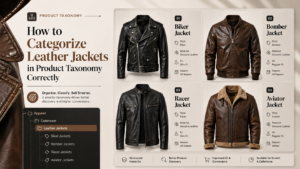
Common styles include:
- Biker jackets
- Café racer jackets
- Bomber jackets
- Aviator jackets
- Leather blazers
- Field jackets
- Overshirts
- Long leather coats
Classic designs tend to offer better long-term versatility than highly trend-dependent styles.
A clean café racer, traditional biker jacket or simple bomber can often be worn across multiple seasons without looking outdated. Unusual proportions, excessive decoration or highly specific colours may provide less styling flexibility.
If long-term value is your priority, consider a design with:
- Balanced proportions
- A simple silhouette
- Functional pockets
- Dependable hardware
- Minimal unnecessary decoration
- A versatile black finish
- A fit that suits your body
Black Is a Versatile Colour
Black is one of the easiest leather-jacket colours to incorporate into a wardrobe.
A black leather jacket can be worn with:
- Jeans
- Chinos
- Tailored trousers
- T-shirts
- Shirts
- Knitwear
- Hoodies
- Boots
- Trainers
- Casual dresses
- Skirts
It can support casual, smart-casual and fashion-focused outfits depending on the jacket design.
This versatility can increase cost-per-wear value because the jacket is not limited to one outfit or occasion.
A matte or semi-matte finish is generally adaptable, while glossy, heavily distressed or two-tone finishes create a more distinctive appearance.
Understanding Cost per Wear
Cost per wear is a useful way to evaluate whether a jacket offers good value.
The basic calculation is:
Cost per wear = Total purchase cost ÷ Number of times worn
For example, if a jacket costs £400 and is worn 200 times, its cost per wear is £2.
A cheaper jacket is not necessarily better value. If a £100 jacket is worn only ten times before it becomes unsuitable, its cost per wear is £10.
When calculating value, include:
- Purchase price
- Shipping
- Import duties
- Alteration costs
- Professional cleaning
- Conditioning products
- Repairs
A well-chosen jacket that fits properly and works with your wardrobe is more likely to be worn frequently.
Fit Has a Major Effect on Value
Even a high-quality jacket becomes a poor investment if it does not fit comfortably.
A black leather jacket should sit close enough to maintain its intended silhouette while allowing natural movement. The shoulders, chest, armholes and upper arms should not feel painfully restrictive.
Important fit areas include:
- Shoulder alignment
- Chest room
- Waist shape
- Upper-arm width
- Armhole comfort
- Sleeve length
- Body length
- Layering space
Do not depend on the leather stretching dramatically. Natural leather may soften and adapt slightly, but a jacket that is several sizes too small is unlikely to become comfortable.
For detailed sizing guidance, read how a black leather jacket should fit.
A Good Fit Encourages Frequent Wear
The financial value of a jacket depends partly on how often you use it.
A jacket is more likely to become part of your regular wardrobe when it:
- Feels comfortable
- Allows natural movement
- Works with your normal clothing
- Provides enough layering room
- Suits your climate
- Matches your preferred style
- Has functional pockets
- Is easy to put on and remove
An uncomfortable jacket may remain unused regardless of its material quality or purchase price.
Fit should therefore be evaluated as carefully as the leather and construction.
Construction Quality Determines Durability
Good leather cannot compensate for poor manufacturing.
A worthwhile jacket should have:
- Straight and secure stitching
- Accurate panel alignment
- Reinforced stress points
- Smoothly operating zips
- Firmly attached hardware
- A properly fitted lining
- Strong pocket bags
- Clean edge finishing
- Balanced sleeves and shoulders
- Consistent measurements
Inspect the shoulders, armholes, pockets, cuffs, collar, front closure and hem.
Warning signs include:
- Loose threads
- Skipped stitches
- Open seams
- Crooked stitching
- Multiple visible needle holes
- Misaligned zips
- Weak pocket corners
- Twisted lining
- Sharp hardware
- Uneven sleeves
- Poorly matched panels
Construction problems can shorten the useful life of a jacket even when the leather initially appears attractive.
Hardware Can Affect Long-Term Value
Zips, snaps, buckles and adjusters receive frequent use. If these components fail, the jacket may become difficult to wear.
Good hardware should:
- Operate smoothly
- Remain aligned
- Suit the leather’s weight
- Be securely attached
- Have no sharp edges
- Use a consistent finish
- Avoid catching the lining
The heaviest zip is not always the best. Oversized hardware may distort lightweight lambskin or sheepskin, while weak hardware may feel unsuitable on thick cowhide.
The components should be selected as part of the complete design.
The Lining Should Not Be Overlooked
The lining influences comfort, movement, warmth and durability.
Common lining materials include:
- Polyester
- Viscose
- Cotton
- Satin
- Quilted polyester
- Wool blends
- Synthetic insulation
A quality lining should sit smoothly without twisting, sagging or catching in the zip. It should provide enough room around the shoulders, sleeves and body for natural movement.
A damaged lining can often be replaced, but this adds to the jacket’s ownership cost. Inspecting the lining before purchase can help you avoid unnecessary repairs.
Leather Jackets Can Develop Character
One reason buyers value natural leather is its ability to change with use.
Depending on the leather and finish, a jacket may gradually develop:
- Softer movement areas
- Subtle creasing
- Tonal variation
- A more personal shape
- Surface character
- A natural patina
These changes can make the jacket appear more distinctive.
However, ageing should not be confused with material failure. Peeling coatings, severe cracking, loose finish and structural damage are not desirable signs of character.
The jacket should age in a way that is consistent with its material specification and intended appearance.
Repairability Can Extend the Jacket’s Life
Many leather-jacket problems can be repaired by an experienced specialist.
Possible repairs include:
- Zip replacement
- Lining replacement
- Restitching open seams
- Repairing pocket bags
- Replacing snaps
- Reinforcing stressed areas
- Shortening sleeves
- Restoring worn edges
- Correcting minor finish damage
Repairability can improve long-term value because one damaged component does not necessarily require replacing the entire jacket.
However, leather retains needle holes, and major pattern alterations can be difficult. Shoulder and armhole changes may be particularly expensive.
Choosing the correct fit and construction from the beginning remains the better approach.
Maintenance Costs Should Be Considered
Leather jackets require more specialised care than many ordinary fabric garments.
Recommended care may include:
- Storing the jacket on a wide hanger
- Keeping it in a ventilated area
- Avoiding permanent plastic covers
- Protecting it from prolonged sunlight
- Allowing wet leather to dry naturally
- Keeping it away from radiators
- Using suitable leather-care products
- Testing products on a hidden area
- Using professional leather cleaning when required
- Repairing damaged stitching promptly
Different finishes require different products. A conditioner suitable for smooth cowhide may not be appropriate for lambskin, suede, nubuck or heavily waxed leather.
Maintenance costs should be included when evaluating the complete investment.
Climate Influences Practical Value
A leather jacket is more valuable when it suits the climate in which it will be worn.
A thick cowhide jacket with a quilted lining may provide useful protection in cold weather but feel impractical in a warm climate.
A lightweight sheepskin or lambskin jacket may be more suitable for mild temperatures, indoor events and transitional seasons.
Consider:
- Average temperature
- Rainfall
- Humidity
- Wind
- Seasonal changes
- Indoor and outdoor use
- Available layering options
Leather is not completely waterproof. Prolonged exposure to heavy rain can affect the finish and shape, so the jacket should be protected and dried correctly.
When a Black Leather Jacket May Not Be Worth It
A leather jacket may not represent good value when:
- You rarely wear jackets
- The climate is unsuitable
- The style does not match your wardrobe
- The fit is uncomfortable
- The seller provides unclear material information
- The return policy is restrictive
- The jacket requires more care than you can provide
- The price is based mainly on branding
- The surface shows early cracking or peeling
- The construction is weak
- You are purchasing only because of a discount
- The design is too trend-dependent for your needs
The most expensive jacket is not always the best investment. A moderately priced jacket with suitable leather, dependable construction and a comfortable fit may provide greater practical value.
Are Affordable Leather Jackets Worth Buying?
An affordable leather jacket can offer good value if its specifications and construction are appropriate for the price.
Before buying, check:
- Whether the outer shell is genuine leather
- The animal source
- The leather grade
- Surface finish
- Stitching
- Lining
- Hardware
- Measurements
- Customer reviews
- Return conditions
Lower prices may result from efficient production, direct purchasing, lower retail overheads or simpler design. They do not always indicate poor quality.
However, unusually low prices combined with vague material descriptions and limited photographs should be treated cautiously.
Are Designer Leather Jackets Worth the Price?
Designer jackets may include value beyond the physical materials.
Their prices can reflect:
- Brand reputation
- Original design
- Retail presentation
- Marketing
- Limited production
- Premium packaging
- Distribution costs
- Customer service
- Resale demand
Some designer jackets use excellent leather and skilled construction. Others may carry a high price primarily because of the brand name.
Buyers should inspect the jacket itself rather than assuming that a recognised label guarantees superior quality.
If material quality and durability are your priorities, compare the designer jacket’s leather, stitching, lining and hardware with alternatives at different price levels.
New vs Second-Hand Leather Jackets
A second-hand black leather jacket can provide excellent value when it is in good condition.
Benefits may include:
- Lower purchase price
- Already-softened leather
- Vintage character
- Reduced environmental demand
- Access to discontinued styles
Before purchasing a used jacket, inspect it for:
- Cracking
- Peeling
- Strong odours
- Mould
- Damaged lining
- Broken zips
- Loose seams
- Stretched pockets
- Excessive colour loss
- Incorrect alterations
- Severe dryness
- Unbalanced shape
Repairs and professional cleaning should be included in the final cost.
A low-priced vintage jacket may become expensive if it requires a new lining, hardware replacement and leather restoration.
Is a Leather Jacket a Sustainable Purchase?
A leather jacket can support a lower-consumption wardrobe when it is worn for many years, maintained and repaired instead of frequently replaced.
However, sustainability involves several considerations, including:
- Raw-material sourcing
- Animal-welfare standards
- Tannery management
- Chemical use
- Water consumption
- Energy use
- Worker conditions
- Product durability
- Transportation
- Repairability
- End-of-life management
Buyers should look for manufacturers that provide transparent information and relevant certifications where required.
A jacket should not be described as sustainable only because it is durable. Responsible production and traceable supply chains also matter.
Certifications and Testing
Testing and certification can be important for brands, retailers and wholesale buyers.
Depending on the market and product requirements, buyers may request information about:
- Restricted substances
- Colourfastness
- Tear strength
- Seam strength
- Finish adhesion
- Flex resistance
- Hardware performance
- Dimensional stability
- Physical safety
- Chemical compliance
Certifications do not replace physical product inspection, but they can provide evidence that specific processes or materials meet defined standards.
The necessary requirements vary by market, product category and customer specification.
Advice for B2B Buyers
For fashion brands, wholesalers and retailers, a leather-jacket collection represents a larger investment than a single retail purchase.
B2B value depends on:
- Consistent product quality
- Accurate costing
- Reliable lead times
- Repeatability
- Low defect rates
- Clear communication
- Market-appropriate styling
- Correct sizing
- Compliance
- Packaging
- After-sales support
Before placing a bulk order, buyers should request:
- Leather swatches
- Written material specifications
- Colour references
- Thickness ranges
- Finish details
- Hardware samples
- Lining samples
- Development samples
- Fit samples
- Pre-production samples
- Measurement charts
- Grading rules
- Test reports where required
- Quality-control procedures
- Production timelines
- Packaging specifications
For custom leather-jacket development and bulk production, Hamid Leather Ltd works with international fashion brands, wholesalers and retailers.
Why Sampling Matters for Wholesale Orders
A leather swatch provides useful information about colour, grain, softness and thickness, but it cannot show how the complete jacket will perform.
A finished sample is needed to evaluate:
- Fit
- Drape
- Weight
- Balance
- Movement
- Panel matching
- Stitching
- Hardware
- Lining
- Pocket function
- Overall appearance
The pre-production sample should use the approved leather, lining, trims, labels and construction details.
Bulk manufacturing should not begin until the complete specifications and sample have been approved.
Calculate the Total Cost of a B2B Order
The unit price is only one part of a wholesale investment.
B2B buyers should consider:
- Sample-development costs
- Leather and material costs
- Minimum order quantity
- Labels and packaging
- Testing
- Inspection
- Freight
- Insurance
- Import duties
- Taxes
- Warehousing
- Marketing
- Returns
- Defects
- Currency changes
- Reordering requirements
A slightly higher unit cost may provide better commercial value if it includes reliable materials, consistent sizing and stronger quality control.
Choosing the lowest quotation without comparing specifications can result in inconsistent products and higher long-term costs.
How to Decide Whether a Jacket Is Worth Buying
Before purchasing, ask yourself:
- Will I wear this jacket regularly?
- Does the style match my wardrobe?
- Is the leather type suitable for my intended use?
- Does the jacket fit comfortably?
- Can I wear my intended layers underneath it?
- Is the construction reliable?
- Are the zips and hardware dependable?
- Does the lining suit the climate?
- Are the material details clearly stated?
- Is the return policy reasonable?
- Can the jacket be repaired?
- Am I willing to maintain it properly?
- Is the total cost realistic for my budget?
- Am I paying for quality or mainly for branding?
- Will the design remain useful beyond one season?
If the jacket performs well across these areas, it is more likely to provide good long-term value.
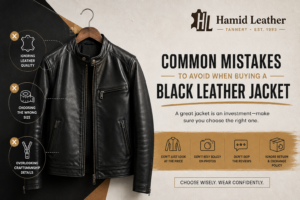
Common Mistakes to Avoid
When investing in a black leather jacket, avoid:
- Buying only because of the brand name
- Assuming a high price guarantees quality
- Choosing a size only from S, M or L labels
- Expecting the leather to stretch several sizes
- Ignoring the lining and hardware
- Focusing only on softness
- Assuming heavier leather is always better
- Choosing a style that does not suit your wardrobe
- Ignoring climate and layering requirements
- Overlooking maintenance costs
- Buying because of a large discount
- Failing to read the return policy
- Confusing natural ageing with peeling
- Approving wholesale production from photographs
- Selecting a supplier only on unit price
Frequently Asked Questions
Are black leather jackets worth the money?
They can be worth the money when they use suitable leather, reliable construction and a comfortable fit. Their versatility and potential for long-term use can provide strong cost-per-wear value.
How long does a real leather jacket last?
A well-made and properly maintained leather jacket can last for many years. Its lifespan depends on the leather type, construction, care and frequency of use.
Which leather offers the best investment value?
Cowhide and goatskin can provide excellent durability, while sheepskin and lambskin offer softness and lightweight comfort. The best option depends on the jacket’s intended use.
Is an expensive leather jacket always better?
No. Price may reflect branding, marketing and retail costs as well as material quality. Inspect the leather, stitching, lining, hardware and fit directly.
Is full-grain leather always the best choice?
Not for every jacket. Full-grain leather can provide strength and natural character, but softer or corrected materials may suit certain lightweight and fashion-focused designs better.
Are black leather jackets still fashionable?
Classic black leather jackets remain widely adaptable because they can be styled with casual, smart-casual and fashion-focused clothing. Simple designs generally offer the greatest long-term versatility.
Do black leather jackets improve with age?
Some natural leathers soften and develop creases, tonal variation and patina with use. However, peeling, severe cracking and loose coatings indicate damage rather than desirable ageing.
Is cowhide better than lambskin?
Cowhide is generally stronger and more structured, while lambskin is softer, lighter and more refined. Neither is automatically better for every jacket.
How much should I spend on a leather jacket?
The appropriate budget depends on the leather, construction, design, brand and expected use. Focus on specifications and cost per wear rather than selecting a jacket only by price.
Should a leather jacket fit tightly at first?
It may feel firm, especially when made from thick cowhide, but it should still close and allow essential movement. Do not depend on dramatic stretching.
Can a leather jacket be repaired?
Yes. Specialist repairers may replace zips, linings and snaps or repair seams and worn areas. Major shoulder and armhole alterations can be difficult.
Is a second-hand leather jacket a good investment?
It can be, particularly when the leather and construction remain in good condition. Include cleaning and repair costs when comparing its value.
Are synthetic leather jackets a better value?
Synthetic jackets generally cost less and may require simpler care, but their durability and ageing behaviour vary. Genuine leather may provide better long-term value when it is well made and maintained.
What should B2B buyers check before ordering?
They should review written specifications, physical leather swatches, samples, measurements, testing requirements, quality-control procedures, lead times and total landed costs.
How can I reduce the cost per wear?
Choose a versatile design, ensure the fit is comfortable, maintain the jacket correctly and repair minor damage before it becomes severe.
Final Thoughts
Black leather jackets can be worth the investment when they combine suitable materials, accurate construction, comfortable fit and versatile design.
Their value does not come from leather alone. Stitching, hardware, lining, pattern cutting, panel matching and surface finishing all affect how the jacket looks and performs over time.
Choose the leather according to your intended use. Cowhide and buffalo leather may suit rugged, structured jackets, while sheepskin and lambskin are suitable for lightweight and refined designs. Goatskin provides a practical balance between strength and flexibility.
Fit is equally important. A jacket that feels uncomfortable or does not work with your usual clothing is unlikely to achieve good cost-per-wear value. Compare exact measurements, account for layering and test your natural movement.
Before purchasing, calculate the complete cost, including delivery, duties, maintenance and possible alterations. Review the seller’s material information and return policy rather than relying only on branding or discounts.
For B2B buyers, value depends on consistency across the entire order. Written specifications, leather swatches, complete samples, fit approval and production inspections are essential before committing to bulk manufacturing.
Ultimately, a black leather jacket is worth the investment when you choose it carefully, wear it regularly and maintain it properly. A well-designed jacket can become a dependable part of your wardrobe, delivering style, comfort and practical value for many years.