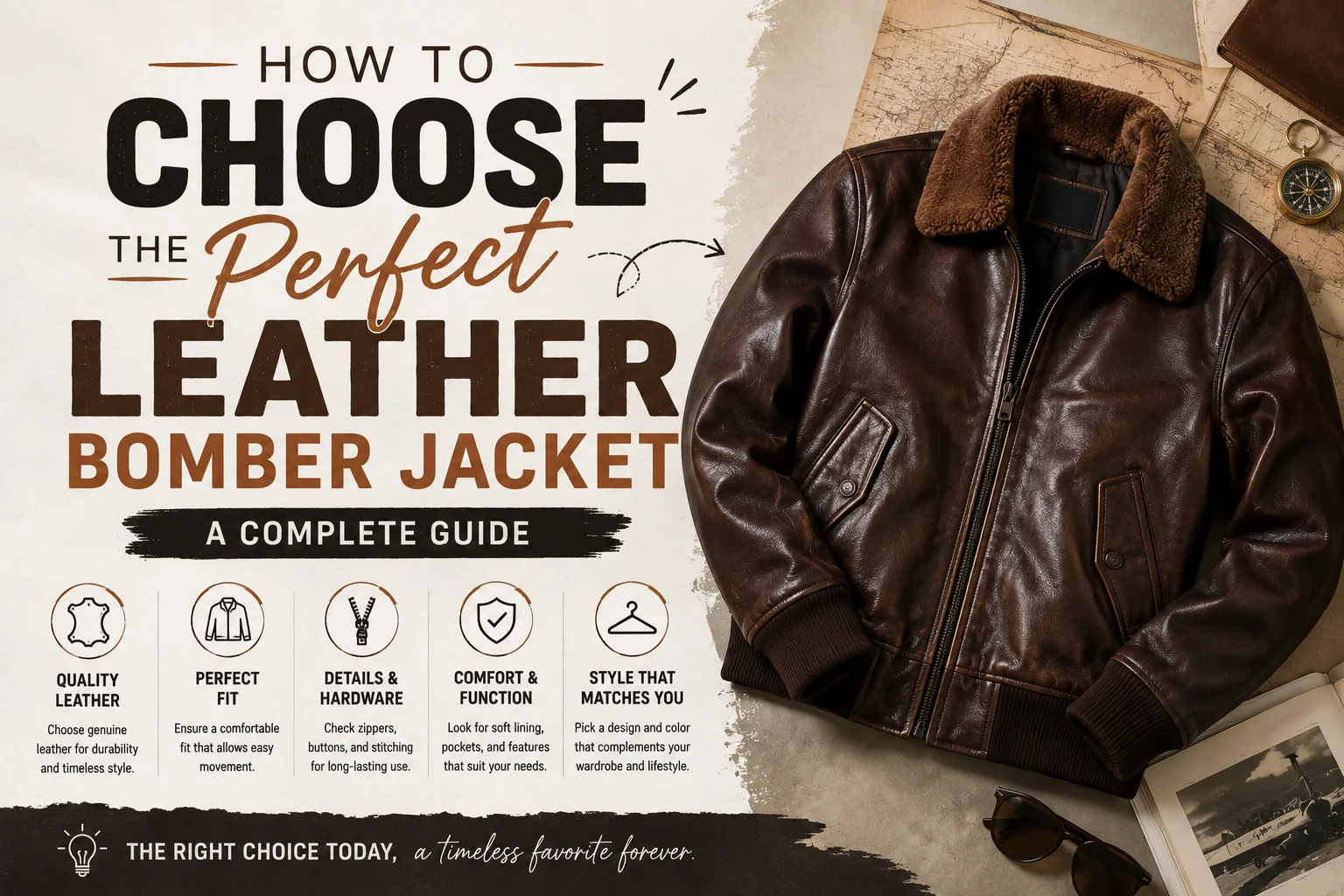
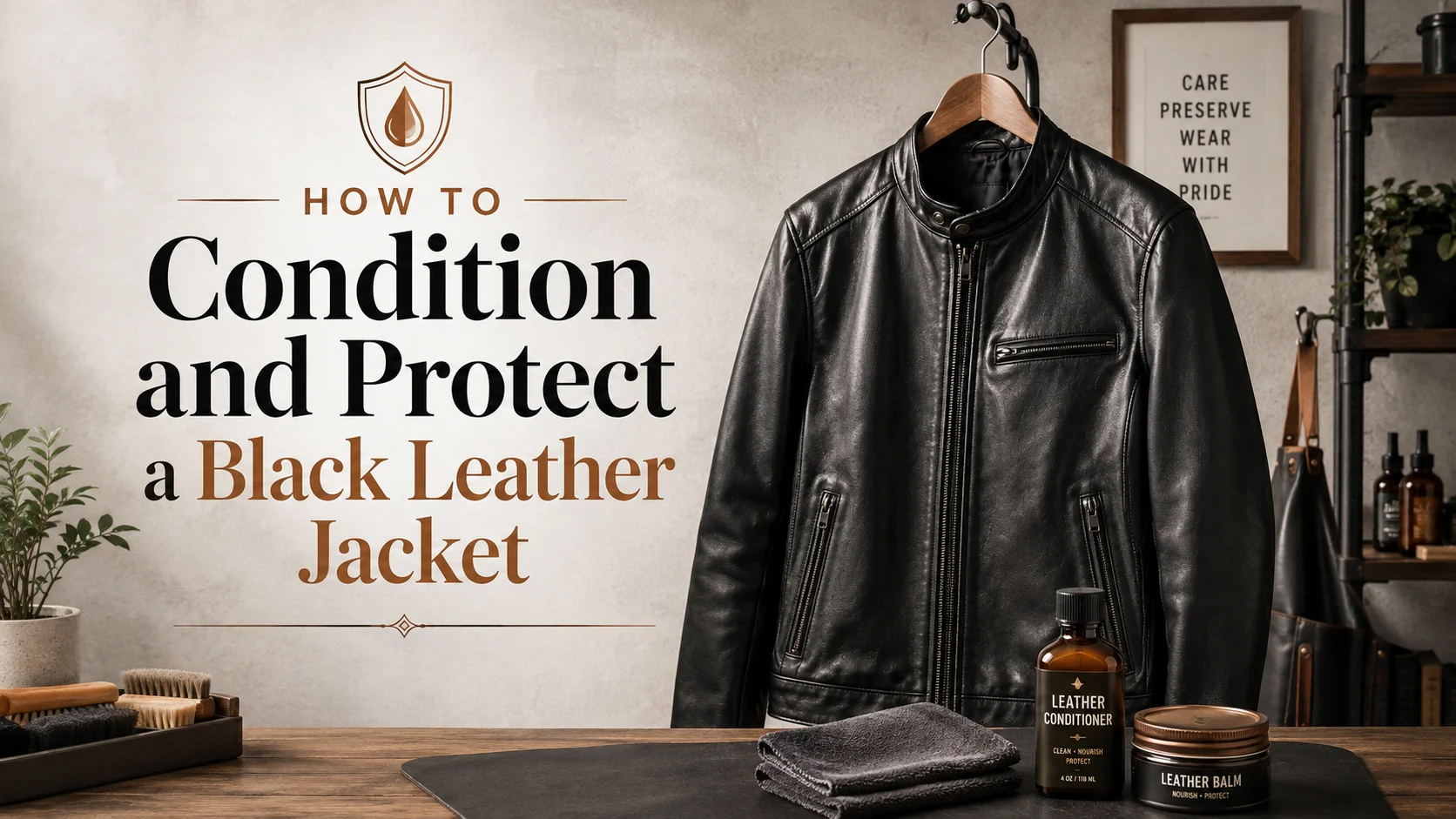
A black leather jacket is more than a piece of outerwear. Whether it is a classic biker jacket, bomber, aviator, racer or contemporary fashion design, genuine leather can provide years of wear when it receives proper care. However, leather is a natural material, which means it can gradually lose moisture, become stiff, develop cracks or fade if it is repeatedly exposed to sunlight, heat, rain, dirt and improper storage.
Learning how to condition and protect a black leather jacket is therefore essential for maintaining its appearance, flexibility and overall lifespan.
Conditioning replaces some of the natural oils that leather loses over time, while protection helps reduce damage from moisture, UV exposure, dirt and everyday wear. The key is understanding which products to use, how often to use them and which common leather-care mistakes should be avoided.
For consumers, retailers and fashion businesses purchasing premium leather garments, proper maintenance can make the difference between a jacket that deteriorates after several seasons and one that remains attractive for many years.
This complete guide explains everything you need to know about conditioning, protecting, storing and maintaining a black leather jacket.
Why Does a Black Leather Jacket Need Conditioning?
Leather begins as animal hide and undergoes tanning, finishing and manufacturing processes that transform it into a durable clothing material.
Although finished leather is considerably stronger than untreated hide, it still contains oils and moisture that contribute to its softness and flexibility.
Over time, these oils can gradually disappear.
Several factors accelerate this process, including:
- Exposure to sunlight
- Central heating
- Hot environments
- Frequent outdoor wear
- Rain and humidity
- Improper cleaning
- Dry storage environments
- Strong cleaning chemicals
As the leather loses moisture, it may begin to feel dry or stiff.
Eventually, very dry leather can develop fine cracks, particularly around areas that experience frequent movement such as the elbows, shoulders, cuffs and pockets.
Leather conditioner helps replenish oils and moisture within the leather fibres.
When applied correctly, conditioning can help maintain:
- Flexibility
- Smooth texture
- Natural appearance
- Resistance to cracking
- Long-term durability
However, conditioning should always be done carefully. Applying too much conditioner can make leather greasy, overly soft or darker than intended.
Proper leather maintenance is therefore about balance rather than constantly applying products.
Why Black Leather Requires Proper Protection
Black leather is popular partly because of its rich, distinctive appearance.
However, repeated exposure to environmental conditions can gradually affect its colour and finish.
For example, UV rays from direct sunlight can cause black leather to fade.
A jacket that originally had a deep black appearance may eventually develop faded grey or brown areas if it spends significant amounts of time in strong sunlight.
Rain can also create problems.
Leather is not naturally waterproof. Although some jackets receive protective finishes during production, extended exposure to water can penetrate the leather.
If wet leather dries too quickly, the fibres can become stiff and brittle.
Dirt, oils and pollution may also accumulate on the surface.
Regular protection therefore helps maintain both the appearance and structural quality of the jacket.
How Often Should You Condition a Black Leather Jacket?
There is no universal conditioning schedule because several factors determine how quickly leather loses moisture.
For most jackets, conditioning approximately once or twice per year is usually sufficient.
However, jackets worn frequently may require slightly more attention.
Consider the following factors.
Frequency of Wear
A jacket worn several times every week experiences more friction, sunlight and environmental exposure than one worn occasionally.
Regularly worn leather may therefore require conditioning more frequently.
Climate
Dry climates can remove moisture from leather relatively quickly.
If the jacket is regularly worn in extremely dry conditions, occasional additional conditioning may help maintain flexibility.
Humid environments create different challenges, particularly the possibility of mould when leather is stored without proper ventilation.
Leather Type
Different leather types absorb conditioner differently.
For example:
- Full-grain leather may absorb conditioning products naturally.
- Corrected-grain leather may have heavier protective coatings.
- Lambskin and sheepskin are generally softer and require gentler products.
- Cowhide is usually thicker and more durable.
Always consider the specific type and finish before applying any treatment.
Storage Conditions
Leather stored near radiators, heaters or direct sunlight can dry faster than leather stored in a cool wardrobe.
Good storage can significantly reduce the need for frequent conditioning.
What Is the Best Conditioner for a Black Leather Jacket?
Choosing the correct conditioner is one of the most important parts of leather maintenance.
Not every leather product is suitable for clothing.
Some products designed for saddles, boots or automotive leather may be too heavy for lightweight jacket leather.
Look for conditioners specifically designed for leather garments.
Common options include:
Leather Conditioning Cream
Conditioning creams are among the most practical options for jackets.
They usually provide moderate moisture without leaving excessive residue.
A high-quality cream can help maintain softness and flexibility while preserving the jacket’s finish.
Leather Lotion
Leather lotions typically have a lighter consistency than heavy creams or waxes.
They can be suitable for softer leather such as lambskin or sheepskin.
Because these products spread easily, they can be applied in thin layers.
Leather Balm
Leather balms often contain oils and waxes.
They may provide additional protection but can sometimes darken leather.
Because black leather is already dark, colour changes may be less noticeable than on tan or brown leather, but testing is still essential.
Specialist Leather Conditioner
Many professional leather-care companies offer conditioners specifically formulated for leather clothing.
These products are generally the safest choice when the manufacturer’s care instructions allow conditioning.
Products You Should Avoid on Leather Jackets
The internet contains many home remedies for leather care, but not all of them are safe.
Some household products can damage leather finishes or create permanent stains.
Avoid using substances such as:
- Cooking oil
- Olive oil
- Coconut oil
- Petroleum jelly
- Hair conditioner
- Body lotion
- Furniture polish
- Strong detergents
- Alcohol-based cleaners
- Bleach
- Household disinfectants
Natural oils may initially make leather appear shiny and moisturised, but they can oxidise, become sticky or encourage uneven darkening.
Professional leather-care products are generally much safer.
Step-by-Step: How to Condition a Black Leather Jacket
Conditioning should never begin by immediately applying cream across the entire garment.
Preparation is important.
Follow these steps carefully.
Step 1: Read the Care Label
Before using any product, check the manufacturer’s care label inside the jacket.
Some leather garments require professional cleaning only.
Others may contain special finishes that react differently to conditioners.
Following the manufacturer’s instructions should always take priority.
Step 2: Inspect the Jacket
Examine the entire surface of the jacket.
Look for:
- Dirt
- Dust
- Water stains
- Cracks
- Scratches
- Mould
- Colour fading
- Dry areas
Pay particular attention to the elbows, cuffs, shoulders, collar and pocket areas because these sections experience frequent movement and friction.
If the jacket is extremely damaged, professional leather restoration may be safer than home treatment.
Step 3: Remove Surface Dust
Use a soft, dry microfiber cloth to gently wipe the jacket.
Removing dust before conditioning prevents particles from being rubbed deeper into the leather.
Avoid aggressive scrubbing.
A gentle wipe is normally sufficient.
Step 4: Clean the Leather if Necessary
Conditioner should ideally be applied to clean leather.
If the jacket contains visible dirt, use a specialist leather cleaner suitable for garments.
Apply a small quantity according to the product instructions.
Never saturate the jacket.
After cleaning, allow the leather to dry naturally before applying conditioner.
Do not use a hair dryer or heater to accelerate drying.
Step 5: Perform a Patch Test
This is one of the most important steps.
Apply a small amount of conditioner to a hidden area, such as:
- Inside the hem
- Under the collar
- Inside a cuff
- Behind an internal flap
Wait for the recommended period and inspect the area.
Check whether the conditioner has caused:
- Discolouration
- Excessive darkening
- Loss of finish
- Stickiness
- Unusual texture
If everything appears normal, continue with the rest of the jacket.
Step 6: Apply a Small Amount of Conditioner
Place a small quantity of leather conditioner onto a clean microfiber cloth.
Do not pour the conditioner directly onto the jacket unless the product instructions specifically recommend doing so.
Using the cloth gives you greater control.
Step 7: Work in Small Sections
Apply conditioner using gentle circular movements.
Work on one section at a time.
For example:
- Front panel
- Second front panel
- Sleeves
- Shoulders
- Back
- Collar
Using small sections helps ensure even coverage.
Avoid applying a thick layer.
Leather generally benefits from several thin applications rather than one heavy coating.
Step 8: Pay Attention to High-Movement Areas
The elbows, shoulders and cuffs experience repeated bending.
These areas may lose moisture faster than other sections.
Apply conditioner carefully but avoid over-saturating them.
Step 9: Allow the Conditioner to Absorb
Once the entire jacket has been treated, place it on a wide padded hanger.
Allow the conditioner to absorb naturally.
The required time depends on the product, although several hours is common.
Keep the jacket away from direct sunlight and heat during this period.
Step 10: Buff the Surface
After the conditioner has absorbed, gently buff the jacket using a clean microfiber cloth.
This removes excess residue and helps restore an even finish.
Your jacket should feel supple rather than oily.
If the surface feels greasy, too much conditioner may have been applied.
How to Protect a Black Leather Jacket from Water
One of the most common misconceptions about leather jackets is that they are completely waterproof.
Most leather jackets can tolerate limited moisture, but prolonged rain can damage untreated leather.
A suitable leather protector can provide additional resistance.
Use a Leather Water-Repellent Spray
Choose a spray specifically designed for leather garments.
Again, perform a patch test first.
Apply the product evenly from the distance recommended by the manufacturer.
Avoid soaking the leather.
A light, even application is usually sufficient.
Allow the jacket to dry naturally before wearing it.
Remember that water-repellent treatments make leather more resistant to moisture, not completely waterproof.
What Should You Do if a Leather Jacket Gets Wet?
Getting caught in rain does not automatically ruin a quality leather jacket.
Correct drying is what matters.
If your jacket becomes wet:
1. Shake Off Excess Water
Gently remove surface droplets.
Do not aggressively twist or wring the leather.
2. Blot Moisture
Use a clean, absorbent cloth.
Pat the leather rather than rubbing it.
3. Hang the Jacket Properly
Place it on a wide padded hanger.
Allow it to dry naturally at room temperature.
4. Keep It Away from Heat
Never place wet leather near:
- Radiators
- Fireplaces
- Heaters
- Hair dryers
- Direct sunlight
Rapid drying can remove essential oils and cause stiffness.
5. Condition After Drying if Necessary
If the jacket feels noticeably dry after becoming wet, a small amount of conditioner may help restore flexibility.
Always allow the jacket to become completely dry first.
How to Protect Black Leather from Sunlight
Sunlight is one of the most overlooked causes of leather deterioration.
Ultraviolet radiation can gradually fade pigments and dry the leather.
A black jacket may eventually develop dull or uneven areas after prolonged UV exposure.
You do not need to avoid wearing your jacket outdoors, but sensible precautions help.
Avoid:
- Leaving the jacket inside a sunny car
- Hanging it beside a window
- Storing it in direct sunlight
- Leaving it outdoors unnecessarily
Some leather protectors contain UV-resistant ingredients, although results vary.
Proper storage remains one of the simplest forms of protection.
How to Prevent a Black Leather Jacket from Fading
Colour fading can happen gradually, particularly on jackets worn frequently.
To protect black leather:
- Minimise prolonged direct sunlight.
- Clean surface dirt regularly.
- Avoid harsh chemicals.
- Use appropriate leather-care products.
- Store the jacket correctly.
- Avoid excessive polishing.
- Condition when the leather begins feeling dry.
If significant colour loss has already occurred, professional recolouring may be required.
Leather dyes and recolouring creams exist, but inexperienced application can produce uneven results.
For expensive jackets, professional restoration is usually safer.
How to Protect a Leather Jacket from Scratches
Leather is durable, but sharp objects can still damage its surface.
Small surface marks may eventually become part of the jacket’s natural character, particularly with full-grain leather.
Deep scratches, however, should be avoided.
Be careful around:
- Rough walls
- Metal furniture
- Sharp bag straps
- Keys
- Jewellery
- Motorcycle components
- Rough storage areas
If the jacket develops a minor scuff, gently rubbing the surrounding leather with a clean finger or soft cloth may reduce its appearance on certain leather types.
Do not aggressively polish scratches.
Deep damage may require professional repair.
How to Store a Black Leather Jacket Correctly
Conditioning alone cannot compensate for poor storage.
Correct storage is one of the easiest ways to extend the life of a leather jacket.
Use a Wide Hanger
Leather jackets can be relatively heavy.
Thin wire hangers may distort the shoulder shape.
Use a strong wooden or padded hanger that supports the jacket properly.
Never Fold the Jacket for Long-Term Storage
Folding leather can create deep creases.
Some creases may naturally relax with wear, but severe folds can become permanent.
Hang the jacket whenever possible.
Use a Breathable Garment Bag
If the jacket requires protection from dust, use a breathable cotton garment bag.
Avoid storing leather inside airtight plastic bags.
Leather needs airflow, and trapped moisture may encourage mould growth.
Store in a Cool, Dry Place
An ideal storage area should be:
- Cool
- Dry
- Dark
- Well ventilated
Avoid basements with excessive humidity and wardrobes positioned beside heaters.
Give the Jacket Enough Space
Do not squeeze leather tightly between other garments.
Compression can create creases and prevent ventilation.
Leave enough room for the jacket to hang naturally.
How to Prevent Mould on a Leather Jacket
Mould becomes a concern when leather is stored in humid environments with limited ventilation.
To reduce the risk:
- Ensure the jacket is completely dry before storage.
- Use a breathable garment bag.
- Keep the wardrobe ventilated.
- Avoid damp storage rooms.
- Inspect jackets during long storage periods.
If mould develops extensively, professional leather cleaning may be required.
Do not simply place a mould-covered jacket back inside the wardrobe because spores may spread to other garments.
Should You Condition a Brand-New Leather Jacket?
Usually, not immediately.
Quality leather jackets are commonly treated during tanning and garment production.
A new jacket should already contain sufficient oils and finishing agents.
Applying additional conditioner immediately may be unnecessary.
Instead, wear the jacket normally and observe the leather.
Condition it when it begins showing signs of dryness rather than following an overly aggressive treatment schedule.
For many jackets, several months or longer may pass before conditioning becomes necessary.
How Can You Tell When Leather Needs Conditioning?
Leather often gives visible and tactile signs when it begins drying.
Watch for:
Increasing Stiffness
If previously supple leather begins feeling noticeably rigid, it may require conditioning.
Dull Appearance
A slightly dull surface may indicate that natural oils are decreasing.
However, remember that not every leather jacket should have a glossy finish.
Fine Dry Lines
Tiny lines around frequently flexed areas may indicate dryness.
Rough Texture
Leather should generally feel smooth and flexible.
If the surface feels unusually rough or dry, conditioning may help.
Increased Creasing
Some creasing is completely normal.
However, pronounced dry creases may signal that the leather has lost moisture.
Can You Over-Condition a Leather Jacket?
Yes.
More conditioner does not automatically mean better leather protection.
Over-conditioning can cause:
- Excessive softness
- Greasy texture
- Dark patches
- Uneven colouring
- Sticky surfaces
- Increased dust attraction
- Weakening of the leather’s structure
A jacket usually requires only a thin, even layer.
If the leather already feels soft and healthy, additional conditioning is probably unnecessary.
Should Black Leather Jackets Be Polished?
Leather jackets generally do not require the same polishing routine as leather shoes.
Shoe polish is formulated primarily for footwear and may contain pigments, waxes or chemicals unsuitable for garment leather.
Using shoe polish across a jacket could alter its texture or appearance.
If you want to improve the jacket’s appearance, use a leather-care product specifically designed for clothing.
A gentle buff with a microfiber cloth after conditioning is often sufficient.
How to Maintain Different Types of Black Leather
Not every black leather jacket should be treated identically.
Understanding the leather type helps you choose the correct maintenance approach.
Full-Grain Leather
Full-grain leather retains the natural grain surface of the hide.
It is often valued for strength, character and its ability to develop a natural patina.
Use gentle conditioning products and avoid aggressive cleaners that could remove the natural finish.
Top-Grain Leather
Top-grain leather has usually undergone surface finishing to create a more uniform appearance.
It may be somewhat more resistant to stains depending on the coating.
Use leather conditioner sparingly, particularly when the jacket has a significant protective finish.
Cowhide Leather
Cowhide is widely used for durable jackets, particularly motorcycle and biker styles.
It is generally thicker than lambskin.
A suitable conditioner can help prevent thicker cowhide from becoming stiff over time.
Sheepskin Leather
Sheepskin is generally softer and lighter than cowhide.
Use lightweight leather-care products and avoid heavy waxes.
Because the material is naturally supple, excessive conditioning may alter its feel.
Lambskin Leather
Lambskin is known for its smooth and luxurious texture.
It requires delicate handling.
Avoid strong cleaners, excessive rubbing and heavy conditioners.
For premium lambskin garments, professional cleaning can be worthwhile.
Suede and Nubuck
Suede and nubuck require completely different care from smooth leather.
Traditional leather conditioner can permanently change their texture.
Only use products specifically designed for suede or nubuck.
The Role of Leather Quality in Long-Term Maintenance
Maintenance becomes easier when a jacket is manufactured from properly selected and processed leather.
Leather quality depends on several factors, including:
- Hide selection
- Tanning process
- Grain quality
- Thickness consistency
- Dyeing
- Finishing
- Stitching
- Garment construction
- Quality control
A poorly processed leather jacket may crack or peel regardless of how carefully it is conditioned.
By contrast, high-quality genuine leather can provide excellent durability when combined with responsible maintenance.
For retailers, fashion brands and wholesalers sourcing leather garments, working with experienced manufacturers can therefore be just as important as educating customers about aftercare.
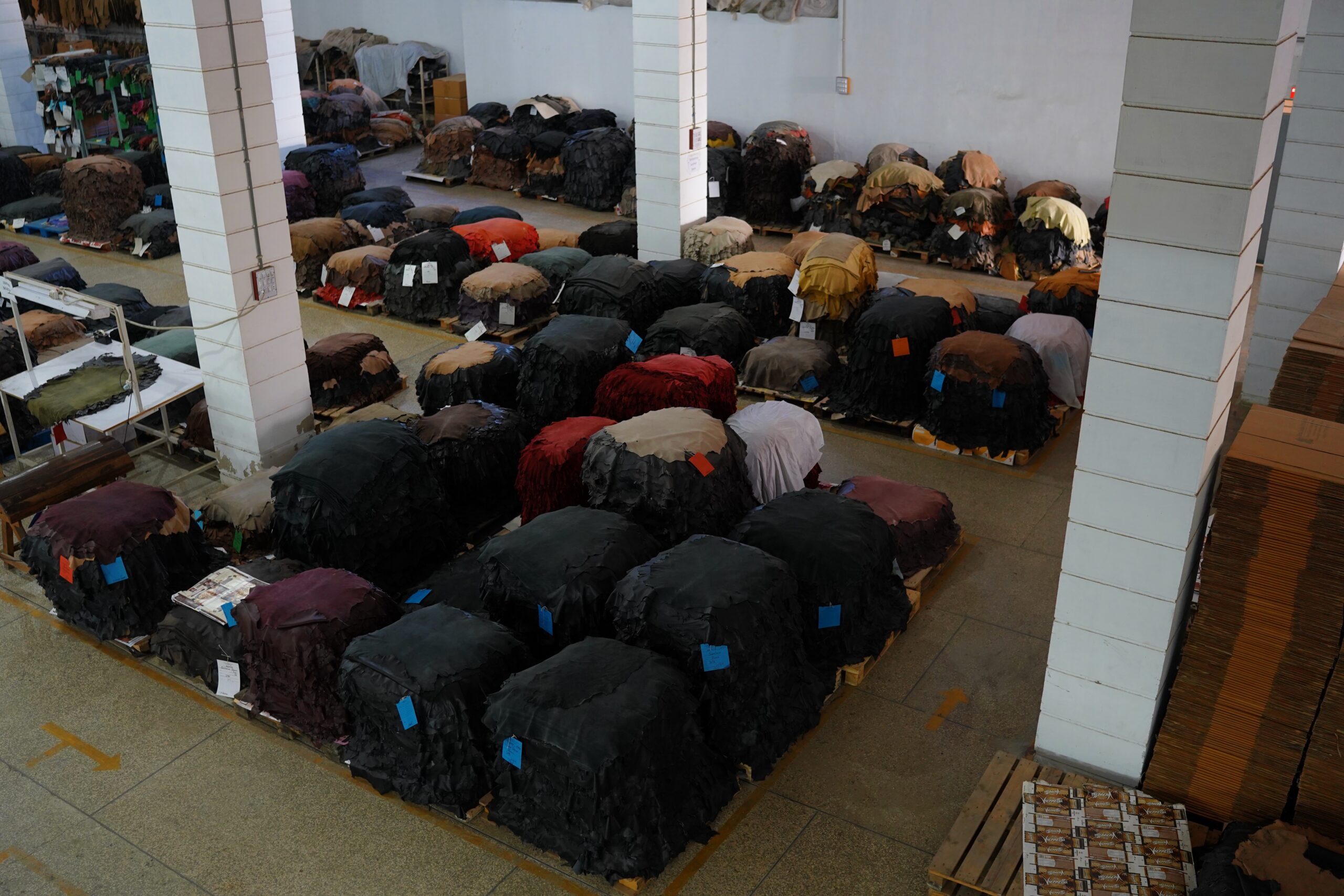
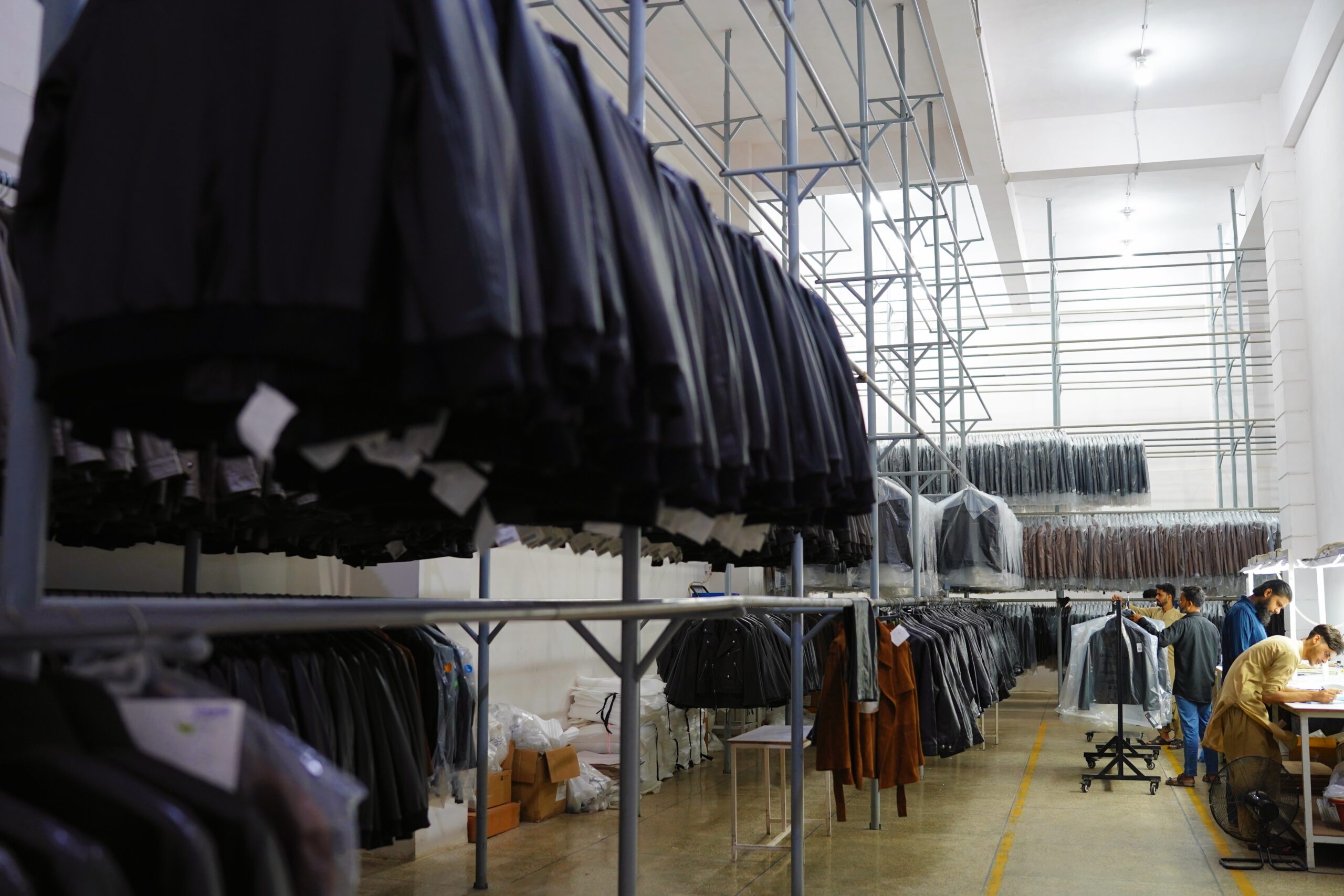
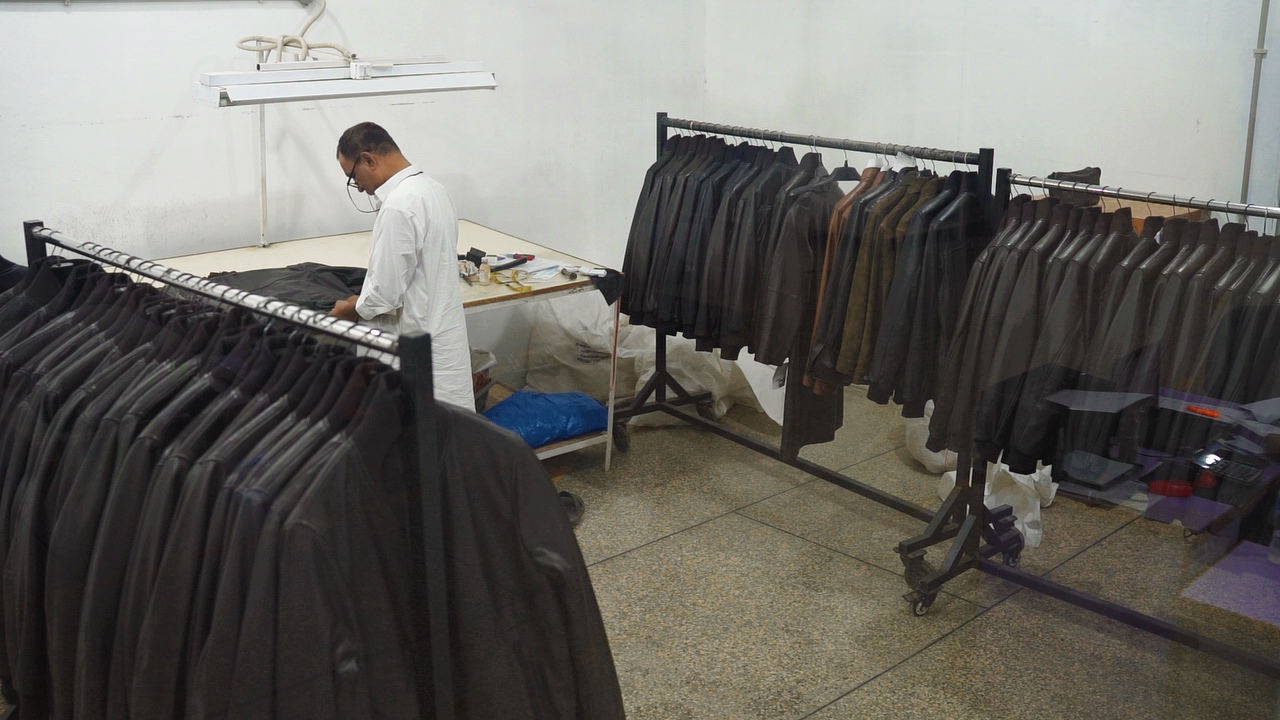
Pakistan has a well-established leather manufacturing industry serving international markets. Businesses sourcing leather garments can explore the manufacturing capabilities of Hamid Leather Ltd, a Pakistan-based B2B leather garment manufacturer supplying international buyers.
How Leather Manufacturing Influences Jacket Durability
Leather care begins long before the customer receives the jacket.
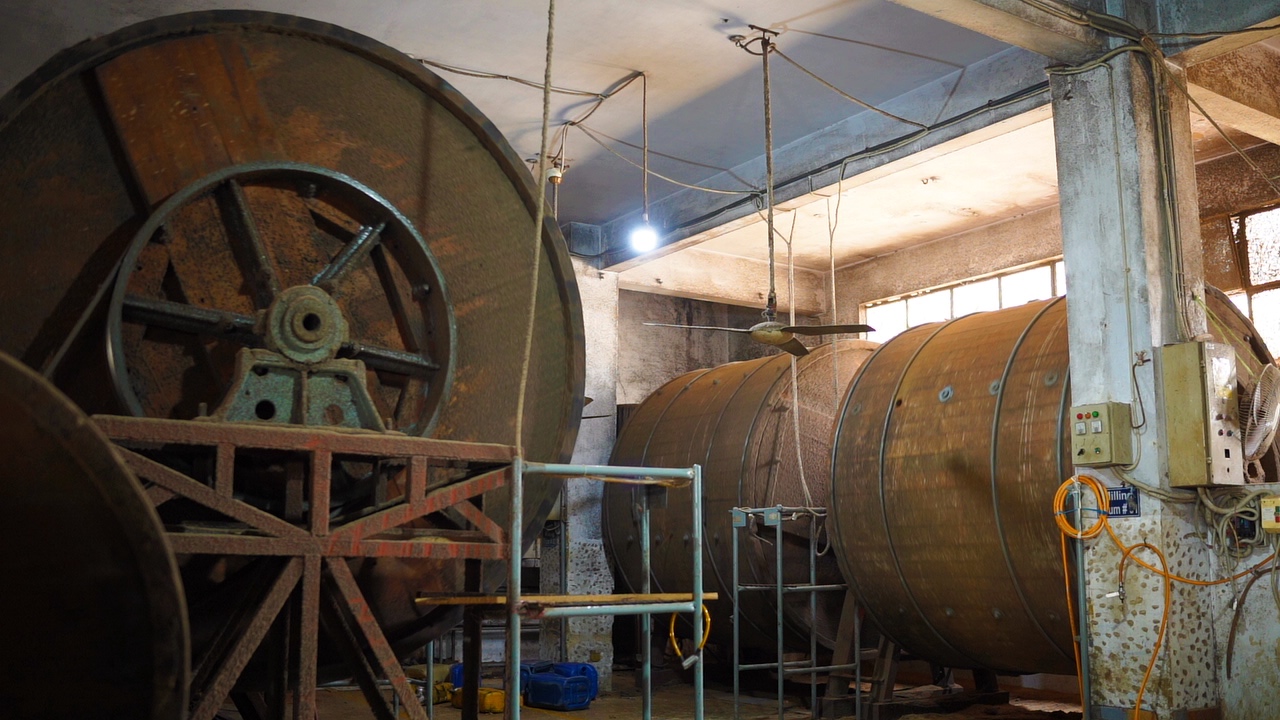
The tanning and finishing processes influence how the material reacts to moisture, conditioning products and everyday wear.
Properly tanned leather should balance flexibility with strength.
During garment manufacturing, leather panels must also be carefully selected according to:
- Thickness
- Grain consistency
- Colour
- Stretch
- Surface quality
Improperly matched panels can produce differences in texture or colour.
Quality stitching is equally important.
A beautifully conditioned jacket will still deteriorate if seams, zippers or linings are poorly constructed.
For B2B buyers, therefore, jacket quality should be evaluated as a complete product rather than judging the leather surface alone.
Common Mistakes When Conditioning a Black Leather Jacket
Even well-intentioned maintenance can damage leather.
Avoid these common mistakes.
Using Too Much Conditioner
Applying thick layers can saturate leather and create a greasy appearance.
Thin applications are safer.
Conditioning Dirty Leather
Conditioning over dust and grime may trap contamination against the surface.
Always remove dirt first.
Skipping the Patch Test
Different leather finishes react differently.
Never assume a product is safe simply because the label says it is suitable for leather.
Using Household Oils
Cooking oils and cosmetic oils are not designed for leather garments.
They can darken, stain or deteriorate over time.
Drying Leather with Heat
Heat removes moisture rapidly and may damage the fibre structure.
Always allow leather to dry naturally.
Conditioning Too Frequently
Leather should not constantly feel oily.
Condition according to the jacket’s condition rather than using products every few weeks.
Using Products Designed for Shoes or Furniture
A heavy boot wax may behave very differently on a lightweight fashion jacket.
Select products intended for leather garments whenever possible.
A Simple Leather Jacket Maintenance Routine
You do not need a complicated routine to keep a black leather jacket in good condition.
A practical schedule might look like this:
After Regular Wear
Allow the jacket to air naturally before placing it back in the wardrobe.
If necessary, wipe away light dust using a soft cloth.
After Rain
Blot moisture and allow the jacket to dry naturally.
Inspect the leather afterward for unusual stiffness.
Every Few Months
Inspect:
- Cuffs
- Elbows
- Collar
- Shoulders
- Zippers
- Stitching
- Lining
Early identification of problems makes maintenance easier.
Once or Twice Per Year
Consider conditioning if the leather feels dry.
Always follow the product and jacket manufacturer’s instructions.
Before Long-Term Storage
Make sure the jacket is:
- Clean
- Completely dry
- Properly hung
- Stored in breathable protection
How to Protect a Black Leather Jacket While Travelling
Travel can expose leather jackets to compression, moisture and temperature changes.
If possible, wear the jacket during travel rather than packing it tightly.
If it must go inside luggage:
- Clean and dry the jacket first.
- Fold it as loosely as possible.
- Avoid placing heavy items on top.
- Remove it from the suitcase immediately after arriving.
- Hang it on a supportive hanger.
Never leave a leather jacket compressed inside luggage for extended periods.
Can Leather Jackets Be Professionally Cleaned?
Yes.
Professional leather cleaning can be valuable for:
- Heavy stains
- Oil marks
- Significant discolouration
- Mould
- Odours
- Premium lambskin
- Vintage jackets
- Jackets requiring colour restoration
Do not assume a standard dry cleaner has leather expertise.
Look specifically for a cleaner experienced with leather garments.
Professional cleaning may cost more than ordinary garment cleaning, but it can be considerably safer for valuable jackets.
How Long Can a Properly Maintained Leather Jacket Last?
A high-quality genuine leather jacket can last many years and, in some cases, decades.
Its lifespan depends on:
- Leather quality
- Construction
- Frequency of wear
- Climate
- Storage
- Cleaning
- Conditioning
- Exposure to water and sunlight
The goal of maintenance is not to keep the jacket permanently looking brand new.
Quality leather naturally develops signs of use.
Soft creases, subtle texture changes and patina can contribute to the character of genuine leather.
The objective is to prevent premature deterioration such as excessive cracking, stiffness, fading or structural damage.
Leather Protection Tips for Retailers and Fashion Brands
Leather care is also relevant from a B2B perspective.
Retailers selling genuine leather garments can reduce customer complaints by providing proper care guidance.
Brands may consider including leather-care instructions covering:
- Recommended cleaning methods
- Conditioning frequency
- Water exposure
- Drying
- Storage
- Professional cleaning
- Prohibited chemicals
Clear instructions can improve customer satisfaction and help consumers understand that genuine leather requires different maintenance from synthetic garments.
For private-label businesses, leather-care labels and packaging instructions can also reinforce the premium positioning of the product.
Conditioner vs Leather Protector: What Is the Difference?
These terms are sometimes used interchangeably, but the products perform different functions.
Leather Conditioner
A conditioner primarily helps restore oils and flexibility.
Its purpose is to prevent leather from becoming excessively dry or brittle.
Leather Protector
A protector primarily creates resistance against environmental factors such as:
- Moisture
- Dirt
- Light stains
Some protectors also claim UV resistance.
Certain products combine conditioning and protective properties, but always check their suitability for the specific leather.
In many cases, conditioning and protection should be viewed as complementary maintenance steps rather than identical treatments.
Does Black Leather Need More Conditioner Than Other Colours?
Not necessarily.
Conditioning frequency depends more on the type and condition of the leather than its colour.
However, black leather can sometimes hide slight darkening caused by conditioners better than lighter shades.
That does not eliminate the need for patch testing.
A conditioner could still alter:
- Gloss level
- Surface texture
- Finish
- Colour uniformity
Always test first.
What If a Black Leather Jacket Starts Cracking?
Minor dryness may improve with conditioning, but conditioner cannot completely reverse deep cracks.
Once leather fibres have physically separated, the damage may be permanent.
For early-stage dryness:
- Clean the leather carefully.
- Use a suitable conditioner.
- Allow it to absorb naturally.
- Evaluate the leather after treatment.
For deep cracks, consult a professional leather repair specialist.
Prevention is far easier than restoring severely damaged leather.
Should You Waterproof a Black Leather Jacket?
Complete waterproofing is neither realistic nor always desirable.
Heavy waterproof coatings can affect the appearance and breathability of leather.
Instead, use a leather-compatible water-repellent product when appropriate.
This provides extra protection against unexpected rain while preserving the characteristics of the material.
Always remember that protection does not mean you should deliberately expose the jacket to heavy rainfall.
Frequently Asked Questions
How often should I condition my black leather jacket?
For most jackets, once or twice per year is usually sufficient. Frequently worn jackets or leather exposed to very dry conditions may require slightly more attention.
Can I use olive oil to condition leather?
It is not recommended. Household oils can cause uneven darkening, residue and long-term deterioration. Use a specialist leather conditioner instead.
Should I condition a new leather jacket?
Usually not immediately. New quality leather should already contain sufficient conditioning agents. Wait until the leather begins showing signs of dryness.
How do I know if my leather jacket is too dry?
Dry leather may feel stiff, rough or less flexible and may develop fine dry lines around areas such as the elbows and cuffs.
Can leather conditioner restore cracked leather?
Conditioner can help prevent further dryness but cannot fully repair deep structural cracks. Severe damage may require professional restoration.
Can I use shoe polish on a black leather jacket?
It is generally better to avoid shoe polish. Products designed specifically for leather garments are safer.
How should I dry a wet black leather jacket?
Place it on a supportive hanger and allow it to dry naturally at room temperature. Keep it away from radiators, hair dryers and direct sunlight.
Can black leather fade?
Yes. Repeated UV exposure can gradually cause black leather to lose colour. Proper storage and reduced prolonged sun exposure can help minimise fading.
Is leather conditioner the same as waterproofing spray?
No. Conditioner primarily restores flexibility and oils, while water-repellent products mainly reduce moisture penetration.
Should leather jackets be stored in plastic?
No. Plastic can restrict ventilation and trap moisture. Use a breathable cotton garment bag instead.
Final Thoughts
Knowing how to condition and protect a black leather jacket is one of the best ways to preserve the garment’s appearance, comfort and durability.
Leather does not require complicated maintenance, but it does require the correct maintenance.
The most important principles are simple:
Use products specifically designed for leather garments, clean the surface before conditioning, always test treatments on a hidden section, apply conditioner sparingly and allow wet leather to dry naturally.
Protection is equally important.
Limiting prolonged exposure to sunlight, rain, excessive heat and humidity can significantly reduce premature deterioration. Correct storage on a supportive hanger in a cool, ventilated environment also helps preserve the jacket’s shape and leather quality.
Remember that genuine leather naturally changes with age. Minor creases, texture variations and subtle patina are normal characteristics rather than defects. Proper care is not about preventing every sign of ageing; it is about ensuring that the leather ages gracefully instead of becoming excessively dry, cracked or damaged.
For consumers, a thoughtful maintenance routine can extend the usable life of a favourite black leather jacket. For retailers, wholesalers and fashion brands, leather-care education can also improve customer satisfaction and reinforce the value of investing in properly manufactured genuine leather garments.
When quality leather, skilled manufacturing and responsible aftercare work together, a black leather jacket can remain a dependable and stylish garment for many years.